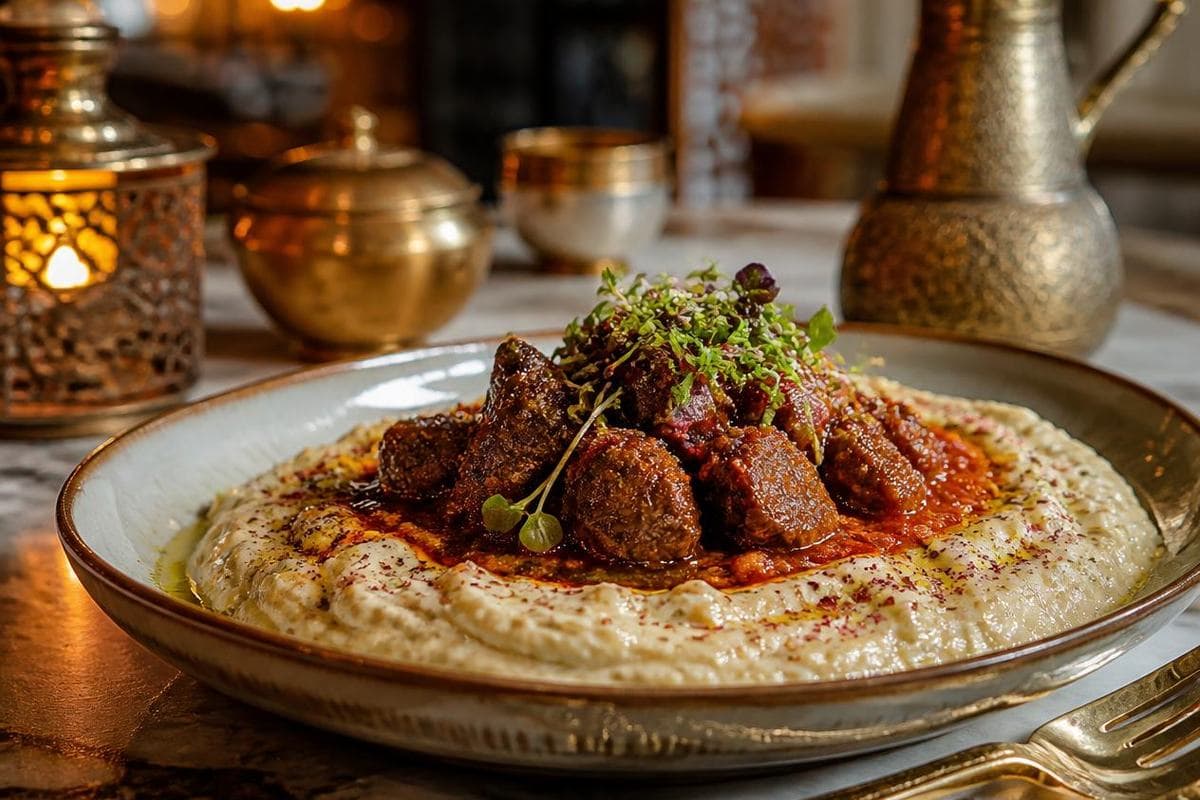
Hünkar Beğendi
Hünkar Beğendi: The Sultan's Favorite Dish
Historical Origin
Hünkar Beğendi, meaning "the Sultan liked it" or "the Sultan's delight," is a classic dish deeply rooted in Ottoman palace cuisine.
The precise origin of Hünkar Beğendi is a subject of differing historical accounts. One widely held tradition suggests it was first created for Sultan Murad IV, who ruled from 1623 to 1640, as he was known for his fondness for eggplant. Another popular legend attributes its creation to the visit of Empress Eugénie, wife of Napoleon III of France, to Istanbul in 1869, during the reign of Sultan Abdülaziz. According to this narrative, palace chefs might have combined French béchamel sauce techniques with local roasted eggplant to craft the dish, which reportedly impressed both the Sultan and the Empress. A less common account suggests that one of Sultan Abdülaziz's concubines, who was a skilled chef, developed the recipe.
Some culinary historians propose that tomatoes, a common ingredient in the stew today, may have been incorporated into the recipe later, possibly around the mid-19th century, indicating that earlier versions of the dish might have utilized different flavor bases.
Technique
Hünkar Beğendi is prepared in two distinct parts: a creamy eggplant puree and a slow-cooked lamb stew.
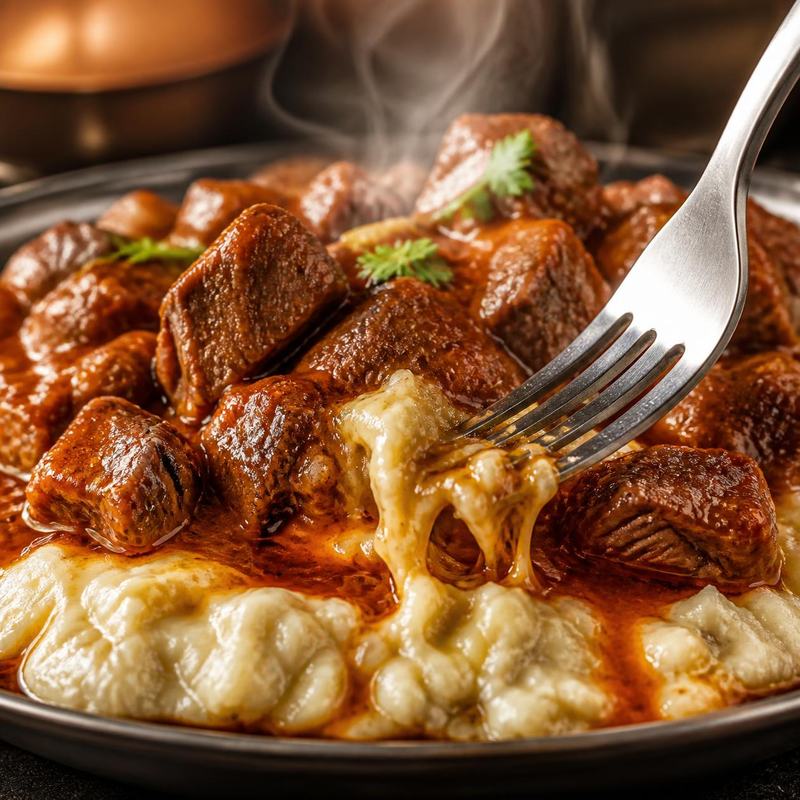
The eggplant puree, known as the "beğendi," begins with eggplants that are char-grilled or roasted until their skin is blackened and the flesh becomes smoky and tender. After peeling, the eggplant flesh is mashed and combined with ingredients such as butter, flour, and milk. Often, grated cheese like kaşar or kashkaval is added to create a smooth, rich consistency.
The accompanying lamb stew typically features cubed lamb, often sourced from the leg. This meat is sautéed with onions and garlic, then combined with tomatoes, tomato paste, and a blend of spices. Common spices include salt, pepper, cumin, oregano, and thyme. The stew is then simmered slowly until the lamb is exceptionally tender. While lamb is the traditional choice, some variations may use veal or beef. The finished dish is usually garnished with fresh, chopped parsley.
Tradition
Culturally, Hünkar Beğendi stands as a testament to the sophistication of Ottoman palace cuisine. Imperial kitchens, such as those at Topkapı Palace, employed numerous specialized cooks dedicated to creating elaborate and refined meals, with some palace recipes occasionally considered state secrets.
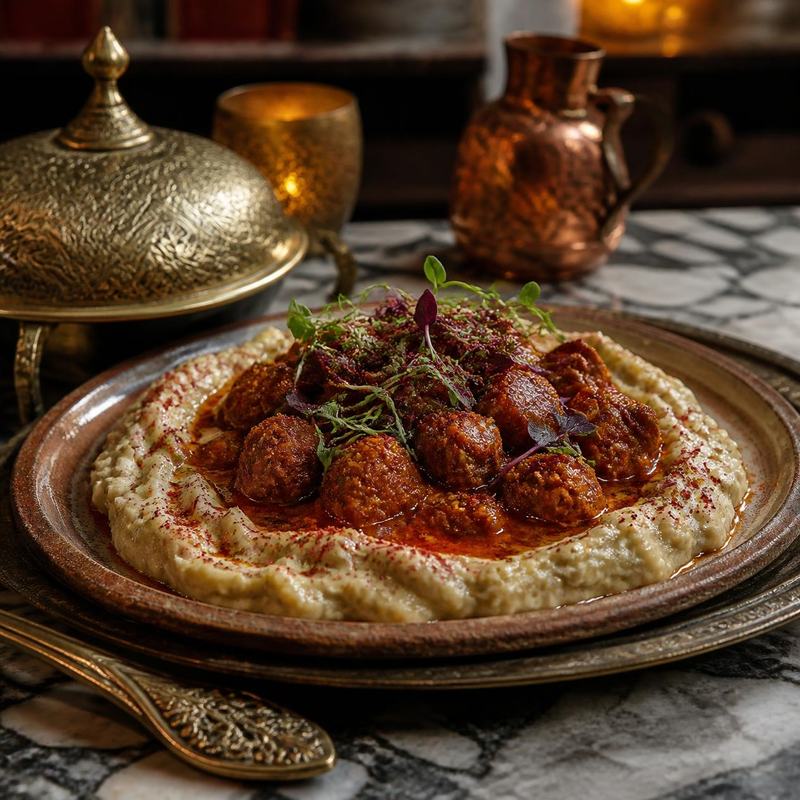
Today, Hünkar Beğendi remains a highly cherished component of Turkish culinary tradition. It is regarded as a special dish, frequently featured at significant occasions such as dinner parties, celebrations, and weddings. Its prominence also ensures it is a popular item on the menus of many Turkish restaurants, representing a taste of imperial history.
Frequently asked questions
What does 'Hünkar Beğendi' mean?
Hünkar Beğendi translates to "the Sultan liked it" or "the Sultan's delight," reflecting its origins in Ottoman palace cuisine and its historical association with sultans.
What are the two main components of Hünkar Beğendi?
The dish consists of two primary components: a rich, creamy eggplant puree (the "beğendi") and a tender, slow-cooked lamb stew.
How is the eggplant puree for Hünkar Beğendi prepared?
The eggplant puree is made by char-grilling or roasting eggplants until smoky and tender. The mashed flesh is then combined with butter, flour, milk, and often grated cheese like kaşar or kashkaval to achieve its smooth, creamy texture.
What kind of meat is traditionally used in the stew?
Traditionally, cubed lamb, often from the leg, is used for the stew. However, variations sometimes feature veal or beef instead.
Who is associated with the historical origin of Hünkar Beğendi?
Accounts vary, but traditions connect the dish to Sultan Murad IV (1623-1640) and, more widely, to Empress Eugénie of France during her visit to Istanbul in 1869, when Sultan Abdülaziz reigned.
Is Hünkar Beğendi an everyday meal in Turkey?
Hünkar Beğendi is generally considered a special dish in Turkish culinary tradition, frequently served at dinner parties, celebrations, and weddings, rather than an everyday meal.
Are there variations in the ingredients of Hünkar Beğendi?
While lamb is traditional for the stew, veal or beef can be used. It is also suggested that tomatoes, a common ingredient in the stew today, may have been introduced to the recipe later in its history.
Written by Istanbook Editorial Team · Last updated September 1, 2026
Sources (4)
- theturkishdishes.com — theturkishdishes.com
- turkishfoodie.com — turkishfoodie.com
- kureansiklopedi.com — kureansiklopedi.com
- tasteatlas.com — tasteatlas.com
A story from Istanbul, occasionally.
One story, one place, one taste, one recommendation.