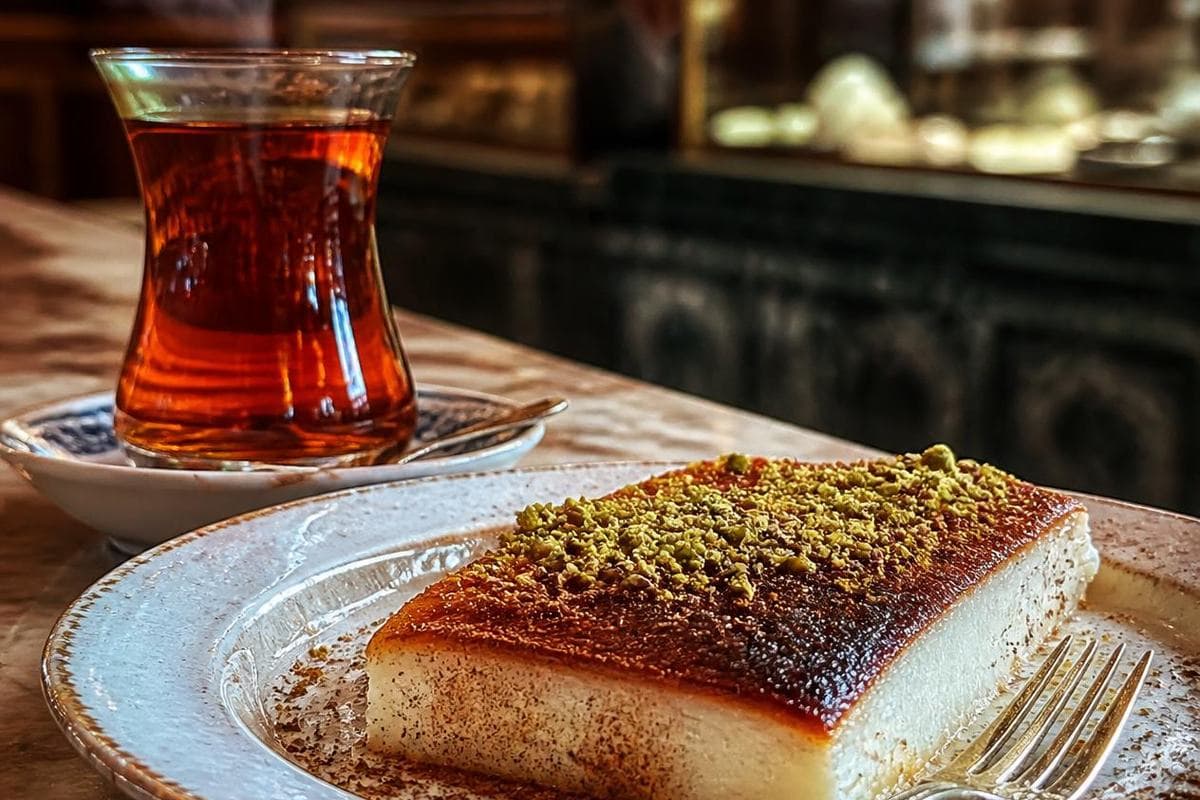
Kazandibi
Kazandibi: A Traditional Turkish Milk Pudding
Historical Origin
The origins of Kazandibi trace back to the opulent kitchens of the Ottoman Palace, where this luxurious dessert was developed and served to sultans, reflecting the refined culinary tastes of the royal court. A popular narrative suggests that the dessert's distinctive caramelized bottom resulted from an accidental occurrence: a palace chef reportedly left a milk pudding on the stove for too long, inadvertently creating the browned layer that was then discovered to be a delightful characteristic.
Historically, Kazandibi was traditionally made by caramelizing the bottom of another milk pudding called Tavukgöğsü (meaning "chicken breast"). Tavukgöğsü itself has a long history, dating back to the ancient Roman Empire and continuing through the Byzantine era, where it was known as "blancmange" in Europe—a dish featuring milk and chicken. In Tavukgöğsü, the chicken breast is shredded into microscopic threads, which contribute a unique elasticity and chewy texture without imparting a savory poultry flavor. Over centuries, a more common variation of Kazandibi emerged, using regular muhallebi (a simple Turkish milk pudding) as its base, largely due to practical and economic considerations.
Technique
The preparation of Kazandibi involves combining primary ingredients such as milk (often full-fat or buffalo milk for richness), granulated sugar, and thickeners like rice flour or cornstarch. Historically, Ottoman cuisine sometimes utilized a starch mixture called sübye, made from soaked and ground short-grain white rice, as a thickener.
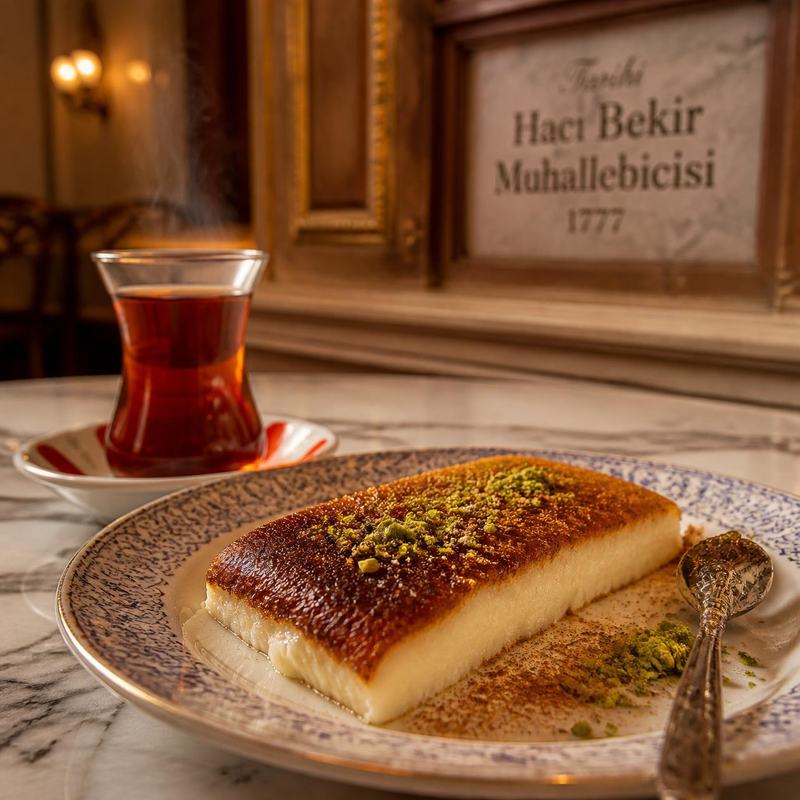
These ingredients are cooked together in a saucepan, requiring constant stirring until the mixture achieves a smooth, creamy, custard-like consistency. The signature caramelized crust is created by either spreading a layer of sugar or butter on the bottom of a wide, heavy-bottomed pan, or by pouring the pudding directly into the pan and cooking it over direct heat. This gentle cooking continues until the bottom layer of the pudding develops a rich golden-brown color and a slightly crispy texture. Once cooled, Kazandibi is commonly cut into rectangular slices and can be served as is, or traditionally, it is rolled or flipped to prominently display its caramelized side. Garnishes often include a dusting of ground cinnamon or finely crushed pistachios.
Tradition
Today, Kazandibi remains a beloved Turkish dessert, a staple found in dessert shops throughout Turkey. Its unique combination of creamy pudding and a slightly crispy, caramelized bottom provides a balance of sweetness with a subtle smoky or earthy bitterness. The dessert is a common feature at special occasions and family gatherings, symbolizing a rich culinary heritage.
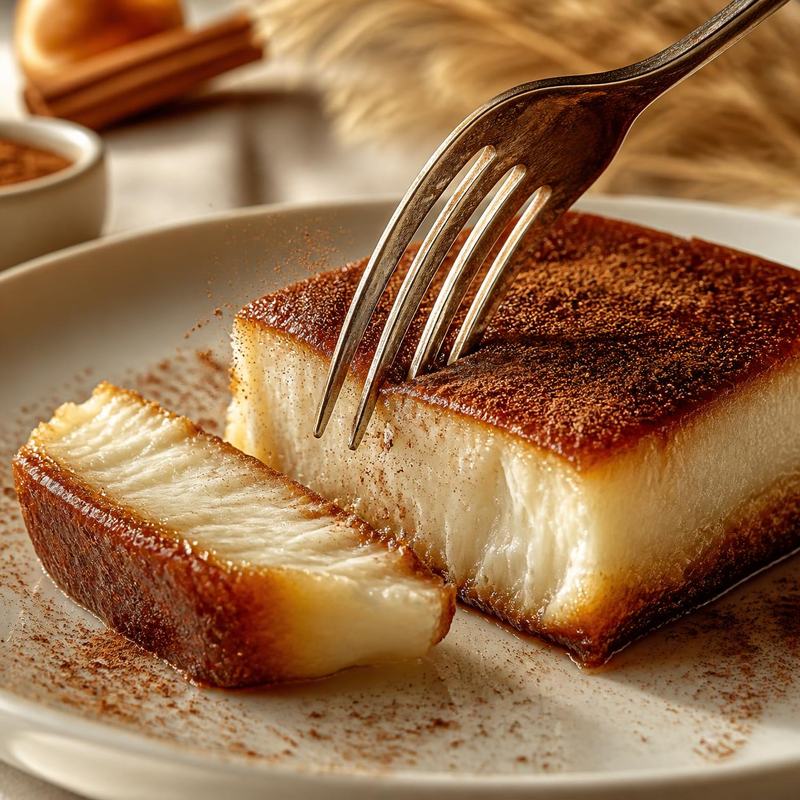
It is often enjoyed as a comforting treat, offering a textural contrast that many find appealing. Its distinctive caramelized surface frequently draws comparisons to desserts like crème brûlée.
Frequently asked questions
What is Kazandibi?
Kazandibi is a traditional Turkish milk pudding, famous for its unique caramelized layer at the bottom. Its name literally translates to "bottom of the pan" or "bottom of the cauldron," referencing its distinctive preparation method.
How did Kazandibi get its name?
The name "Kazandibi" directly refers to its preparation, where the pudding's base is intentionally browned or caramelized. A popular legend suggests it originated from a palace chef accidentally leaving a milk pudding on the stove, leading to the discovery of this delightful burnt bottom.
What are the main ingredients in Kazandibi?
The primary ingredients for Kazandibi typically include milk (often full-fat or buffalo milk), granulated sugar, and thickeners such as rice flour or cornstarch. Some recipes may also incorporate flavorings like mastic gum, vanilla extract, or rosewater.
How is the caramelized layer achieved?
To achieve the signature caramelized crust, a layer of sugar or butter is often spread on the bottom of a wide, heavy-bottomed pan. Alternatively, the pudding mixture itself is poured into the pan and cooked over direct heat until its bottom layer turns a rich golden-brown and develops a slightly crispy texture.
What is the historical origin of Kazandibi?
Kazandibi originated in the kitchens of the Ottoman Palace, where it was served to sultans. It traditionally started as a caramelized version of tavuk göğsü (milk pudding with finely shredded chicken breast), a dish with roots dating back to the ancient Roman Empire and Byzantine era, known then as "blancmange."
Is chicken still used in Kazandibi today?
While historically Kazandibi was made by caramelizing tavuk göğsü, a milk pudding containing finely shredded chicken breast, a more common variation today uses regular muhallebi (a simple Turkish milk pudding) as its base, largely due to practical and economic reasons. The chicken in tavuk göğsü is shredded so finely that it provides elasticity without imparting a savory flavor.
How is Kazandibi typically served?
Once cooled, Kazandibi is usually cut into rectangular slices. It can be served as is, or traditionally, it is rolled or flipped to highlight its distinctive caramelized side. It is often garnished with a dusting of ground cinnamon or finely crushed pistachios.
Where can I find Kazandibi today?
Kazandibi remains a beloved Turkish dessert and is a staple in dessert shops throughout Turkey. It is also commonly served at special occasions and family gatherings.
Written by Istanbook Editorial Team · Last updated September 1, 2026
Sources (3)
- gastronomytours.com — gastronomytours.com
- tasteatlas.com — tasteatlas.com
- aegeandelight.com — aegeandelight.com
A story from Istanbul, occasionally.
One story, one place, one taste, one recommendation.