Kokoreç
Kokoreç: Istanbul's Debated Street Food
Historical Origin
The dish, known as kokoreç in Turkish and kokoretsi (κοκορέτσι) in Greek, boasts ancient roots. Similar preparations were documented in Byzantine cuisine, where they were referred to as plektín, koilióchorda, or chordókoila. Some historians suggest a connection to *Plektē* or *Mimarkys*, described in Homer's Iliad around 500 BC, which involved cleaning and roasting intestines on a spit.
The term "kokoreç" itself saw its first recorded use in 1920 in a short story by Turkish author Ömer Seyfettin, who encountered it in an Istanbul restaurant and described it as a Greek dish. The precise etymology of the word remains debated; some sources propose that the Greek *kokorétsi* originates from the Albanian *kukurec*, which may have initially meant "corncob" in South Slavic languages, while others argue for an independent loan from South Slavic languages.
Over centuries, kokoreç developed within Anatolia's broader kebab and offal cooking traditions, integrating with Ottoman and Turkic culinary practices.
Technique
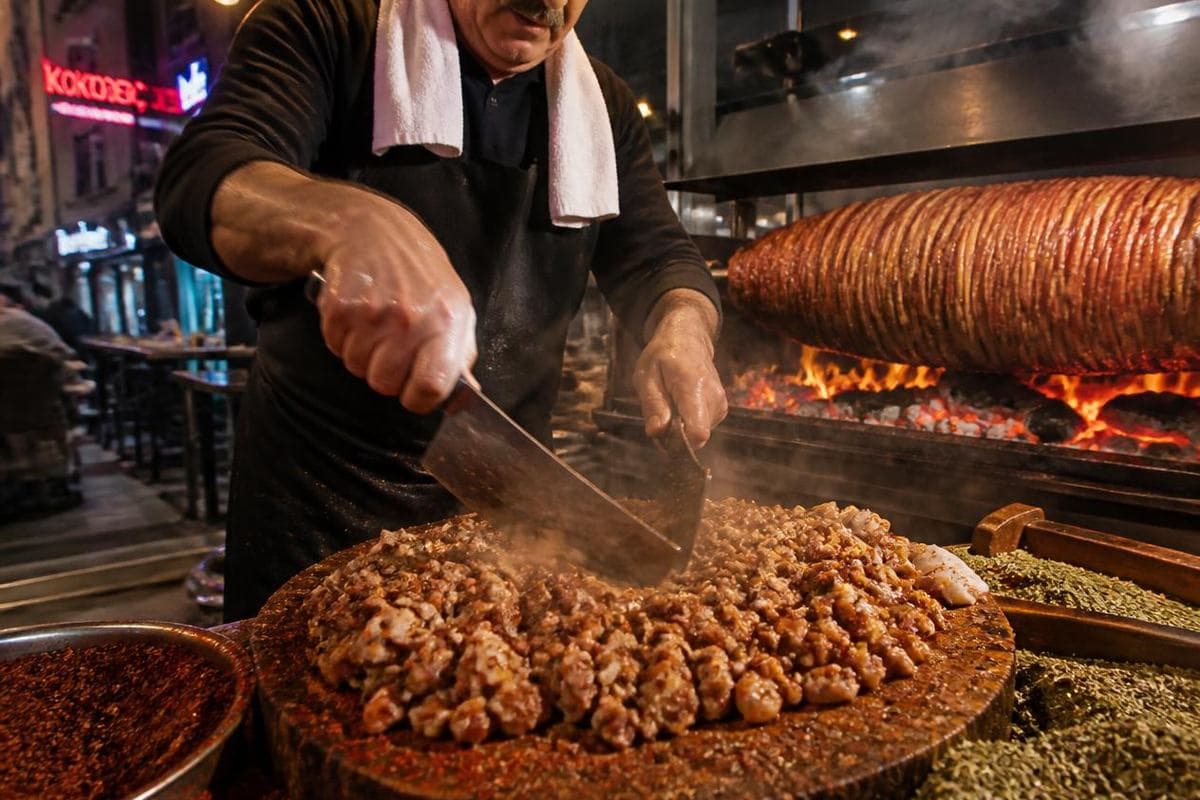
Turkish klasik kokoreç is prepared using thoroughly cleaned lamb or mutton intestines, often sourced from suckling lambs. These intestines are tightly wrapped around a horizontal skewer, typically encasing sweetbreads (the thymus gland).
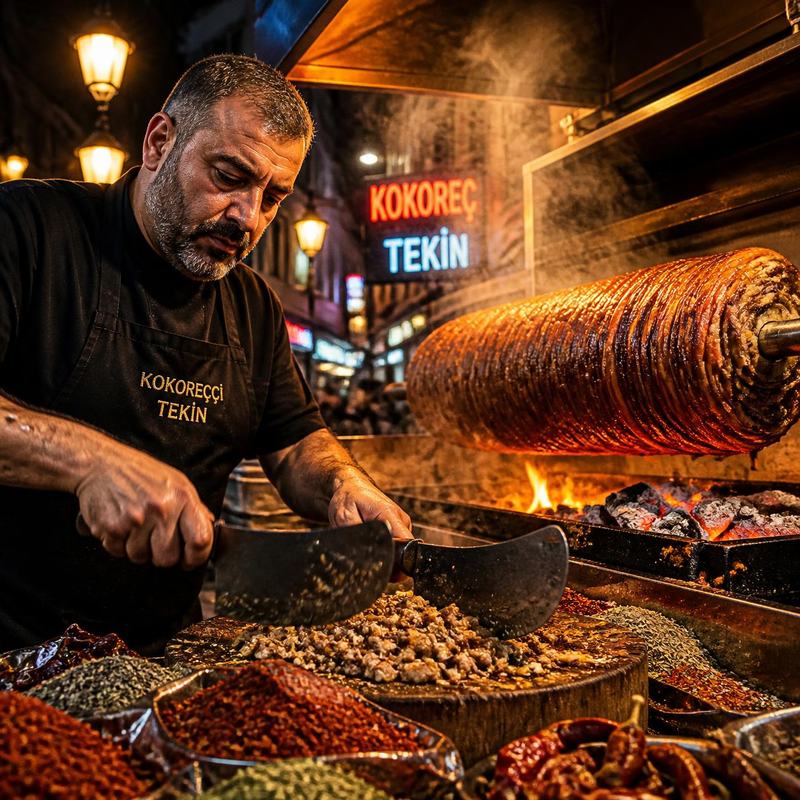
The skewer is then slowly grilled over charcoal, allowing the outer layers to crisp while the interior remains tender. Once cooked, the meat is finely chopped, sometimes even minced, on a hot griddle using two knives. It is then generously seasoned with a blend of spices, which commonly includes oregano, cumin, salt, pepper, and chili flakes or red pepper.
Kokoreç is most frequently served in a half or quarter loaf of fresh bread, often with optional additions such as chopped tomato and green peppers. A spicier version, known as "Atom kokoreç," features extra hot peppers and chili.
Tradition
Kokoreç is recognized as one of Turkey's most widely consumed fast foods and is a quintessential street food in Istanbul. It holds a significant place in Istanbul's nightlife culture, frequently sought after as a late-night meal following an evening out or as a popular remedy for hangovers.
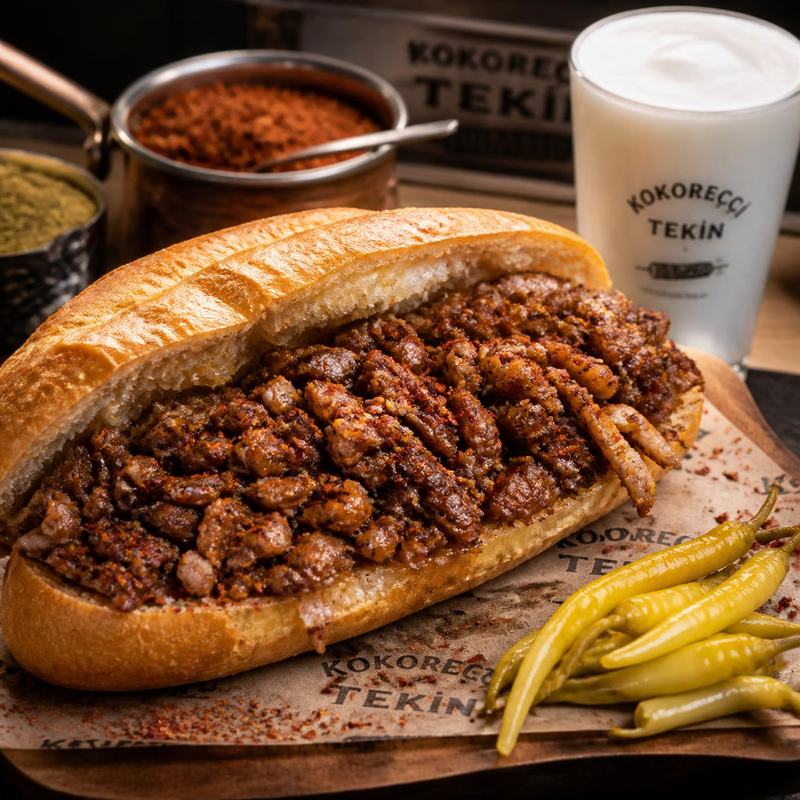
The dish is available year-round from numerous street vendors, known as kokoreççi, as well as in small kiosks and select restaurants. It is typically enjoyed on the go, often accompanied by ayran (a yogurt-based drink) or a cold beer.
Kokoreç is also famous as "Istanbul's Most Debated Street Food" due to ongoing discussions regarding its origins and distinct preparation styles. A "food war" exists between Turkey and Greece, with both nations claiming the dish. While Greek *kokoretsi* often includes various offal like liver and kidney in addition to intestines and is frequently served on a plate, the Turkish *kokoreç* primarily features intestines and sweetbreads and is typically presented as a sandwich. Some food historians consider it a shared culinary heritage of both regions. Furthermore, speculation in the early 2000s about a potential ban under hypothetical European Union regulations concerning sheep's offal also contributed to its debated status.
For visitors, Istanbul's municipality inspects registered street-food vendors, but a practical tip is to choose busy stands with visible grilling, as this often indicates fresh turnover and reliability.
Frequently asked questions
What is Kokoreç?
Kokoreç is a widely recognized and often debated street food found throughout the Balkans and Anatolia, deeply ingrained in Istanbul's culinary scene. It primarily consists of cleaned lamb or mutton intestines, often wrapped around sweetbreads, grilled, chopped, seasoned, and typically served in bread.
How is Klasik Kokoreç prepared?
Klasik kokoreç involves wrapping thoroughly cleaned lamb or mutton intestines, usually from suckling lambs, around a skewer with sweetbreads. This is then slowly grilled over charcoal. Once cooked, the meat is finely chopped on a hot griddle with two knives and seasoned with spices like oregano, cumin, salt, pepper, and chili flakes. It's most commonly served in a half or quarter loaf of fresh bread.
What are the historical origins of Kokoreç?
Kokoreç has ancient roots, with similar preparations noted in Byzantine cuisine as *plektín* or *koilióchorda*. Some historians link it to *Plektē* or *Mimarkys* described in Homer's Iliad around 500 BC. The term "kokoreç" itself was first recorded in 1920. Its etymology is debated, with suggestions of Greek, Albanian, and South Slavic influences, and it evolved within Anatolia's broader kebab and offal traditions.
Why is Kokoreç considered "Istanbul's Most Debated Street Food"?
It's debated due to its contentious origins, with Turkey and Greece both claiming the dish. There are also distinct preparation styles, with Greek *kokoretsi* often including more varied offal and being served on a plate, while Turkish *kokoreç* focuses on intestines and sweetbreads, typically served in a sandwich. Additionally, past speculation about potential EU regulations concerning sheep's offal contributed to its debated status.
When and where is Kokoreç typically eaten in Istanbul?
Kokoreç holds a special place in Istanbul's nightlife culture, often sought as an end-of-night meal or a hangover cure. It is sold year-round by numerous street vendors (kokoreççi), in small kiosks, and some restaurants. It's generally consumed on the go, often paired with ayran (a yogurt drink) or cold beer.
What is "Atom kokoreç"?
"Atom kokoreç" is a spicier variant of the classic dish. It includes extra hot peppers and chili alongside the traditional seasoning.
How can a visitor find good quality Kokoreç in Istanbul?
For newcomers, a practical tip is to choose busy street stands with visible grilling. These vendors tend to have a high turnover, which usually ensures fresh preparation and meticulous cleaning of the intestines, both crucial for quality and safety. Istanbul's municipality also inspects registered street-food vendors.
Written by Istanbook Editorial Team · Last updated September 1, 2026
Sources (7)
- istanbulfood.com — istanbulfood.com
- uniqueistanbulexperiences.com — uniqueistanbulexperiences.com
- yummyistanbul.com — yummyistanbul.com
- turkishfoodie.com — turkishfoodie.com
- greekreporter.com — greekreporter.com
- wikipedia.org — wikipedia.org
- hurriyetdailynews.com — hurriyetdailynews.com
A story from Istanbul, occasionally.
One story, one place, one taste, one recommendation.