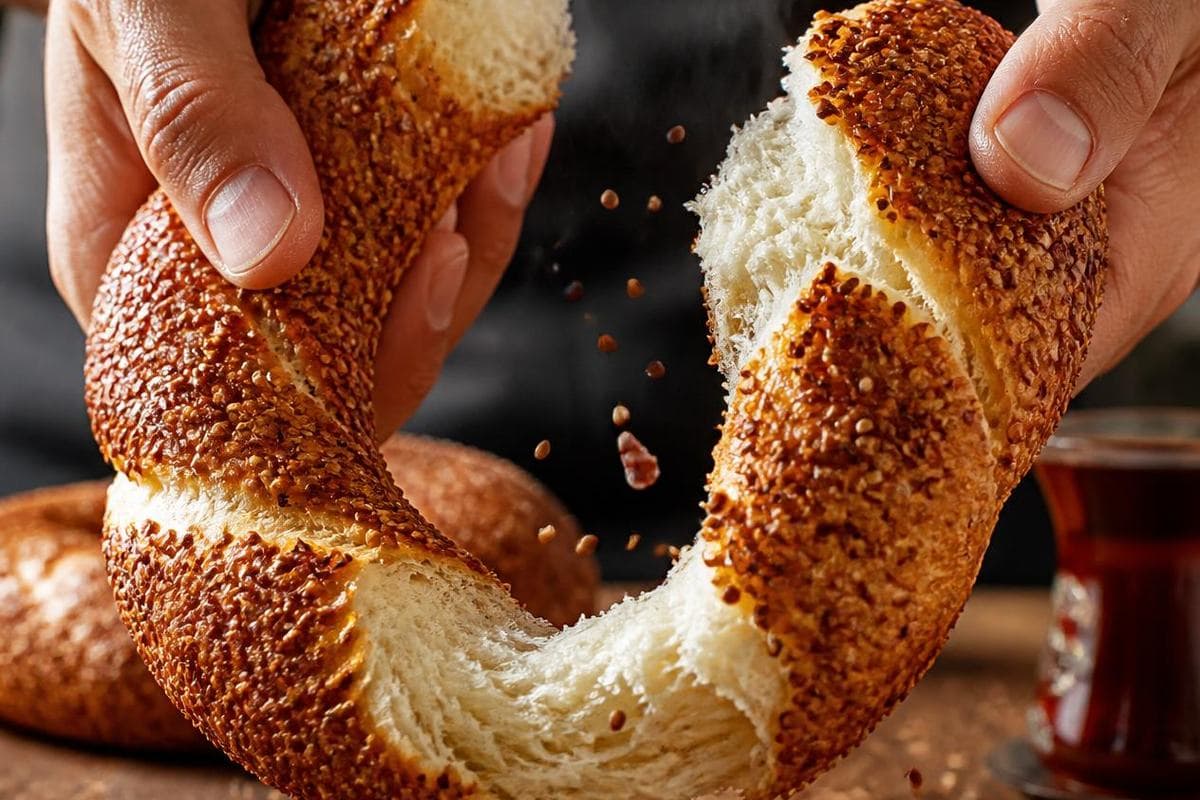
Simit
Simit: Istanbul's Iconic Sesame Bread Ring
Historical Origin
Simit holds a deeply rooted place in the culinary history of Istanbul. The word itself derives from the Arabic word samīd, which translates to fine flour. The earliest known written record of this beloved bread dates back to 1525, found within the archives of Istanbul's city administration.
During the era of the Ottoman Empire, simit was highly regarded. It was a tradition for the sultan to gift simit to the Janissary soldiers during the holy month of Ramadan. By the 17th century, the bread had become a staple of the city's daily life; the renowned Ottoman traveler Evliya Çelebi recorded the existence of 70 dedicated simit bakeries operating throughout Istanbul.
Technique
The creation of a classic simit begins with a simple dough made from a mixture of wheat flour, water, yeast, sugar, and salt. Once the dough is prepared, it is rolled into long strands and carefully twisted together to form its signature circular ring.
Unlike bagels, simit dough is never boiled in water prior to baking. Instead, it undergoes a unique process that defines its flavor and texture. Before entering the oven, the dough rings are dipped into a diluted bath of fruit molasses, most commonly grape molasses known as pekmez. Immediately after this dip, the entire ring is generously coated in sesame seeds. As it bakes, the molasses bath caramelizes, granting the bread its characteristic dark reddish-brown crust, a delightful crunch, and a slightly sweet flavor profile.
Tradition
Today, simit is an inseparable part of Istanbul's daily rhythm. It is sold across the city by street vendors known as simitçi, who navigate the bustling streets pushing glass-topped carts or skillfully balancing large, stacked trays on their heads.
Locals frequently enjoy the bread as a quick breakfast or an on-the-go snack throughout the day, traditionally paired with a steaming glass of Turkish tea, or çay. When enjoyed as a sit-down meal, simit is commonly served alongside white cheese, olives, fresh tomatoes, or fruit jams.
Perhaps the most charming tradition associated with this sesame bread ring takes place on the water. Ferry commuters crossing the Bosphorus often eat simit on board, partaking in a beloved local ritual of tossing small, torn pieces of the bread to the flocks of seagulls circling above the wake.
Written by Istanbook Editorial Team