
Simit
Simit: Istanbul's Ring-Shaped Bread
Historical Origin
The origins of simit are a subject of discussion, with some sources suggesting a lineage tracing back to the Byzantine Empire, where a similar ring-shaped bread, *kollikion* or *boukellon*, was popular. More definitively, historical records show that simit has been produced in Istanbul since 1525.
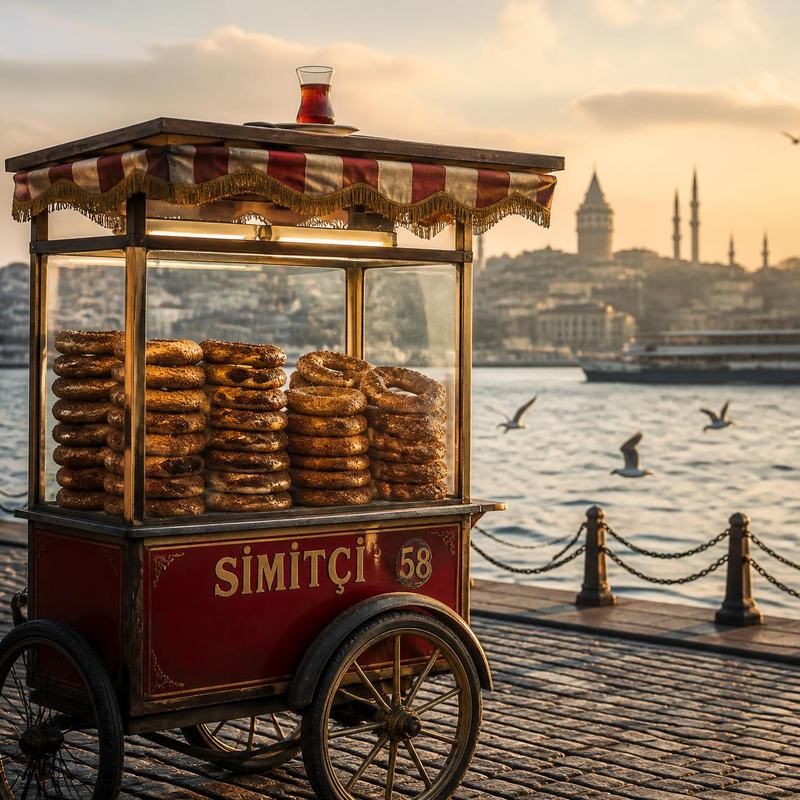
During the Ottoman Empire, simit initially served as an affordable and substantial food for the working class. By 1593, its weight and price were standardized in the neighborhood of Üsküdar. The renowned 17th-century traveler Evliya Çelebi documented the presence of 70 simit bakeries in Istanbul in the 1630s. Interestingly, simit was also considered a delicacy among the elite, prepared in the ovens of the Topkapı Palace and even distributed by the Sultan to the Janissaries during the holy month of Ramadan. The name "simit" itself is believed to come from the Arabic word "samīd," which translates to 'white bread' or 'fine flour'.
Technique
A traditional simit recipe relies on simple ingredients: flour, water, yeast, sugar, salt, and sesame seeds. The preparation method distinguishes it from other ring-shaped breads like bagels; simit dough is notably not boiled.
After being shaped into rings, the dough is dipped into a molasses-based coating, often grape molasses (pekmez) or other fruit molasses. This crucial molasses bath imparts the simit's characteristic reddish-brown color, its thin, crunchy, slightly sweet crust, and ensures the sesame seeds generously coat and adhere to the surface. The rings are then traditionally baked in hot stone ovens, contributing to their distinct texture.
Tradition
Simit is often referred to as "the people's bread" due to its affordability and widespread presence, holding a significant place in Turkish street culture and daily routines. "Simitçi," or simit vendors, are a familiar sight across Istanbul, selling fresh simit from their distinctive carts near schools, ferry terminals, markets, and busy transportation hubs, sometimes balancing large trays on their heads.
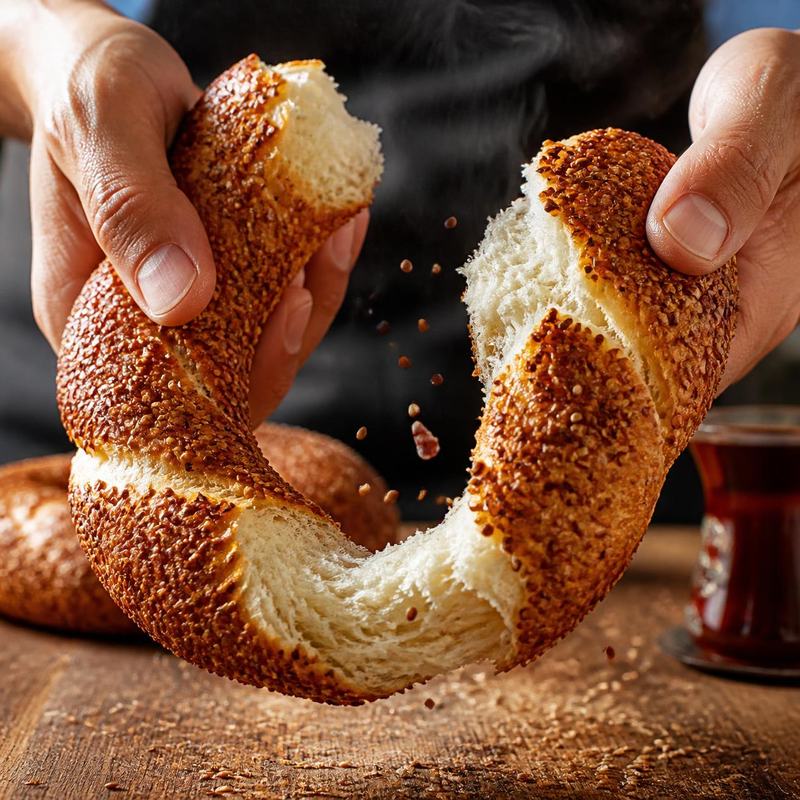
It is commonly enjoyed as a quick breakfast, a midday snack, or alongside afternoon tea. Simit is frequently paired with a glass of traditional Turkish tea, or served with accompaniments such as cheese, olives, tomatoes, various jams, and spreads. It can also be consumed with ayran, a salty yogurt drink. More than just a food, simit is a cultural staple, symbolizing community, simplicity, and daily tradition within Turkish urban life.
While popular throughout Turkey, simit exhibits regional variations. For example, Istanbul's simit is known for being thin and crunchy, whereas Ankara's version is typically thicker and softer. In Izmir, it is known as "gevrek" and is noted for its extra-crispy texture and darker color.
Neighborhood: Üsküdar: Istanbul's Ancient Gateway on the Bosphorus
Frequently asked questions
What is simit?
Simit is an iconic circular Turkish bread, characterized by its crispy, sesame-coated exterior and soft interior. It is a staple in Turkish daily life, often referred to as "the people's bread."
How is simit made, and what makes it unique?
Simit dough, made from simple ingredients like flour, water, and yeast, is shaped into rings and then dipped into a molasses-based coating before being generously covered with sesame seeds. Unlike bagels, simit is not boiled. This molasses bath gives it a distinctive reddish-brown color, a thin, crunchy crust, and helps the sesame seeds adhere. It is traditionally baked in hot stone ovens.
What is the history of simit?
Some historians suggest simit's origins may date back to the Byzantine Empire. However, its production in Istanbul is definitively documented since 1525. During the Ottoman era, it became an affordable food for the working class and its price and weight were standardized by 1593 in Üsküdar. It was also enjoyed by the elite, even served in the Topkapı Palace.
How is simit typically eaten in Istanbul?
Simit is commonly enjoyed as a quick breakfast or a midday snack. It is frequently paired with a glass of traditional Turkish tea, or served with cheese, olives, tomatoes, various jams, and spreads. It can also be consumed with ayran, a salty yogurt drink.
Who are "Simitçi"?
"Simitçi" are simit vendors who are a familiar sight throughout Istanbul. They sell fresh simit from carts, often near schools, ferry stops, markets, and busy transportation hubs, contributing to the city's vibrant street culture.
Are there different kinds of simit?
Yes, while popular across Turkey, simit has regional variations. Istanbul's simit is known for being thin and crunchy, while Ankara's is thicker and softer. In Izmir, it's called "gevrek" and is recognized for its extra-crispy texture and darker color.
Why is simit considered a cultural staple in Turkey?
Simit is deeply embedded in Turkish daily life and street culture. Its affordability, widespread availability, and role as a common food item for all social classes have made it a symbol of community, simplicity, and enduring daily tradition in Turkish urban life.
Written by Istanbook Editorial Team · Last updated September 1, 2026
Sources (4)
- wikipedia.org — wikipedia.org
- themediterraneandish.com — themediterraneandish.com
- anascreccatravel.com — anascreccatravel.com
- tasteatlas.com — tasteatlas.com
A story from Istanbul, occasionally.
One story, one place, one taste, one recommendation.