Turkish Coffee (Türk Kahvesi)
Turkish Coffee: History, Preparation, and Culture
Historical Origin
Turkish coffee's origins trace back to Yemen in the 15th century, where coffee beans were cultivated by traders. The beverage was introduced to the Ottoman Empire in the 16th century, during the reign of Sultan Suleiman the Magnificent (1520-1566).
According to legend, Özdemir Pasha, the Ottoman Governor of Yemen, became fond of coffee and brought it to the palace's attention around the 1540s. Its popularity spread beyond the palace, and the first documented coffeehouse (kahvehane) in Istanbul opened in the Tahtakale district in 1554 or 1555, established by two Syrian merchants named Hakem and Shams.
From Istanbul, the tradition of coffee drinking and coffeehouses rapidly spread across the Ottoman Empire and subsequently to Europe, notably after the 1683 Siege of Vienna when abandoned coffee sacks helped introduce the drink to new regions.
Technique
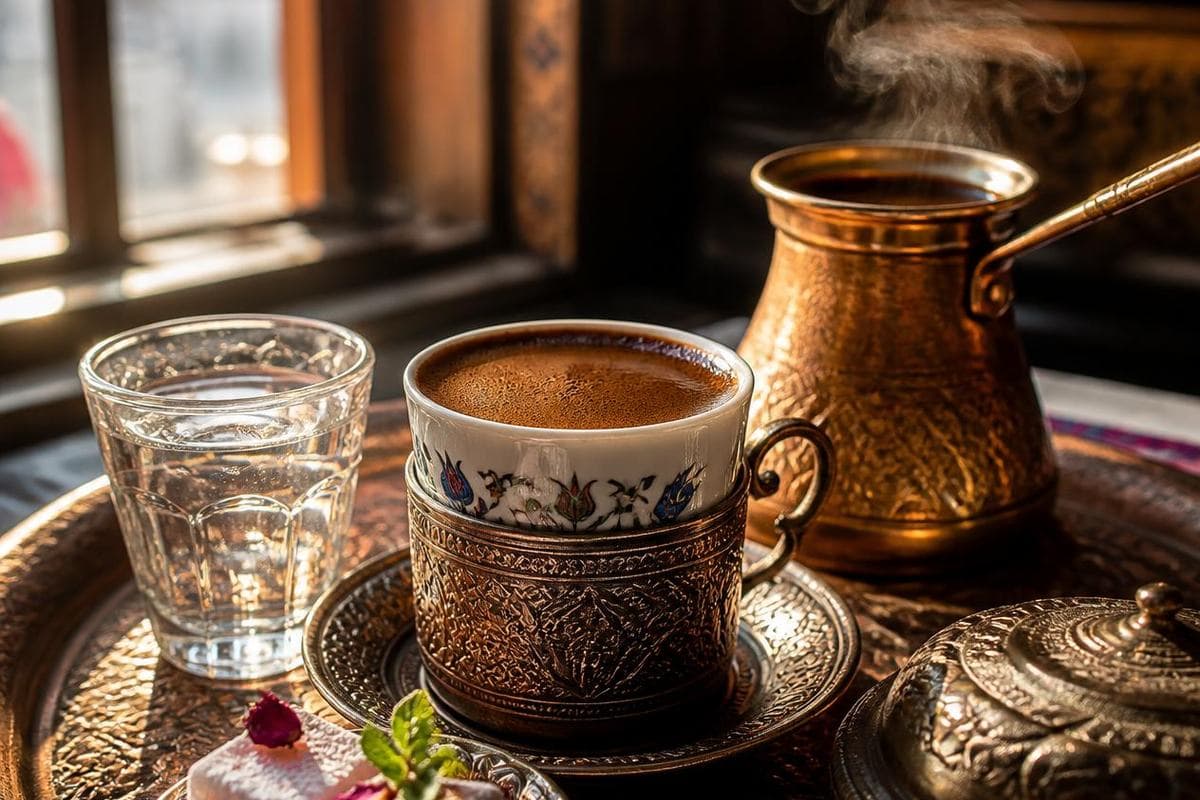
Turkish Coffee (Türk Kahvesi) is distinguished by its unique preparation method. It involves very finely ground coffee, often finer than espresso, brewed with cold water and optional sugar in a special pot called a cezve.
A cezve, sometimes referred to as an ibrik in other regions, is a small, long-handled pot traditionally made of copper or brass, designed with a wider base and a narrower neck to encourage foam formation and retain aromas. The brewing process entails slowly heating the mixture until it just comes to a boil, creating a thick layer of foam on top, which is a crucial aesthetic and quality indicator.
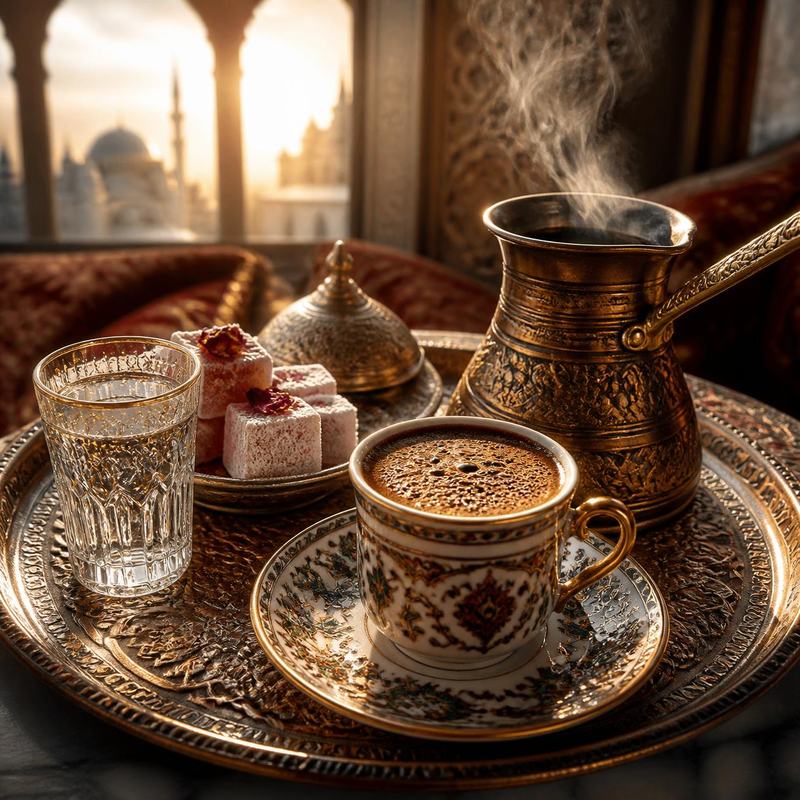
Unlike other coffee preparations, Turkish coffee is unfiltered, meaning the finely ground coffee particles remain in the cup and settle at the bottom, contributing to its rich body and intense flavor. While Arabica beans are considered ideal, any coffee beans can be used, roasted medium or medium-dark. It is traditionally served in small cups, known as kahve fincanı or demitasse cups, often accompanied by a glass of water and sometimes Turkish delight. Some traditional methods involve brewing the coffee in a cezve placed in a pan of hot sand, allowing for precise heat control. Optional spices like cardamom or cinnamon can be added during preparation.
Tradition
Turkish coffee is deeply embedded in Turkish culture and tradition, earning its place on the UNESCO Representative List of the Intangible Cultural Heritage of Humanity in 2013. December 5th is recognized as World Turkish Coffee Day. The tradition is a symbol of hospitality, friendship, and refinement, permeating social life. An invitation for coffee provides an opportunity for intimate conversation, reflecting the Turkish proverb "A cup of coffee can create a friendship that lasts for 40 years."
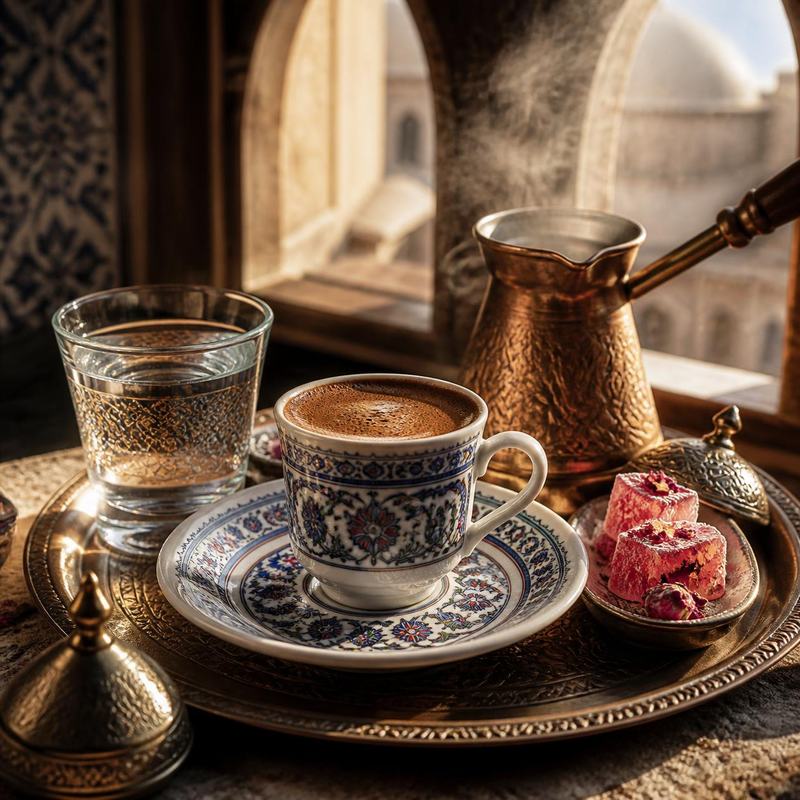
- Kahvehaneler (Coffeehouses): In the Ottoman Empire, coffeehouses became vital social centers where people from all walks of life gathered for conversation, news exchange, intellectual discussions, playing games like chess, listening to music, and poetry. These establishments also served as venues for resolving disputes and planning political activities. By the 19th century, Istanbul alone was home to approximately 2,500 coffeehouses.
- Misafirlik ve Sohbet (Hospitality and Conversation): Offering coffee to a guest is considered an act of honor, and refusing it is uncommon, symbolizing warmth and friendship.
- Engagement Ceremonies: Turkish coffee plays a significant role in pre-wedding rituals. When the groom's family visits the bride's house, the bride prepares and serves coffee to everyone. Traditionally, the bride might prepare the groom-to-be's cup with salt instead of sugar as a playful test of his character and patience.
- Fal Geleneği (Fortune-telling): After drinking Turkish coffee, the remaining grounds at the bottom of the cup are often used for kahve falı, a traditional practice of fortune-telling (tasseography). This ritual involves swirling the cup, flipping it onto its saucer, and then interpreting the patterns formed by the dried coffee grounds to gain insights into the future or one's life. It is primarily a social and cultural activity, enjoyed for reflection and entertainment, rather than being considered a scientific or religious practice.
Frequently asked questions
What is unique about the preparation of Turkish coffee?
Turkish coffee is unique because it is made with very finely ground coffee brewed with cold water in a special pot called a cezve. It is unfiltered, so the coffee grounds remain in the cup and settle at the bottom, contributing to its rich flavor and body.
When and how did Turkish coffee arrive in the Ottoman Empire?
Turkish coffee was introduced to the Ottoman Empire in the 16th century, during the reign of Sultan Suleiman the Magnificent. According to legend, Özdemir Pasha, the Ottoman Governor of Yemen, brought it to the palace's attention around the 1540s after becoming fond of the beverage.
What is a <em>cezve</em>?
A cezve is a small, long-handled pot traditionally made of copper or brass, specifically designed for brewing Turkish coffee. It has a wider base and a narrower neck, which helps in forming the characteristic thick foam.
What is the cultural significance of Turkish coffee in modern society?
Turkish coffee is a symbol of hospitality, friendship, and refinement, deeply embedded in Turkish culture. It is an integral part of social life, providing an opportunity for intimate conversation and is recognized on the UNESCO Representative List of the Intangible Cultural Heritage of Humanity.
How do Turkish coffeehouses contribute to the culture?
Turkish coffeehouses, or kahvehaneler, have historically been and continue to be vital social centers. They serve as places for conversation, exchanging news, intellectual discussions, playing games, listening to music and poetry, and even for resolving disputes.
What is <em>kahve falı</em>?
Kahve falı is a traditional practice of fortune-telling (tasseography) using the remaining coffee grounds at the bottom of a Turkish coffee cup. After drinking, the cup is swirled, flipped onto its saucer, and the patterns formed by the dried grounds are interpreted for insights into the future or one's life. It's primarily a social and cultural activity for reflection and entertainment.
What type of coffee beans are typically used for Turkish coffee?
While Arabica beans are considered ideal for Turkish coffee, any coffee beans can be used. They are typically roasted to a medium or medium-dark level before being ground to an extremely fine consistency.
Is Turkish coffee served with anything else?
Yes, Turkish coffee is traditionally served in small cups (kahve fincanı) and is often accompanied by a glass of water to cleanse the palate, and sometimes by a piece of Turkish delight.
Written by Istanbook Editorial Team · Last updated September 1, 2026
Sources (5)
- unesco.org — unesco.org
- ottomancoffeehouse.co.uk — ottomancoffeehouse.co.uk
- mehmetefendi.com — mehmetefendi.com
- wikipedia.org — wikipedia.org
- travelatelier.com — travelatelier.com
A story from Istanbul, occasionally.
One story, one place, one taste, one recommendation.