Places
加拉塔大桥:伊斯坦布尔的活力连接
Overview
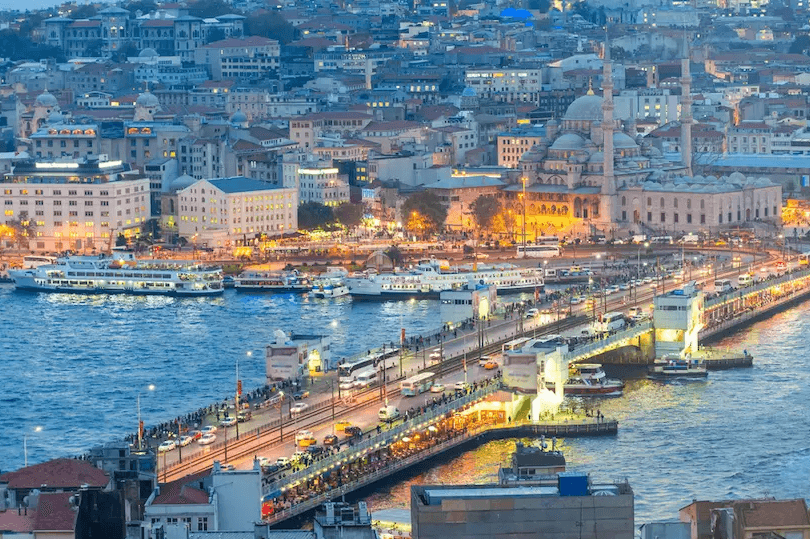
这座桥梁不仅是通道,还是连接伊斯坦布尔历史中心和现代区的脉动动脉。横跨金角湾,它连接着埃米诺努——伊斯坦布尔历史港口和贸易中心,以及北岸的加拉塔(特别是卡拉科伊——伊斯坦布尔的历史港口和文化区)。这座标志性桥梁作为日常生活中的活力舞台,是城市动态的象征,无数的故事在这里上演,反映了这座城市多层次的过去和繁忙的现在。
History
跨越金角湾的桥梁连接了这两岸,这一想法并非新鲜事物;几个世纪以来,简易的桥梁就已存在。拜占庭皇帝尤金尼乌斯一世于6世纪建立的桥梁是最早尝试跨越这一水道的尝试之一,尽管其确切位置和性质仍引起历史学家的争论。后来,在1502年,达·芬奇本人提议建造一座跨越金角湾的单跨桥,但这个雄心勃勃的项目从未实现。加拉塔桥的现代历史始于1836年,当时奥斯曼苏丹穆罕默德二世赞助建造了一座浮桥,称为哈伊拉蒂耶桥。随后,在1845年,第一座真正的加拉塔桥——新桥(Cisr-i Cedid)——启用。这座桥的过桥费成为了帝国国库的重要收入来源。随着伊斯坦布尔的发展,对更坚固连接的需求也不断增加。这座桥在1863年、1899年和1912年分别被三次更换,最后一次是一座显著的铁桥,持续为这座城市服务了几十年。这座第四座加拉塔桥成为了这座城市的长期地标,直到1992年被大火严重损坏,并随后被替换。目前的第五座加拉塔桥于1994年完工,继续延续这一悠久的传承,成为伊斯坦布尔不断变化的城市格局中一座永恒的地标。每一代加拉塔桥都在塑造城市交通基础设施、促进贸易和与伊斯坦布尔不断扩大的城市结构共同演变中扮演了关键角色。
Architecture
当前的加拉塔大桥是一座双层升降桥,这意味着它可以在必要时开启以让大型船只通过金角湾。它的设计既实用又巧妙地融入了伊斯坦布尔的历史天际线。上层主要用于车辆通行、有轨电车线路以及行人,提供了俯瞰历史半岛、苏莱曼尼耶清真寺建筑群和加拉塔塔的壮观景色。下层则是一个繁忙的餐饮区,许多店铺专门经营海鲜,吸引了当地居民和游客。这座双层结构不仅提供了必要的连通性,还创造了一个充满活力的社会空间,使大桥本身成为一个目的地,而不仅仅是过境点。
Neighborhood: Eminönü: Istanbul's Historic Port and Trading Hub
Frequently asked questions
What is the Galata Bridge?
The Galata Bridge is an iconic double-deck bridge in Istanbul that spans the Golden Horn (Haliç), connecting the historic district of Eminönü on the historic peninsula with the Karaköy area of Galata on the northern shore.
Where is the Galata Bridge located?
The Galata Bridge is located in the heart of Istanbul, Turkey. It connects the neighborhoods of Eminönü: Istanbul's Historic Port and Trading Hub (part of the Old City) and Karaköy: Istanbul's Historic Port and Cultural District (part of Galata: Istanbul's Historic Genoese Quarter) across the Golden Horn.
How many Galata Bridges have there been throughout history?
There have been five distinct Galata Bridges constructed across the Golden Horn since the mid-19th century, with the current bridge being the fifth iteration. Prior to these, there were earlier temporary pontoon bridges and even a proposed design by Leonardo da Vinci.
What is the significance of the Galata Bridge in Istanbul?
The Galata Bridge is profoundly significant as it serves as a vital transportation artery, a bustling hub for trade and fishing, and a vibrant social and cultural meeting point. It symbolically and literally bridges different economic and social worlds within Istanbul, connecting the old city with the more modern districts.
What can visitors do on or around the Galata Bridge?
Visitors can walk across the bridge, observe the numerous fishermen, enjoy panoramic views of the city's skyline, and dine at the seafood restaurants located on its lower deck. The areas at either end, Eminönü: Istanbul's Historic Port and Trading Hub and Karaköy: Istanbul's Historic Port and Cultural District, offer bustling markets, historic sites, and ferry terminals.
Are there restaurants on the Galata Bridge?
Yes, the lower deck of the current Galata Bridge is home to many restaurants and cafes, primarily specializing in fresh fish and seafood, offering unique dining experiences right over the Golden Horn.
Why is fishing so popular on the Galata Bridge?
Fishing from the Galata Bridge has been a long-standing tradition and remains a popular activity for both locals and visitors. It's a source of livelihood for many, provides fresh catch for the bridge's restaurants, and has become an iconic image of Istanbul's daily life.
How does the Galata Bridge connect different parts of Istanbul?
The Galata Bridge acts as a crucial link, physically and culturally. It connects the historic, Ottoman-era commercial hub of Eminönü: Istanbul's Historic Port and Trading Hub (home to the Istanbul's Spice Bazaar (Mısır Çarşısı) and Grand Bazaar: Istanbul's Historic Covered Market) with Karaköy: Istanbul's Historic Port and Cultural District, which historically served as a more European-influenced trade and financial center, leading up to the modern districts of Beyoğlu: Istanbul's Cosmopolitan Heart.
Written by Istanbook Editorial Team