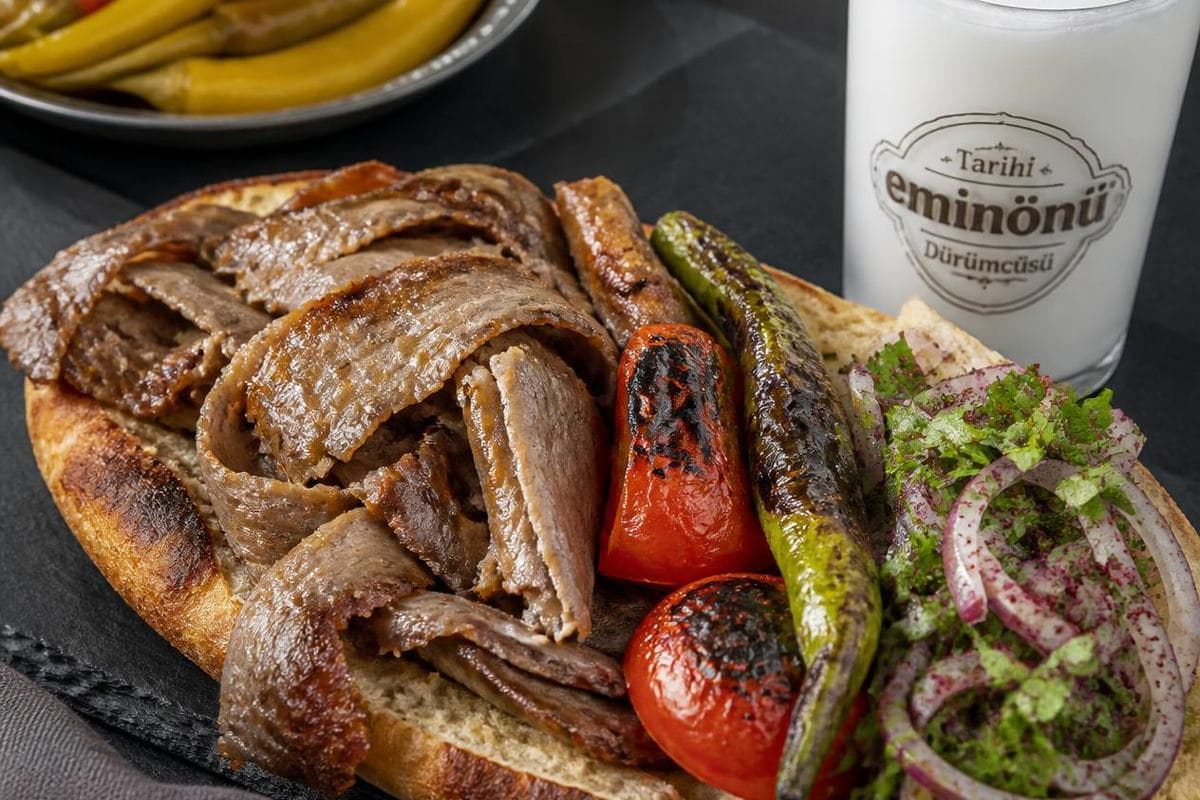
Döner Kebab
Döner Kebab: Istanbul's Rotating Delicacy
Historical Origin
The practice of roasting meat on a spit has ancient roots, with horizontal spit roasting (similar to cağ kebab) present in the Ottoman Empire as early as the 17th century. The innovative vertical rotisserie method, which distinguishes döner, is widely believed to have emerged in the mid-19th century.
The exact inventor of the vertical spit remains a subject of historical debate. One account credits İskender Efendi from Bursa, who is said to have conceived the idea of roasting lamb vertically around the 1850s. Another claim suggests Hamdi Usta from Kastamonu invented it around 1830 or 1835. Interestingly, some sources also propose that Takiyüddin Efendi, an Ottoman astronomer and engineer from the 16th century, invented a steam-powered rotating döner machine. Despite these varying claims, the earliest known photograph of a döner kebab vendor with a vertical spit was captured in Sultanahmet: Istanbul's Imperial Heart by James Robertson in 1855.
Technique
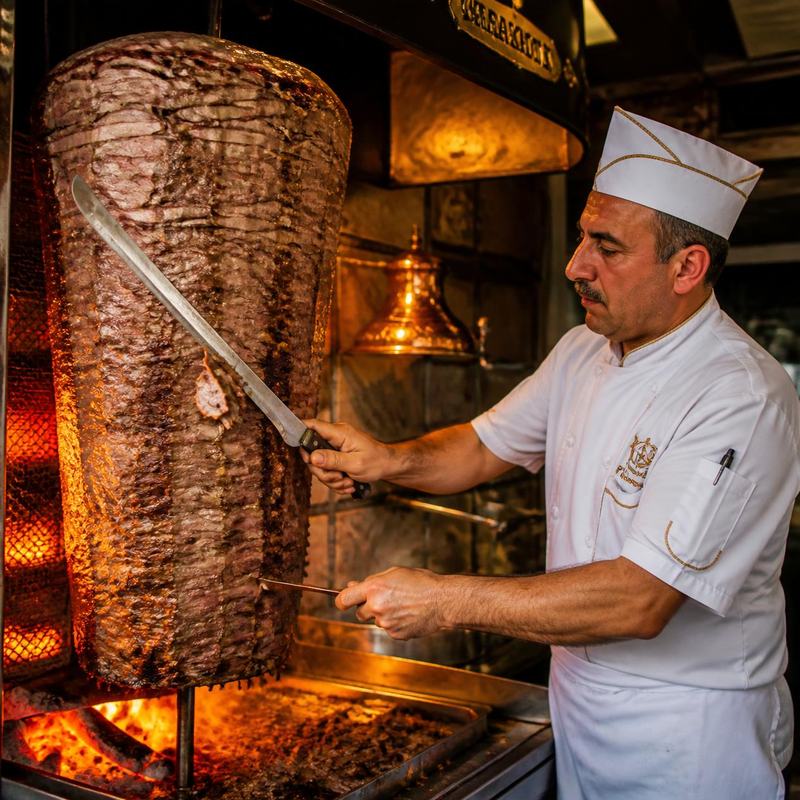
Döner kebab, meaning "rotating kebab" in Turkish, is traditionally prepared by stacking seasoned meat (lamb, beef, veal, chicken, turkey, or a mixture) onto a large vertical spit. As the spit slowly rotates in front of a heat source, the outer layer of meat cooks and self-bastes, ensuring tenderness. Thin slices are then shaved off vertically as needed.
For homemade döner (ev tipi döner), recipes typically involve marinating thinly sliced beef or ground meat with ingredients such as yogurt, grated onion, tomato paste, vinegar, olive oil, and spices like oregano, black pepper, and salt. The marinated meat is often tightly pressed and rolled into a log, then frozen for several hours to facilitate thin slicing. These slices are then cooked in a pan or oven.
Tradition
While the vertical spit döner originated in Anatolia, its widespread popularization in Istanbul occurred later. Restaurateurs like Beyti Güler, whose renowned restaurant opened in 1945, notably championed its spread. By the mid-1960s, döner kebab began to be commonly sold in sandwich form in Istanbul.
The modern fast-food sandwich variant of döner kebab gained international recognition largely due to Turkish immigrants in West Berlin in the 1970s. Kadir Nurman is often credited with popularizing this street food in 1972, serving döner meat with mixed salad in flatbread. This German adaptation frequently includes more vegetables and sauces compared to the more traditionally meat-centric Turkish style.
Döner kebab is a significant component of Turkish culinary identity, embodying Turkish hospitality (misafirperverlik) and symbolizing community and celebration. It is served in several ways:
- Porsiyon (Plate): Sliced döner meat served on a plate, often with rice, french fries, and salad.
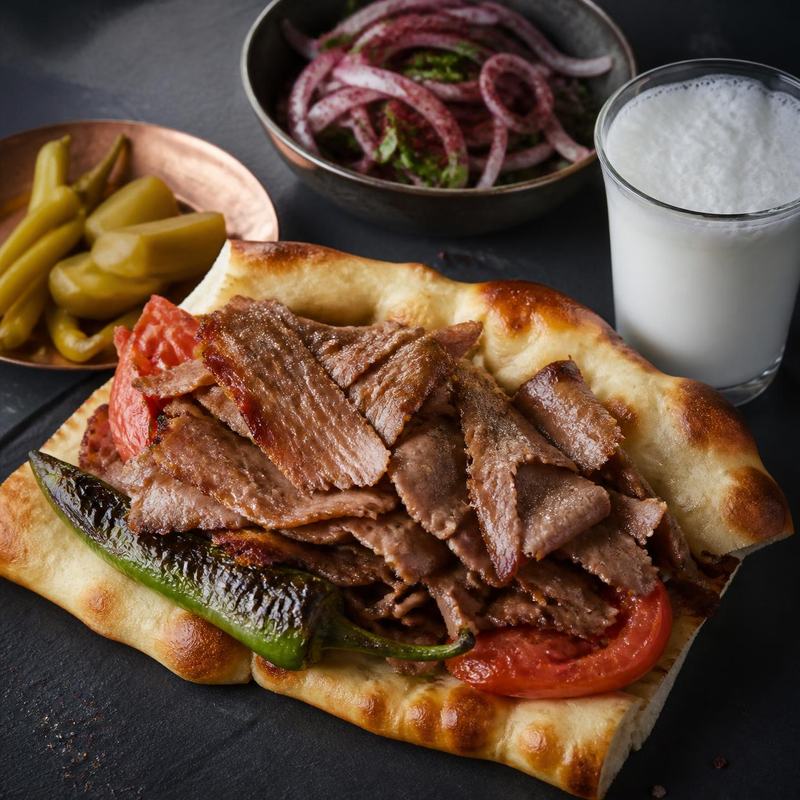
- Sandwich: Meat placed inside half-pide bread (yarım ekmek arası döner) or other types of bread.
- Dürüm (Wrap): Meat wrapped in a thin flatbread like lavash, typically with various vegetables and sauces.
- İskender Kebab: A famous variation from Bursa, featuring thinly sliced döner meat over pieces of pide bread, topped with a rich tomato sauce and sizzling melted butter, usually accompanied by yogurt.
Homemade döner (ev tipi döner) is commonly served with pide or lavash bread, fresh vegetables such as tomatoes, onions (often mixed with sumac and parsley), and lettuce, along with various sauces.
Neighborhood: Sultanahmet: Istanbul's Imperial Heart
Frequently asked questions
What does 'Döner Kebab' mean?
The name Döner Kebab translates from Turkish to "rotating kebab," referring to the vertical spit on which the meat is cooked.
When did the vertical döner spit originate?
The revolutionary vertical rotisserie method for döner kebab is generally agreed to have emerged in the mid-19th century in the Ottoman Empire.
Who invented the vertical döner spit?
The exact inventor is a subject of historical debate. Accounts credit İskender Efendi from Bursa (around the 1850s) or Hamdi Usta from Kastamonu (around 1830-1835). Some sources also mention Takiyüddin Efendi from the 16th century.
How did döner kebab become popular as a fast food sandwich?
While döner was sold in sandwich form in Istanbul from the mid-1960s, its global prominence as a fast-food sandwich variant came through Turkish immigrants in West Berlin in the 1970s, with Kadir Nurman often credited for introducing it there in 1972.
What types of meat are typically used in döner kebab?
Traditionally, döner kebab was made with lamb or mutton. Today, it can be prepared with beef, lamb, veal, chicken, turkey, or a mixture of these meats. Istanbul döner frequently uses a combination of beef and lamb, or solely beef.
What are the common ways döner kebab is served?
Döner kebab is served in several ways:
- Porsiyon (Plate): Sliced meat on a plate, often with rice, french fries, and salad.
- Sandwich: Meat served in half-pide bread (yarım ekmek arası döner) or other bread.
- Dürüm (Wrap): Meat wrapped in a thin flatbread like lavash, usually with vegetables and sauces.
- İskender Kebab: A special variation from Bursa, with meat over pide bread, topped with tomato sauce and butter, typically served with yogurt.
Can döner be made at home?
Yes, ev tipi döner (homemade döner) can be prepared at home. It involves marinating thinly sliced or ground meat, pressing it into a log, freezing it for easy slicing, and then cooking the slices in a pan or oven. It's often served with pide or lavash bread and fresh vegetables.
Written by Istanbook Editorial Team · Last updated September 1, 2026
A story from Istanbul, occasionally.
One story, one place, one taste, one recommendation.