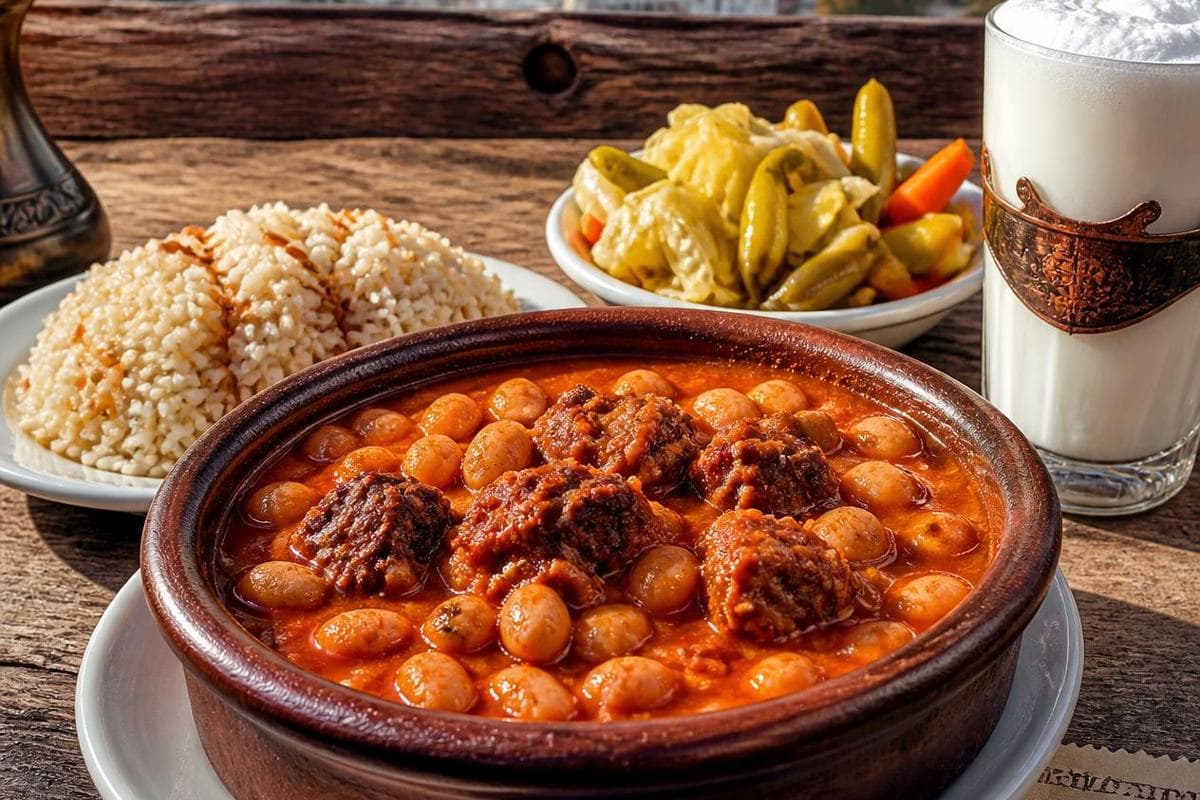
Kuru Fasulye (Stewed White Beans)
Kuru Fasulye: Turkish Stewed White Beans
Historical Origin
The journey of the white bean, a variety of Phaseolus vulgaris, began in Mesoamerica. It made its way into Ottoman cuisine sometime between the 16th and early 18th centuries, likely introduced through Spain following the European discovery of the Americas.
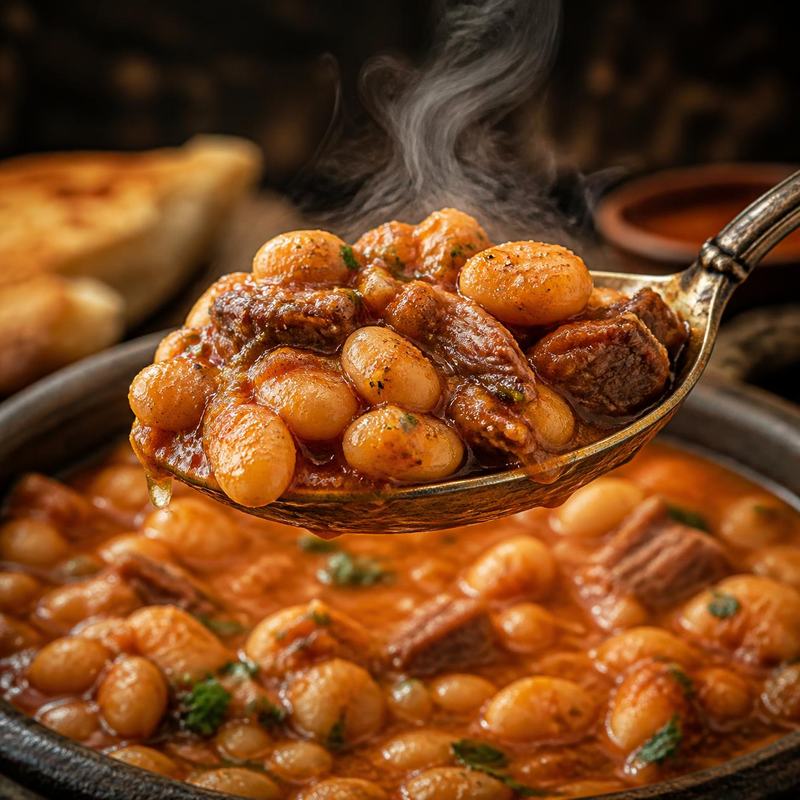
Initially, this dish was considered a delicacy, served predominantly in palace kitchens for special occasions. However, its affordability and high protein content quickly propelled it into widespread popularity among the general public. Over time, kuru fasulye became deeply ingrained in Turkish culinary culture, evolving with diverse cooking techniques across different regions.
Technique
Kuru fasulye, a staple in Turkish cuisine, is primarily a stewed bean dish. Its core ingredients typically include white beans, olive oil, onion, and either tomato paste or tomato sauce. While often prepared in a simple style, variations exist where additional ingredients are incorporated, such as various vegetables or different types of meat.
Regional differences in preparation are notable:
- The Black Sea style is known for being thick and buttery, frequently containing meat.
- The Anatolian or Erzincan style tends to be soupier and more tomato-based, often with less butter or meat.
Tradition
Kuru fasulye is widely recognized as an "Istanbul institution" and holds a significant place in the city's culinary landscape. It is a ubiquitous offering in esnaf lokantaları, which are traditional workers' restaurants celebrated for serving simple, hearty, and high-quality meals. In these establishments, kuru fasulye is often considered a fundamental part of daily sustenance.
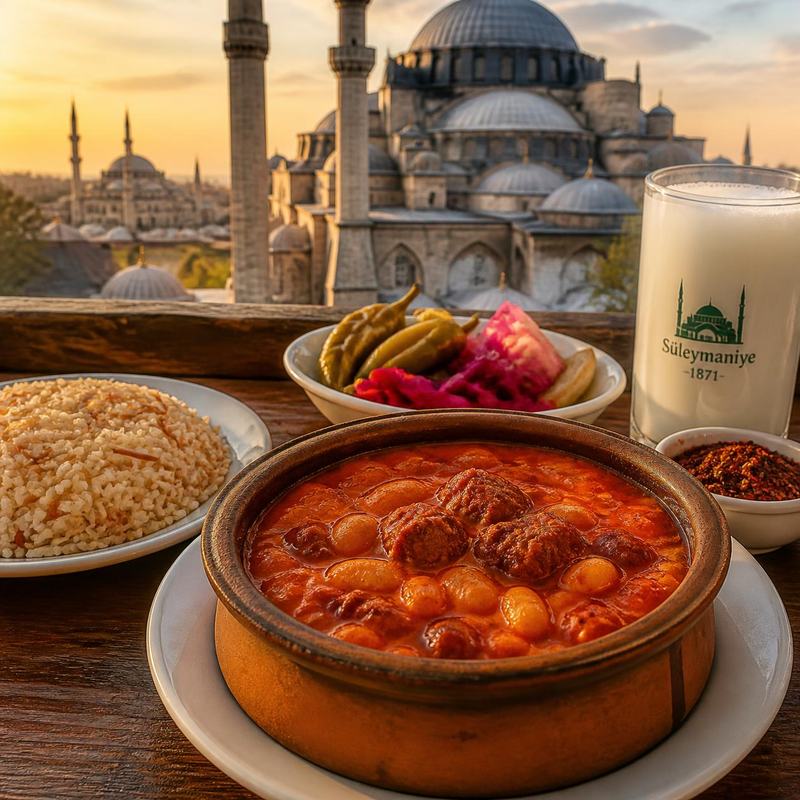
The dish is almost always enjoyed with a side of Sade pilav (plain rice) or bulgur, forming an iconic and inseparable culinary pairing in Turkish meals. This combination is frequently complemented by cacık (a yogurt and cucumber dip) and various pickles.
Istanbul is home to numerous esteemed fasülyecis (restaurants specializing in kuru fasulye), some with deep historical roots. Notable establishments include:
- Kurufasülyeci Ali Baba, located near the Süleymaniye Mosque Complex, which has been serving the dish since 1924.
- Hüsrev Lokantası
- Fasuli
- Çömlek Kuru Fasulye
- Tarihi Kalkanoğlu Pilavcısı
- Kardeşler Lokantası
- Bizce Kuru
- Nalia
- Kuru Fasulyeci Hasan Usta
Neighborhood: Süleymaniye: An Ottoman Legacy on the Golden Horn
Frequently asked questions
What is Kuru Fasulye?
Kuru fasulye is a traditional Turkish stewed white bean dish, often considered Turkey's national dish. It's a staple in Turkish cuisine, known for being hearty and economical.
What are the main ingredients in Kuru Fasulye?
The primary ingredients include white beans, olive oil, onion, and tomato paste or tomato sauce. Other ingredients like various vegetables or meats (such as lamb, beef, or pastırma) can also be added.
Are there different regional styles of Kuru Fasulye?
Yes, there are. The Black Sea style is typically thick, buttery, and may include meat. The Anatolian or Erzincan style is generally soupier and tomato-based, often with less butter or meat.
When did white beans arrive in Ottoman cuisine?
The white bean, originating in Mesoamerica, was introduced to Ottoman cuisine around the 16th or early 18th century, likely via Spain after the discovery of the Americas.
What is the cultural significance of Kuru Fasulye in Istanbul?
In Istanbul, Kuru fasulye is regarded as an "Istanbul institution" and everyday sustenance, especially prominent in esnaf lokantaları (traditional workers' restaurants). It reflects the city's rich culinary traditions and provides an economical source of protein.
What is Kuru Fasulye typically served with?
It is almost invariably served with Sade pilav (plain rice) or bulgur. This classic pairing is often accompanied by cacık (a yogurt and cucumber dip) and pickles.
Where can I find renowned Kuru Fasulye restaurants in Istanbul?
Istanbul boasts many famous fasülyecis (Kuru Fasulye specialists). Historic options include Kurufasülyeci Ali Baba near the Süleymaniye Mosque Complex, which has been serving the dish since 1924. Other notable places include Hüsrev Lokantası, Fasuli, Çömlek Kuru Fasulye, and Kuru Fasulyeci Hasan Usta.
Written by Istanbook Editorial Team · Last updated September 1, 2026
Sources (6)
- medium.com — medium.com
- turkishfoodie.com — turkishfoodie.com
- yemek.com — yemek.com
- tasteatlas.com — tasteatlas.com
- wikipedia.org — wikipedia.org
- culinarybackstreets.com — culinarybackstreets.com
A story from Istanbul, occasionally.
One story, one place, one taste, one recommendation.