Places
Basilica Cistern (Yerebatan Sarnıcı)
Overview
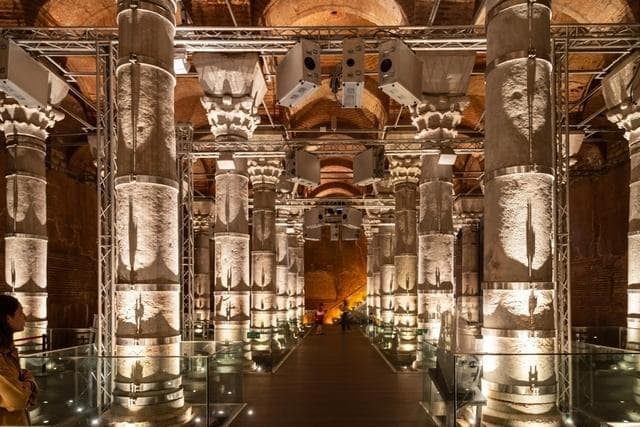
The Basilica Cistern, known in Turkish as Yerebatan Sarnıcı ('Sunken Palace Cistern'), is the largest of several hundred ancient cisterns that lie beneath the city of Istanbul, Turkey. Constructed in the 6th century during the reign of Byzantine Emperor Justinian I, it served as a vital underground water reservoir for Constantinople, supplying water to the Great Palace and surrounding imperial buildings. Today, it stands as an enduring testament to Byzantine engineering prowess and a captivating subterranean marvel, offering visitors a unique glimpse into the sophisticated infrastructure that sustained one of the ancient world's most prominent cities. Its atmospheric dim lighting and silent, echoing waters evoke a sense of mystery and historical depth.
History
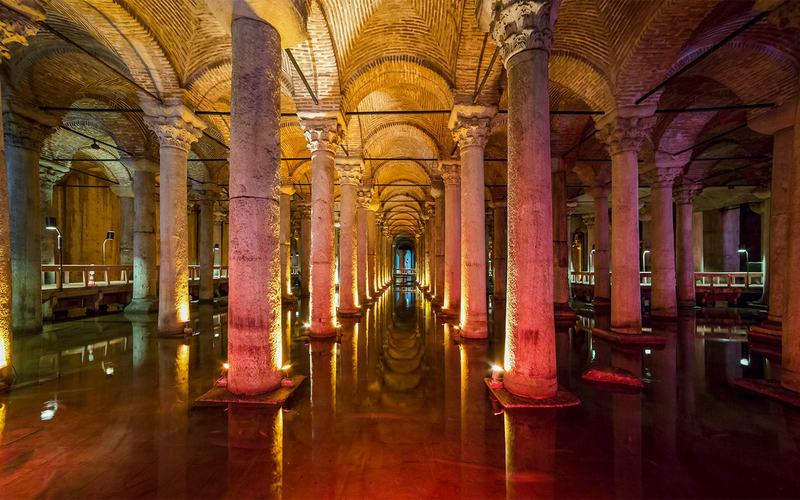
The construction of the Basilica Cistern dates back to the Byzantine period, specifically during the reign of Emperor Justinian I (527–565 CE). Its primary purpose was to provide a reliable water supply to the Great Palace of Constantinople, which was situated nearby, as well as other significant imperial structures, including the Hagia Sophia: A Layered History. The cistern was an integral part of Constantinople's extensive water infrastructure, which included aqueducts bringing water from distant sources, such as the Belgrade Forest, to various open-air and subterranean reservoirs across the city. Many underground cisterns were constructed throughout the Byzantine era to ensure a steady supply of potable water, especially during sieges, demonstrating a sophisticated approach to urban planning and resilience. Following the Ottoman conquest of Constantinople in 1453, the cistern's use diminished significantly. The Ottomans, preferring running water over stagnant reserves, eventually ceased using the Basilica Cistern, and it largely fell into obscurity. It was rediscovered in 1545 by the Dutch traveler Petrus Gyllius, who noted local residents drawing water and even fishing from it. Despite this rediscovery, it remained largely forgotten and neglected for centuries, often used as a dumping ground or simply left to decay. Modern awareness and appreciation of the cistern began to grow in the 20th century. Major restoration efforts were undertaken in the 1980s by the Istanbul Metropolitan Municipality, cleaning out tons of mud and debris and installing walkways for visitors. Further extensive restorations were completed in the early 21st century, enhancing its structural integrity and visitor experience. Today, the Basilica Cistern is a popular museum and a significant historical site in Sultanahmet: Istanbul's Imperial Heart, drawing attention to the incredible engineering achievements of the Byzantine Empire.
Architecture
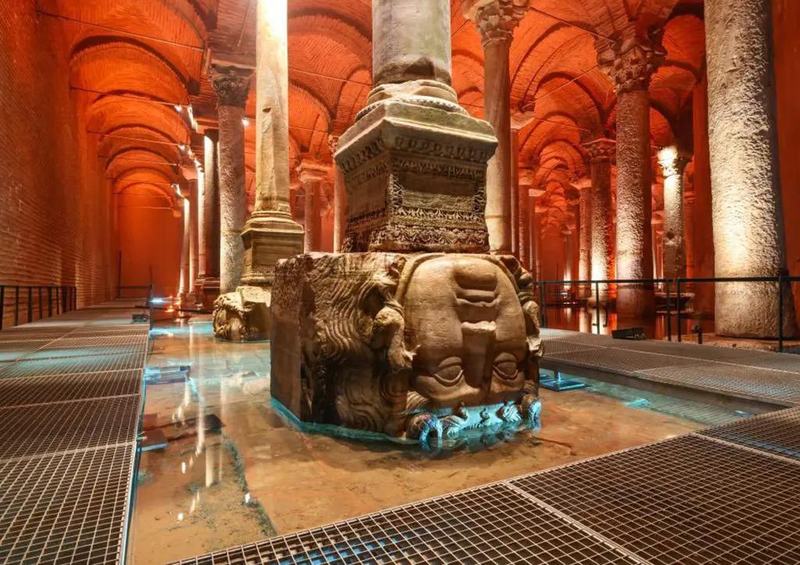
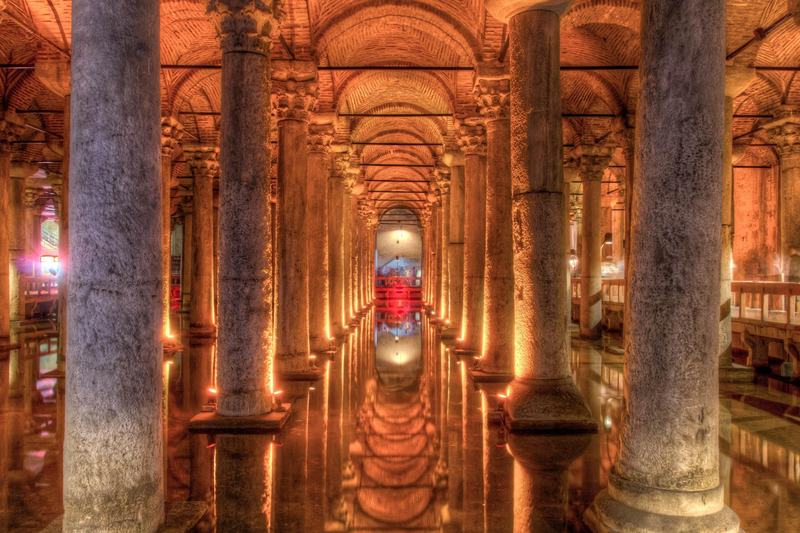
The Basilica Cistern is an extraordinary example of Byzantine hydraulic engineering and architectural design. It measures approximately 140 meters (459 feet) in length and 70 meters (230 feet) in width, covering an area of nearly 9,800 square meters (105,000 square feet). The cistern has a capacity to hold around 80,000 cubic meters (2.8 million cubic feet) of water. Its impressive roof is supported by a forest of 336 marble columns, each about 9 meters (30 feet) high. These columns are arranged in 12 rows of 28 columns, spaced 4.8 meters (15.7 feet) apart. A notable characteristic of the cistern's construction is the extensive use of spolia – recycled architectural elements from earlier structures. The columns exhibit various styles, including Doric, Ionic, and Corinthian, suggesting they were salvaged from older ruined buildings. Some columns are plain, while others are fluted or intricately carved. The capitals also vary, with some being Corinthian or Ionic, and others simpler block capitals. This practice of reusing materials was common in Byzantine construction, providing both efficiency and a unique aesthetic. The columns support cross vaults and arches made of brick, which in turn bear the weight of the ceiling. The walls of the cistern are 4.8 meters (15.7 feet) thick and constructed of brickwork, waterproofed with a special mortar made from crushed brick dust, ensuring the integrity of the reservoir. This robust construction allowed it to withstand centuries of seismic activity and neglect. The most famous elements within the cistern are two column bases carved with the likeness of Medusa, located in the northwest corner. One is inverted, and the other is placed on its side. While popular legend attributes their placement to a desire to ward off evil spirits, historical evidence suggests a more pragmatic explanation: they were likely repurposed from an earlier Roman structure and placed in these orientations simply to fit the columns' height and base requirements, demonstrating the utilitarian nature of spolia in this massive engineering project. The exact origin and original purpose of these Medusa heads remain a subject of historical interpretation rather than settled fact, contributing to the cistern's mysterious allure.
Practical Information
Opening Hours: Open daily, generally from morning until evening. Hours may vary on special days and during events.
Admission: Paid entry. Separate ticket arrangements may apply for Turkish citizens and foreign visitors.
Accessibility: The cistern is underground and is accessed via stairs and an elevator. Most of the main visitor route is accessible, but some areas may be difficult for wheelchair users due to the historic structure.
Visit Duration: Approximately 30–45 minutes.
Best Time to Visit: Early morning or later in the afternoon for a quieter experience.
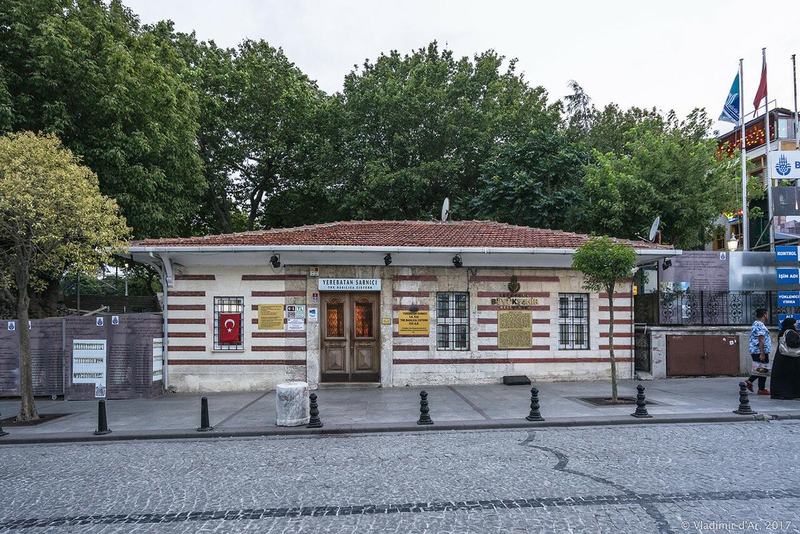
Location: Sultanahmet, Fatih — directly across from Hagia Sophia.
Visitor Note: The interior is dimly lit, humid, and has wet/slippery surfaces in some areas. Comfortable shoes are recommended.
Neighborhood: Sultanahmet: Istanbul's Imperial Heart
Frequently asked questions
What is the Basilica Cistern?
The Basilica Cistern, or Yerebatan Sarnıcı, is the largest of several ancient underground water reservoirs in Istanbul, built during the Byzantine Empire to supply water to Constantinople. It is now a popular historical site and museum.
When was the Basilica Cistern built?
It was constructed in the 6th century CE during the reign of Byzantine Emperor Justinian I (527–565 CE).
What was the original purpose of the Basilica Cistern?
Its primary purpose was to store and supply water to the Great Palace of Constantinople and other imperial buildings, including the Hagia Sophia: A Layered History, as part of the city's extensive water infrastructure.
How many columns are in the Basilica Cistern?
The cistern is supported by 336 marble columns, arranged in 12 rows of 28 columns each.
What are the Medusa heads in the Basilica Cistern?
The Medusa heads are two column bases featuring carvings of Medusa, found in the northwest corner of the cistern. One is inverted and the other is sideways, likely due to their reuse from an earlier Roman structure where their orientation was adapted to fit the cistern's structural needs.
Why is it called the 'Sunken Palace Cistern'?
Its Turkish name, Yerebatan Sarnıcı, translates to 'Sunken Palace Cistern' because of its vast subterranean dimensions and the multitude of columns that resemble an underground palace.
How was the Basilica Cistern rediscovered after the Ottoman conquest?
After falling into disuse by the Ottomans, it was rediscovered in 1545 by the Dutch traveler Petrus Gyllius, who noted locals drawing water from it.
Is the water still in the Basilica Cistern?
Yes, water is maintained in the cistern today, but at a shallow level, primarily for aesthetic purposes and to reflect the columns, enhancing its atmospheric appeal for visitors.
Written by Istanbook Editorial Team