Places
Column of Constantine (Çemberlitaş)
Overview
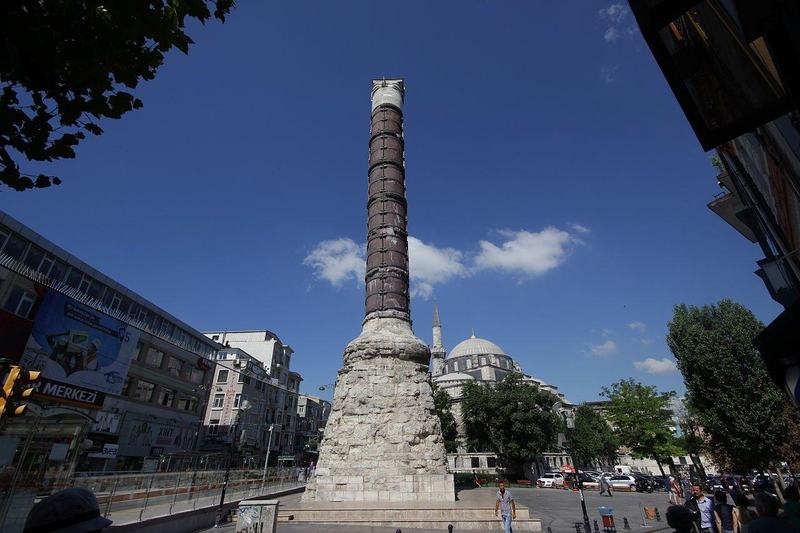
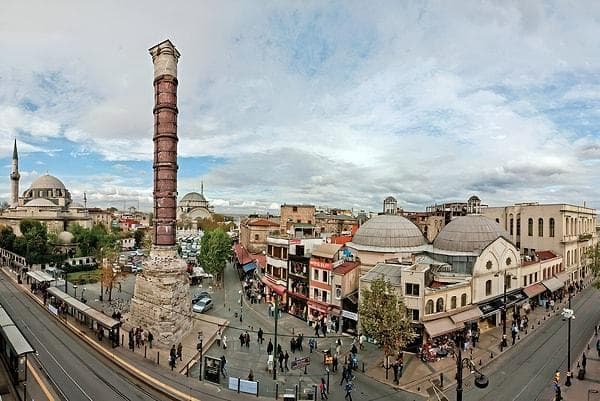
The Column of Constantine, known in Turkish as Çemberlitaş (meaning "Hooped Stone"), stands as one of Istanbul's most enduring monuments. Erected by Constantine the Great in 330 AD, it marked the dedication of Constantinople as the new capital of the Roman Empire, Nova Roma ("New Rome"). Located in the historic heart of the city, the column has witnessed millennia of urban transformation, from the grandeur of the Forum of Constantine to its integration into Ottoman Istanbul. Its current appearance, characterized by reinforcing iron bands, tells a layered story of imperial ambition, natural disasters, and continuous preservation efforts. Today, it remains a powerful symbol of Istanbul's deep historical roots, bridging the Roman, Byzantine, and Ottoman eras.
History
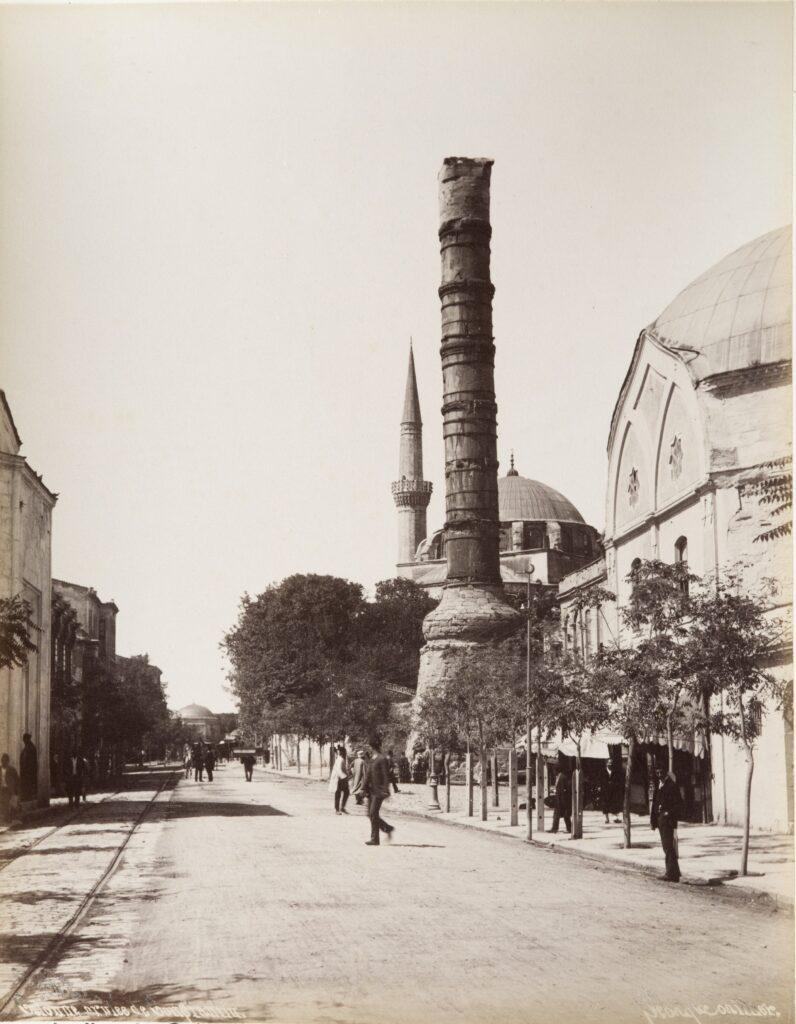
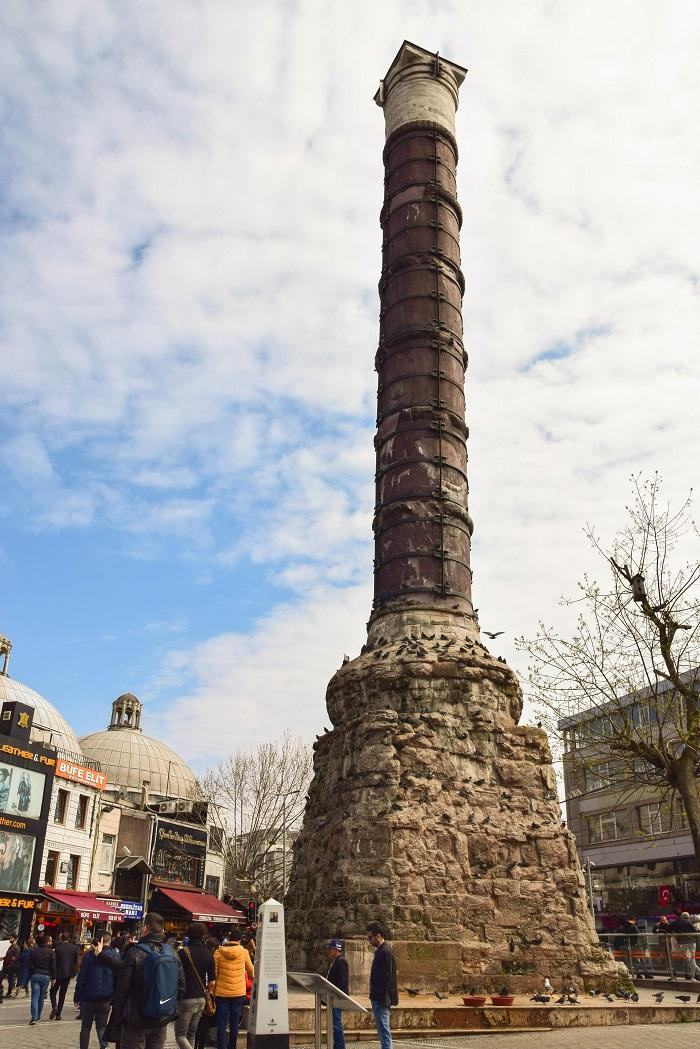
The Column of Constantine was a central feature of the Forum of Constantine, one of the grand public spaces established by Emperor Constantine the Great to rival the forums of Rome. Dedicated on May 11, 330 AD, alongside the city itself, the column served as a potent symbol of Constantine's new imperial capital. Originally, the column was topped by a colossal bronze statue of Constantine himself, depicted either as Apollo or Helios (the sun god), holding a globe. This statue's pose and attributes symbolized not only imperial power but also the city's aspirations as a new center of the world. Monumental columns, common in the Roman world, functioned as powerful expressions of imperial authority and propaganda, commemorating victories and signifying the emperor's divine favor. Early Christian legends, though unsubstantiated by documented sources, claim that the column's base contained sacred relics, including pieces of the True Cross and the baskets from the miracle of the loaves and fishes, intended to sanctify the new capital. Throughout the Byzantine period, the column suffered numerous challenges. It was frequently struck by lightning and endured several fires, leading to damage to its porphyry drums and the statue. A severe storm in 1106 AD caused the statue of Constantine and its capital to fall from the column. Emperor Manuel I Komnenos subsequently repaired the column, placing a large cross atop it and adding a dedicatory inscription. The column's base was also reinforced during this period to ensure its stability. Following the Ottoman conquest of Constantinople in 1453, the column, though scarred, continued to stand. Its original open forum setting gradually gave way to new urban structures, and it became embedded within the fabric of Ottoman Istanbul. A devastating fire in 1779 severely damaged the column, prompting a significant restoration effort by Sultan Abdülhamid I. During this restoration, the column's damaged joints were reinforced with prominent iron hoops, giving it its popular Turkish name, Çemberlitaş, meaning "Hooped Stone". This intervention permanently altered its appearance, transforming it from a smooth, monumental shaft into the distinctly banded structure visible today.
Architecture
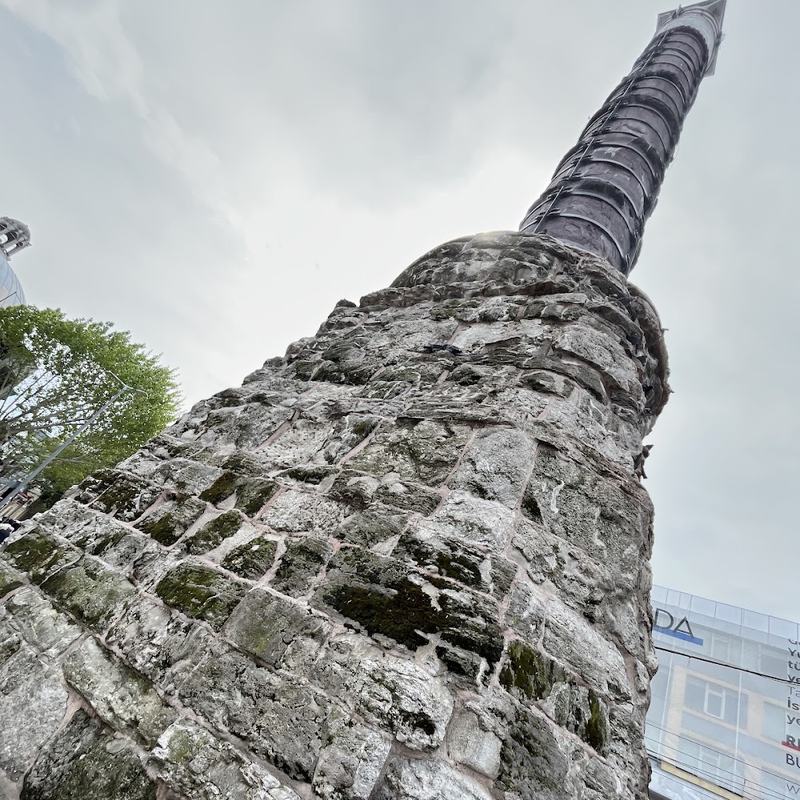
The Column of Constantine is primarily constructed from large drums of Egyptian porphyry, a highly prized purple-red igneous rock. Originally, it consisted of eight porphyry drums, atop which rested a Corinthian capital, surmounted by the colossal bronze statue of Emperor Constantine the Great. The column reached an estimated height of approximately 50 meters, including its pedestal and statue, making it an imposing landmark within the Forum of Constantine. Following the fall of its original statue in 1106 AD, a cross replaced the imperial effigy. The most significant architectural change occurred after the 1779 fire, when Sultan Abdülhamid I ordered the column's porphyry drums to be encased in protective masonry and reinforced with the distinctive iron bands, which are visible today. This protective measure, while preserving the column, also significantly altered its original aesthetic, giving it its iconic "hooped" appearance and reducing its overall perceived height.
Practical Information
Location: Molla Fenari, Vezirhan Cd. No:16 D:18, Fatih, Istanbul.
Opening hours: Open 24 hours, every day. The column stands in a public square and can be viewed from outside at any time.
Admission: Free. There is no entrance ticket.
Visit duration: Around 15–20 minutes is enough to see the column and surrounding square, although it is easy to combine with nearby attractions.
Accessibility: The surrounding square and pedestrian areas are generally wheelchair accessible, although the historic streets around Çemberlitaş can be uneven and busy.
Public transport: The easiest option is the T1 tram line. Get off at Çemberlitaş station, immediately beside the monument.
Best time to visit: Early morning or evening, when the square is generally less crowded. The illuminated column also makes an interesting evening photo.
Photography: Photography is unrestricted from the public square. For the best perspective, include the surrounding tram line and historic streets in the frame.
Facilities: Cafés, restaurants, shops and public transport are available nearby.
Tip: The monument was erected around 330 AD to commemorate Constantinople's dedication as the new capital of the Roman Empire. Its famous iron hoops gave it the Turkish name Çemberlitaş, meaning roughly “hooped stone.”
Frequently asked questions
What is the Column of Constantine?
The Column of Constantine, also known as Çemberlitaş, is an ancient Roman monumental column in Istanbul, Turkey, erected by Emperor Constantine the Great to mark the founding of Constantinople as the new capital of the Roman Empire.
When was the Column of Constantine built?
The column was dedicated on May 11, 330 AD, coinciding with the official dedication of Constantinople as Nova Roma (New Rome).
What was the column's original purpose?
It served as a central monument in the Forum of Constantine, symbolizing the new imperial capital and featuring a colossal statue of Emperor Constantine the Great himself, showcasing imperial power and the city's new status.
Why is it called Çemberlitaş?
The Turkish name "Çemberlitaş" means "Hooped Stone." This refers to the prominent iron bands that reinforce the column, which were added during a major restoration after a devastating fire in 1779.
What happened to the original statue on top of the column?
The original bronze statue of Emperor Constantine the Great fell from the column during a severe storm in 1106 AD. It was later replaced by a cross during the Byzantine era.
What material is the Column of Constantine made from?
The column is primarily constructed from large drums of porphyry, a distinctive purple-red igneous rock that was highly valued in the Roman Empire.
Can visitors go inside the Column of Constantine?
No, the Column of Constantine is a solid monumental structure and does not have an interior accessible to visitors. It can only be viewed from the outside.
What is the historical significance of the Column of Constantine?
It is a crucial monument that signifies the foundation of Constantinople as the Roman Empire's new capital, reflecting imperial power, urban planning, and the continuity of history from Roman and Byzantine to Ottoman periods in Istanbul.