Places
Dolmabahçe Palace: A Symbol of Ottoman Modernization
Overview
Nestled on the European shore of the Bosphorus, Dolmabahçe Palace (Dolmabahçe Sarayı) stands as a monumental emblem of the Ottoman Empire's profound transformation in the 19th century. Built during an era of significant Western influence and reform, this opulent palace served as the primary imperial residence, replacing the more traditional and secluded Topkapı Palace: Center of the Ottoman Empire. Its architecture, a lavish fusion of European and Ottoman styles, reflects a deliberate shift in imperial representation, showcasing a desire to project a modern, sophisticated image to the world, aligned with contemporary European monarchies. Today, it remains a powerful symbol of Istanbul's layered history, intimately connected to both the twilight of the Ottoman era and the dawn of the Turkish Republic.
History
The construction of Dolmabahçe Palace commenced in 1843 under the reign of Sultan Abdülmecid I and was completed in 1856. The decision to abandon Topkapı Palace, which had served as the imperial residence for centuries, was driven by several factors. Topkapı, with its sprawling courtyards, kiosks, and emphasis on privacy and tradition, was increasingly perceived as antiquated and lacking the grandeur and modern amenities expected of a 19th-century European court. Sultan Abdülmecid I sought a residence that would better reflect the Ottoman Empire's modernization efforts and its engagement with Europe, providing a more accessible and outward-facing symbol of imperial power. The palace was intended to embody the spirit of the Tanzimat reforms, a period of reorganization marked by efforts to secularize and westernize the administration, military, and society. Located on the Bosphorus in the Beşiktaş: Istanbul's Bosphorus Crossroads neighborhood, the palace's waterfront setting was chosen to align with the aesthetic trends of European royal residences, offering expansive views and a prominent public facade. Following Abdülmecid I, several Ottoman sultans resided here, including Abdülaziz, Abdülhamid II, Mehmed V Reşad, and Mehmed VI Vahideddin, until the dissolution of the Ottoman Empire. After the establishment of the Turkish Republic, Dolmabahçe Palace served as a presidential residence for Mustafa Kemal Atatürk. It was here that Atatürk spent his final years and passed away on November 10, 1938. This connection has cemented its place in the national consciousness as a site of profound historical significance, marking both the end of an empire and the beginning of a republic.
Architecture
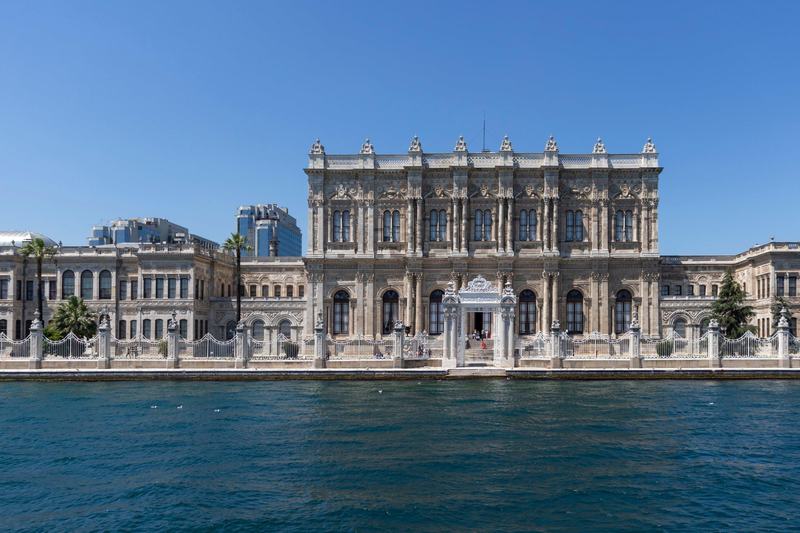
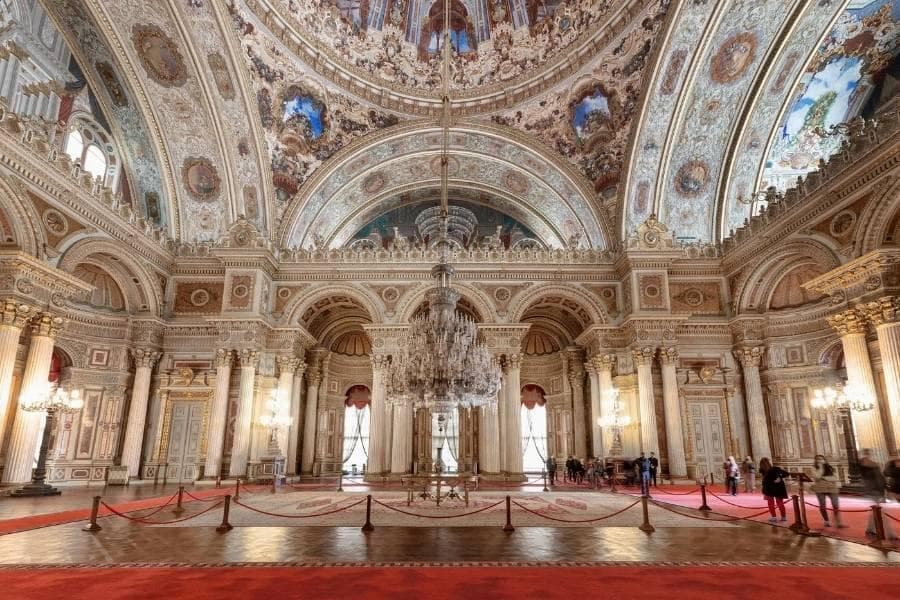
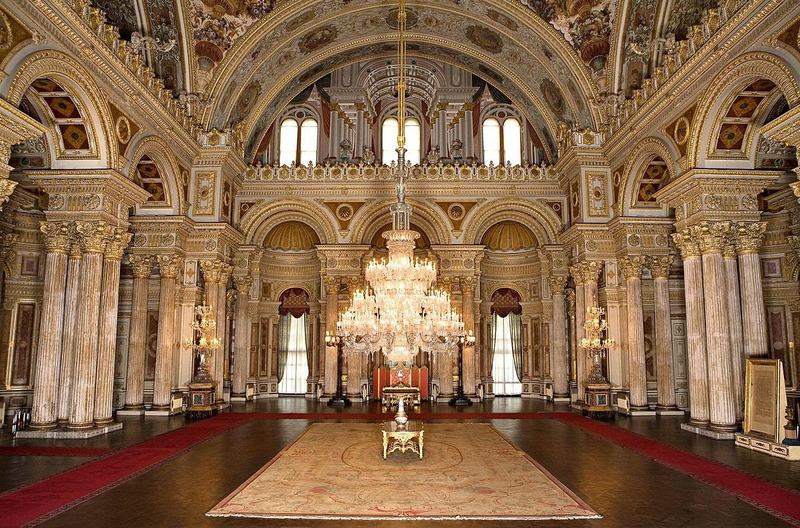
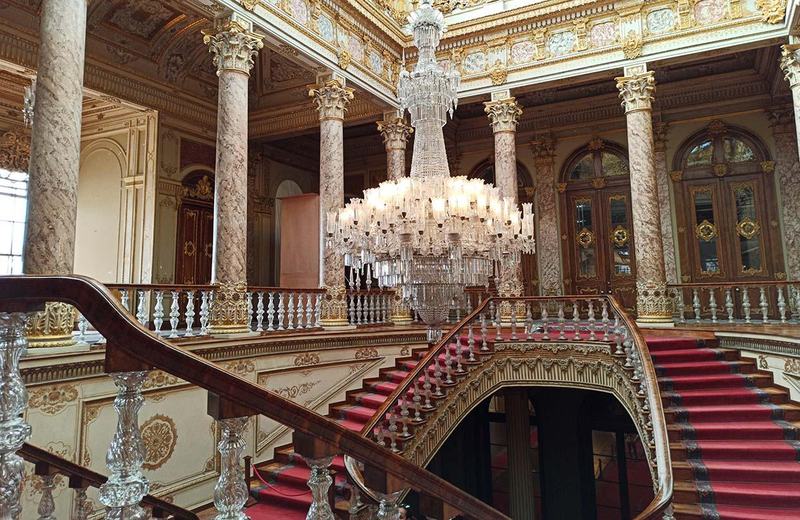
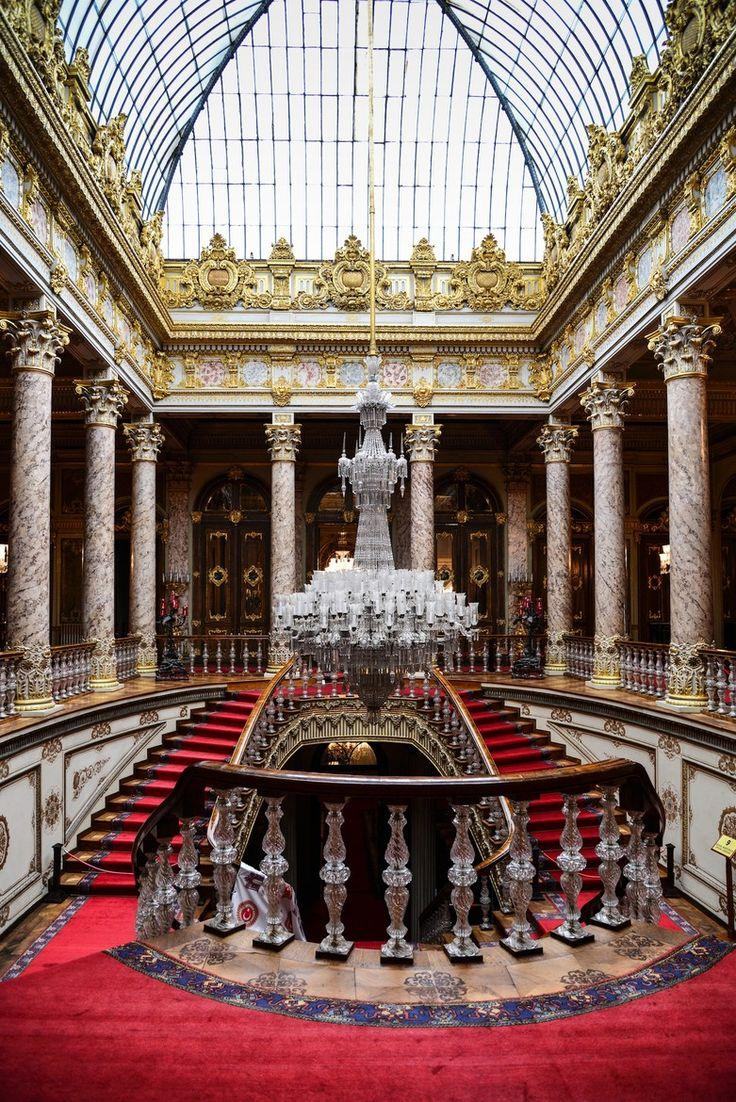
The architectural design of Dolmabahçe Palace is primarily attributed to members of the Balyan family, prominent Armenian court architects, with Garabet Balyan and his son Nigoğayos Balyan being the chief designers. The palace is a magnificent example of the Ottoman Baroque, Rococo, and Neoclassical styles, consciously departing from the classical Ottoman architectural traditions seen in earlier imperial structures. Spanning an immense area of 45,000 square meters, it comprises 285 rooms, 46 halls, 6 hammams (Turkish baths), and 68 lavatories. Its ceremonial heart is the Muayede Salonu, or Ceremonial Hall, featuring a spectacular 36-meter-high dome and a colossal 4.5-ton Bohemian crystal chandelier, reportedly a gift from Queen Victoria. The interior decoration is characterized by an unparalleled display of opulence, incorporating vast quantities of gold, marble, and crystal. The Crystal Staircase, with its Baccarat crystal balusters, is another testament to this lavish aesthetic. The palace also houses a significant collection of European paintings, including works by Ivan Aivazovsky, and features exquisite Hereke carpets and Zuber wallpaper, demonstrating the empire's embrace of European luxury crafts. The extensive gardens, meticulously landscaped in a European style, extend along the Bosphorus, offering a seamless blend of imperial residence and natural beauty. This synthesis of Western grandeur with subtle Ottoman sensibilities aimed to create a 'modern' palace suitable for a transforming empire.
Practical Information
Location: Vişnezade, Dolmabahçe Caddesi, Beşiktaş, Istanbul.
Opening hours: Tuesday–Sunday, 09:00–17:00. The palace is closed on Mondays. The ticket office closes at 17:00.
Admission: Paid entry. Different ticket categories are available depending on which sections are visited. Museum Pass is not valid for the Selamlık section of Dolmabahçe Palace.
Visit duration: Allow approximately 1.5–2.5 hours for a proper visit, especially if you want to explore the palace gardens and associated collections.
Accessibility: Because this is a historic palace with preserved interiors, full accessibility should not be assumed throughout the complex. Visitors with mobility limitations should check accessibility arrangements with Milli Saraylar before visiting.
Photography: Photography and video recording are not permitted inside the palace's visitor interiors. Non-professional photography is permitted outdoors in the gardens, subject to the site's rules.
Children: Children aged 0–6 can visit individually with a parent or guardian, although school groups in this age range are subject to restrictions because of the palace's architecture.
Best time to visit: Weekday mornings are generally preferable for a quieter experience. Avoid arriving close to closing time because the palace complex requires considerable time to explore.
Public transport: The palace is easily reached from central Beşiktaş by walking or public transport. It is also close to Dolmabahçe tram and bus connections.
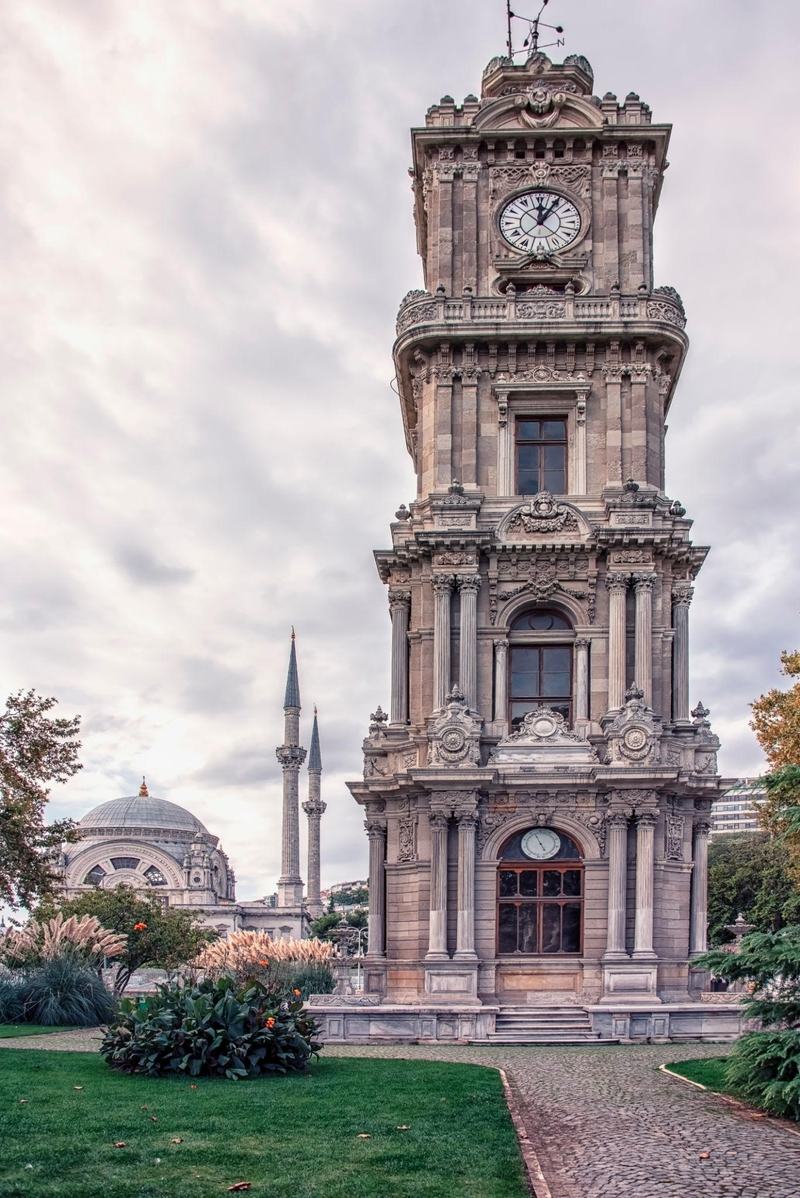
Facilities: The palace complex includes visitor facilities, and the Saat Kule Kafeterya in the exterior garden is open 09:00–22:30.
Tip: Dolmabahçe is particularly important for understanding the Ottoman Empire's 19th-century transformation. Its European-influenced architecture, monumental ceremonial spaces and Bosphorus setting make it very different from the earlier Ottoman palace tradition.
Neighborhood: Beşiktaş: Istanbul's Bosphorus Crossroads
Frequently asked questions
When was Dolmabahçe Palace built and by whom?
Dolmabahçe Palace was built between 1843 and 1856 during the reign of Sultan Abdülmecid I. The chief architects were Garabet Balyan and his son Nigoğayos Balyan, members of the prominent Balyan family.
Why did the Ottoman court move from Topkapı Palace to Dolmabahçe Palace?
The move from Topkapı Palace was a symbolic act reflecting the Ottoman Empire's desire to modernize and align itself with European monarchies in the 19th century. Sultan Abdülmecid I sought a more contemporary, European-style residence that could better project an image of imperial power and sophistication, replacing Topkapı's more traditional and secluded atmosphere.
What architectural styles can be seen in Dolmabahçe Palace?
Dolmabahçe Palace exhibits a lavish blend of European architectural styles, including Ottoman Baroque, Rococo, and Neoclassical elements. This fusion showcases a departure from classical Ottoman architecture, reflecting the empire's modernization efforts.
What is the significance of Dolmabahçe Palace in the modern Turkish Republic?
Dolmabahçe Palace holds significant importance as the residence where Mustafa Kemal Atatürk, the founder of the Turkish Republic, lived during his visits to Istanbul and where he passed away in 1938. It symbolizes the transition from the Ottoman Empire to the modern Turkish state.
What are some notable features of Dolmabahçe Palace's interior?
The interior is renowned for its opulence, featuring the grand Muayede Salonu (Ceremonial Hall) with its large Bohemian crystal chandelier, the elegant Crystal Staircase with Baccarat crystal balusters, and extensive use of gold, marble, Hereke carpets, and European art.
How does Dolmabahçe Palace relate to the Bosphorus?
The palace's strategic location directly on the European shore of the Bosphorus was a deliberate choice to enhance its grandeur and public visibility. Its waterfront setting allowed for impressive ceremonial arrivals by sea and offered panoramic views, mimicking the prominent positioning of European royal residences.
Written by Istanbook Editorial Team