Places
Grand Bazaar: Istanbul's Historic Covered Market
Overview
The Grand Bazaar, known in Turkish as Kapalıçarşı (meaning 'Covered Market'), is one of the world's oldest and largest covered markets, a labyrinthine heart of commerce that has pulsed at the center of Istanbul for centuries. Far more than just a marketplace for goods, it has historically served as a vibrant economic and social institution, a testament to Istanbul's enduring role as a crossroads of trade and culture. Its enclosed structure houses thousands of shops, `hans` (caravanserais), and workshops, offering a tangible link to the city's rich past. The bazaar's historical significance lies in its complex organization, diverse communities of merchants and artisans, and its continuous adaptation through centuries of change, including natural disasters and urban development.
History
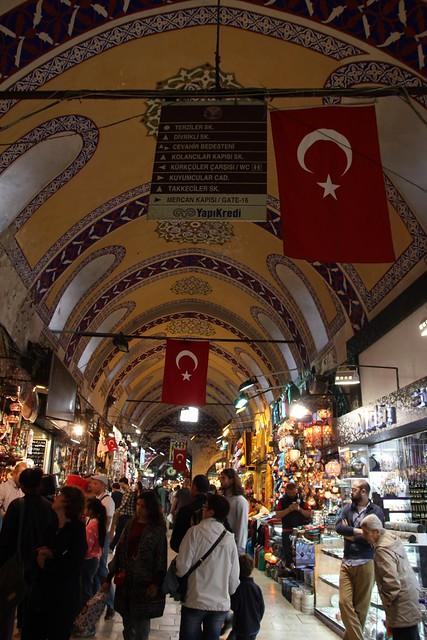
The origins of the Grand Bazaar can be traced back shortly after the Ottoman conquest of Constantinople in 1453. Its foundational structures, the İç Bedesten (Inner Covered Market) and the Sandal Bedesteni (Sandal Covered Market), were established under Sultan Mehmed II to generate revenue for the Hagia Sophia's upkeep and serve as a center for textiles and luxury goods respectively. These initial stone-built structures quickly attracted merchants, and over time, a network of streets and smaller shops began to grow around them, eventually becoming covered. This development transformed it into a sprawling commercial complex rather than just isolated markets. The bazaar's growth mirrored Istanbul's rise as a global trading hub, connecting East and West. By the 17th century, it had achieved its largely covered, labyrinthine form. Within its walls, commerce was highly organized by guilds, with specific streets and sections dedicated to particular trades, from goldsmiths and jewelers to carpet weavers and leather workers. Different communities, including Ottoman Turks, Greeks, Armenians, and Jews, historically operated within the marketplace, contributing to its diverse economic and social fabric. The Grand Bazaar was not immune to the challenges of time; it suffered numerous fires and earthquakes throughout its history, notably major fires in 1515, 1701, and 1894, and a significant earthquake in 1766. Each event led to extensive rebuilding and architectural modifications, often with support from ruling sultans, ensuring its resilience and continued function. These rebuilding efforts contributed to its layered architectural character, blending various Ottoman styles. Over centuries, it evolved from a primary Ottoman commercial institution, vital for the city's economy, into one of Istanbul's most recognizable contemporary landmarks, drawing millions of visitors annually while still retaining its commercial essence.
Architecture
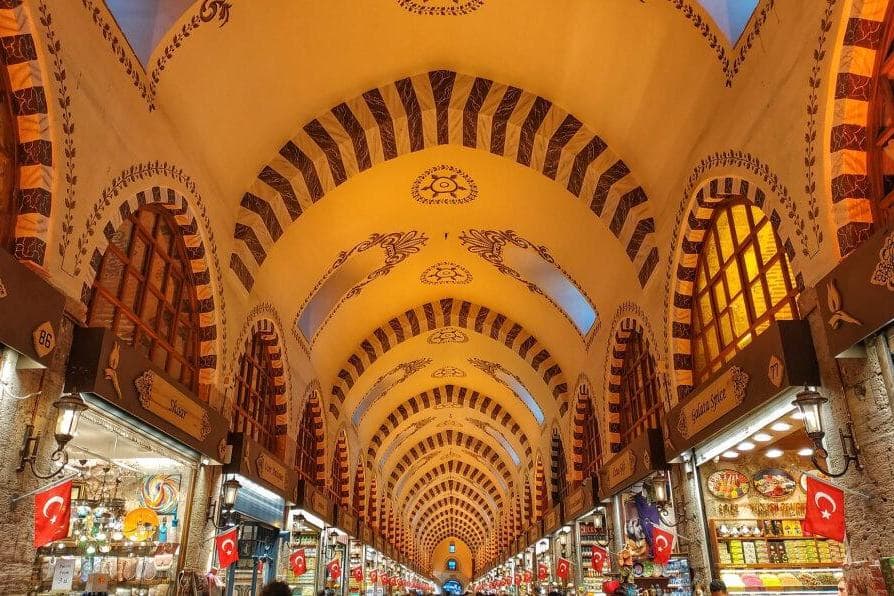
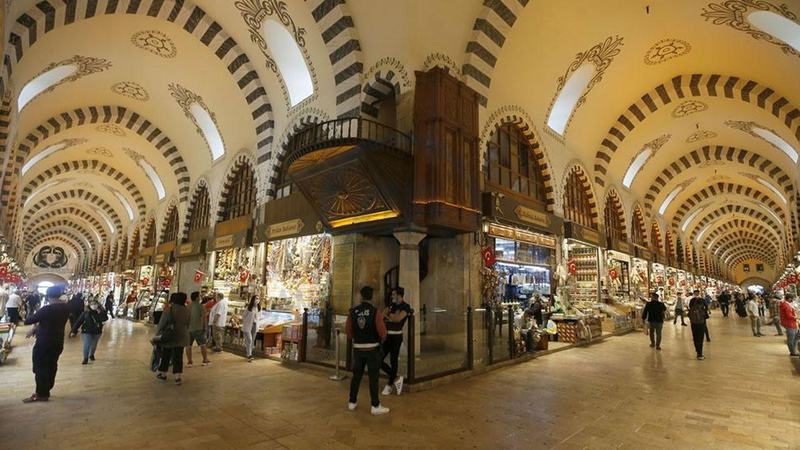
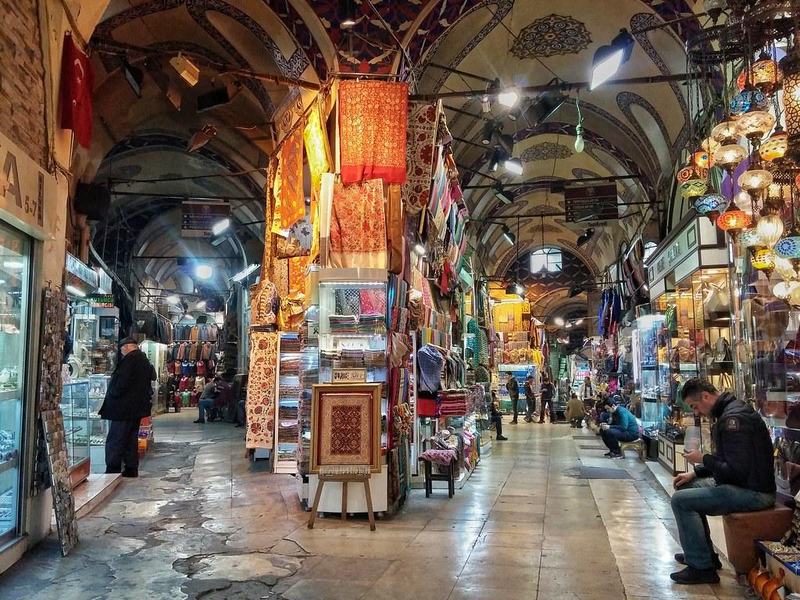
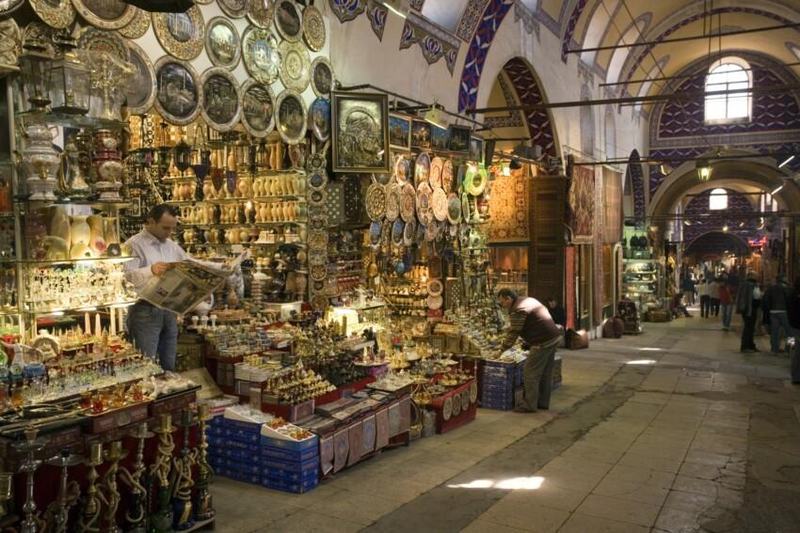
The architecture of the Grand Bazaar is a captivating blend of practical Ottoman commercial design and decorative artistry, reflecting its continuous evolution over more than five centuries. Its most defining characteristic is its sprawling, covered layout, consisting of a vast network of vaulted passages and domed ceilings, which protect merchants and goods from the elements and create an immersive, almost subterranean, shopping experience. The two original bedestens, the İç Bedesten and the Sandal Bedesteni, stand as sturdy, stone-built core structures, distinguished by their robust construction and multiple domes. Surrounding these are the numerous covered streets, each lined with small, often standardized shop units (called `dükkan` in Turkish) that open directly onto the thoroughfares.
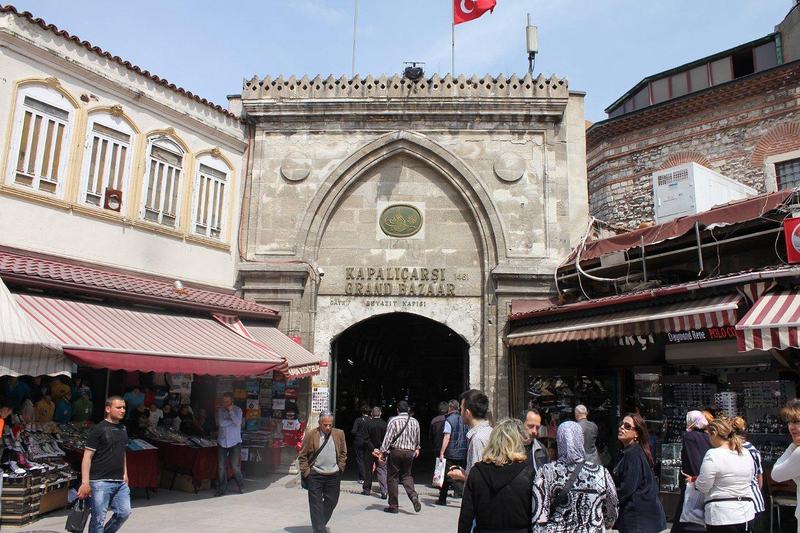
The bazaar also integrates multiple `hans` (caravanserais), which are inner courtyards surrounded by multi-story structures, historically providing lodging and storage for visiting merchants and their goods. These `hans` often feature their own gates and a more open, yet still secure, layout. The overall aesthetic is characterized by the repetitive rhythm of arches, vaults, and domes, often adorned with traditional Ottoman decorative elements, including intricate tilework, painted motifs, and calligraphic details, though much of the original ornamentation has been lost or restored over time due to fires and earthquakes. Its numerous gates, each with its own historical significance, serve as impressive entrances and exits to the vast complex.
Practical Information
Location: Beyazıt, Kalpakçılar Caddesi No: 22, Fatih, Istanbul.
Opening hours: Monday–Saturday, approximately 08:30–19:00. Closed on Sundays and during the first days of major religious holidays. Individual shops may have slightly different hours.
Admission: Free. There is no entrance ticket for the bazaar itself.
Visit duration: Allow 1–2 hours for a good introduction, although you can easily spend half a day exploring the shops, hans and side streets.
Accessibility: Partially accessible. The main corridors are relatively wide and mostly flat, but historic stone flooring can be uneven, some entrances have steps, and side alleys can be narrow. Crowds can also make wheelchair access difficult.
Best time to visit: Weekday mornings, particularly before 11:00, are generally quieter. The bazaar becomes considerably busier around midday.
Public transport: The easiest option is the T1 tram to Beyazıt–Kapalıçarşı station, which is a short walk from the bazaar.
Photography: Photography is generally possible in the public areas, but ask permission before photographing shopkeepers, workshops or private spaces.
Shopping: Expect jewelry, carpets, textiles, leather goods, ceramics, antiques, souvenirs and traditional crafts. Bargaining is a normal part of shopping in many of the bazaar's stores.
Facilities: Cafés, restaurants, ATMs, exchange offices and public toilets are available in and around the bazaar.
Tip: Don't rush through the main streets. The real character of the Grand Bazaar is often found in its hans, quieter side streets and historic bedestens. The complex has more than 60 covered streets and thousands of shops.
Historical note: The bazaar developed after the Ottoman conquest of Constantinople and was expanded substantially during the Ottoman period. The Ministry of Culture describes its present form as dating to the early 18th century, following centuries of expansion, fires and restoration.
Neighborhood: Eminönü: Istanbul's Historic Port and Trading Hub
Frequently asked questions
What is the historical significance of the Grand Bazaar in Istanbul?
The Grand Bazaar, or Kapalıçarşı, is historically significant as one of the world's oldest and largest covered markets, established after the Ottoman conquest of Constantinople. It served as a vital economic hub, facilitating trade between East and West, generating revenue for imperial endowments, and acting as a center for guild-based craftsmanship and diverse commercial activities. Its continuous operation for over five centuries reflects Istanbul's enduring role as a global trading city. (status: verified)
How did the Grand Bazaar develop after the Ottoman conquest?
Following the Ottoman conquest in 1453, Sultan Mehmed II initiated the construction of the İç Bedesten and Sandal Bedesteni, which formed the nucleus of the bazaar. These initial structures were for essential goods and luxury items, respectively. Over time, the area around these bedestens became covered, expanding into a vast network of streets, shops, and `hans` (caravanserais), developing into the extensive covered market seen today. (status: verified)
What role did guilds play in the Grand Bazaar's operation?
Guilds (lonca) were central to the Grand Bazaar's organization, with specific streets and sections historically dedicated to particular trades like goldsmiths, jewelers, carpet merchants, and leatherworkers. These guilds regulated quality, prices, and training, ensuring craftsmanship standards and fostering a strong sense of community among artisans and merchants. (status: verified)
Which communities historically operated within the Grand Bazaar?
Historically, the Grand Bazaar was a vibrant melting pot where various communities, including Ottoman Turks, Greeks, Armenians, and Jews, conducted business side-by-side. Each community contributed to the bazaar's diverse economic and social fabric, specializing in different trades and maintaining distinct cultural traditions within the market's framework. (status: verified)
How did natural disasters impact the architecture of the Grand Bazaar?
The Grand Bazaar endured numerous fires and earthquakes throughout its history, such as significant fires in 1515, 1701, and 1894, and a major earthquake in 1766. Each disaster necessitated extensive rebuilding and architectural modifications. These events shaped its layered appearance, with subsequent restorations and repairs often incorporating the architectural styles and construction techniques prevalent at the time. (status: verified)
What kind of goods were historically traded in the Grand Bazaar?
Historically, the Grand Bazaar was a hub for a wide array of goods, ranging from everyday necessities to exotic luxury items. This included textiles, spices, precious metals, jewelry, carpets, leather goods, arms, and antiques. The initial bedestens, for example, specialized in textiles and luxury goods like precious stones and gold. (status: verified)
Written by Istanbook Editorial Team