Places
Hagia Irene: Istanbul's Ancient Imperial Church of Holy Peace
Overview
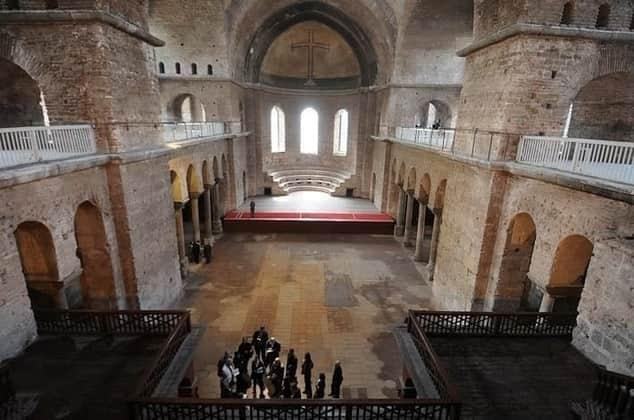
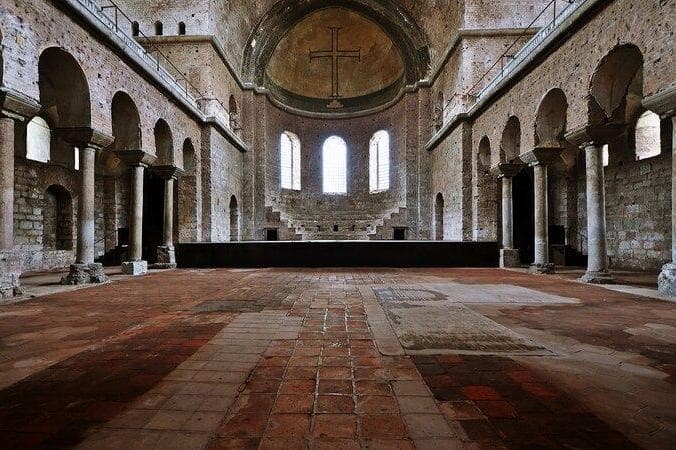
Hagia Irene (Aya İrini in Turkish), meaning "Holy Peace," stands as one of Istanbul's most significant yet often overlooked Byzantine churches. Nestled within the outer courtyard of Topkapı Palace: Center of the Ottoman Empire in Sultanahmet: Istanbul's Imperial Heart, this venerable structure predates its grander neighbor, Hagia Sophia: A Layered History, offering a distinct narrative of early Christian Constantinople and the city's imperial ambitions. Unlike many other Byzantine churches in the city, Hagia Irene was not converted into a mosque after the Ottoman conquest, preserving much of its original form and revealing a unique trajectory through centuries of Istanbul's history. From its origins as a major patriarchal church to its later roles as an imperial arsenal and one of Turkey's first museums, Hagia Irene embodies the multi-layered heritage of Istanbul.
History
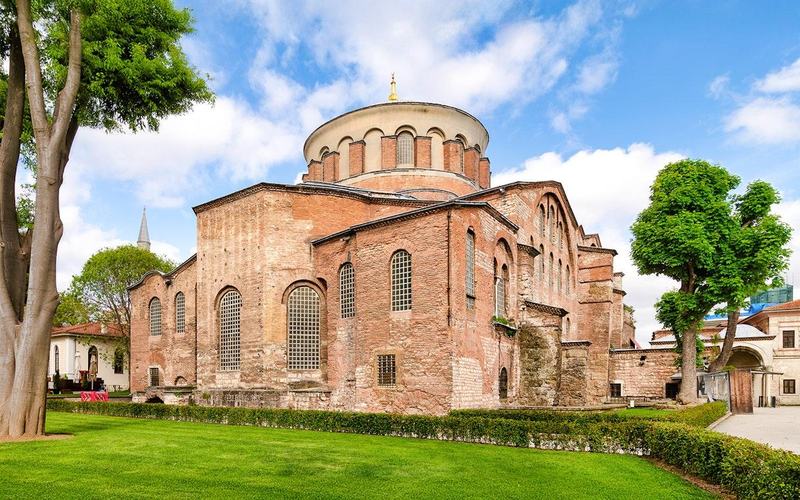
The foundations of Hagia Irene date back to the 4th century, believed to have been established during the reign of Constantine the Great, making it one of Constantinople's earliest churches. It served as the patriarchal church of the city before the completion of the first Hagia Sophia: A Layered History. Its proximity to the Imperial Palace underscored its importance within the Byzantine capital's religious and political landscape. The church suffered significant damage during the Nika Revolt of 532 AD, a catastrophic uprising that also devastated the first Hagia Sophia: A Layered History. Emperor Justinian I rebuilt Hagia Irene, completing it alongside his new Hagia Sophia in the 6th century. A major earthquake in 740 AD caused further destruction, leading to a substantial reconstruction under Emperor Constantine V. This 8th-century rebuilding period left an indelible mark on Hagia Irene's interior, notably through its Iconoclastic-era mosaics. It hosted the Second Ecumenical Council in 381 AD, solidifying its early importance in Christian doctrine. Following the Ottoman conquest of Constantinople in 1453 by Sultan Mehmed II, Hagia Irene was spared conversion into a mosque, likely due to its placement within the secure precincts of the newly established Topkapı Palace: Center of the Ottoman Empire complex. Instead, it was repurposed as an armory (Cebehane) for the Janissaries, the elite infantry units of the Ottoman army, storing weapons and military equipment. In the 19th century, its historical significance was recognized as it became the first Ottoman Imperial Museum (Müze-i Hümayun), housing ancient artifacts and military collections before these were moved to larger facilities. This unique preservation trajectory, distinct from other Byzantine churches, highlights its enduring imperial connection across different empires.
Architecture
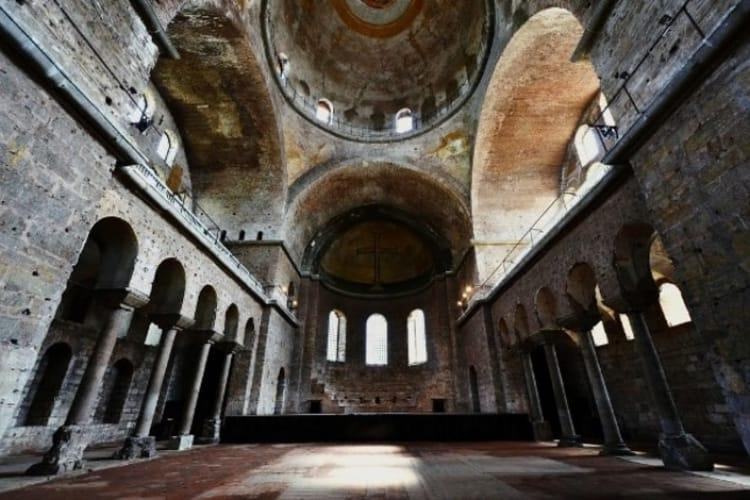
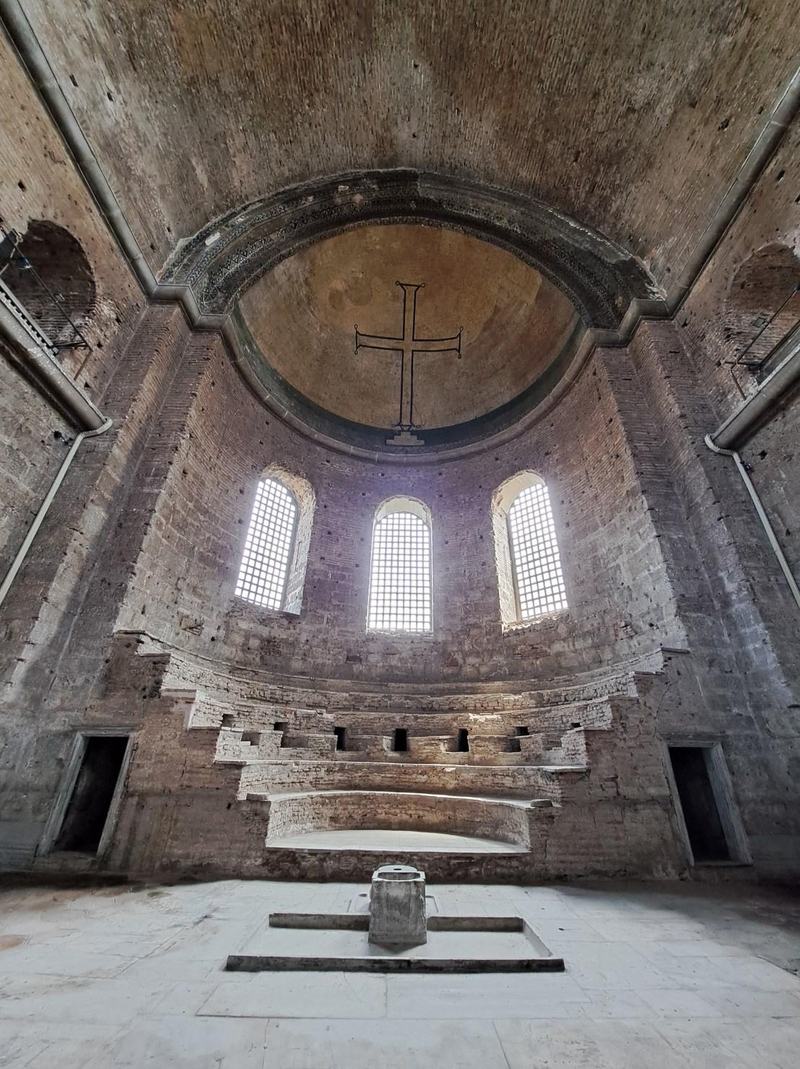
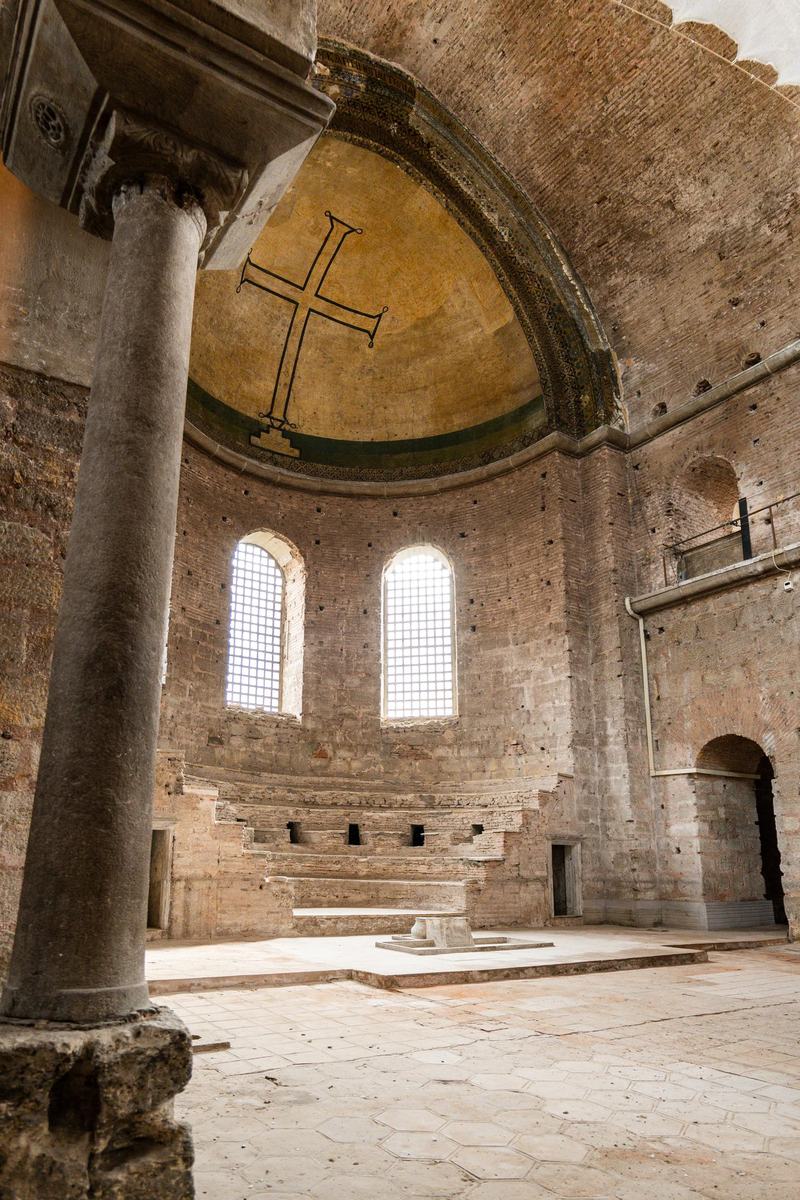
Hagia Irene's architectural evolution reflects the shifting styles and challenges of Byzantine construction. Initially a basilica, its post-Nika Revolt reconstruction under Justinian I likely introduced a domed basilica plan. The most significant architectural imprint visible today comes from its 8th-century rebuilding after the 740 AD earthquake, a period strongly associated with Iconoclasm. The structure features a large central dome supported by pendentives, a hallmark of Byzantine architecture, and two aisles flanking the nave. The interior is particularly renowned for its surviving Iconoclastic-era mosaics. Unlike the figural representations common in many Byzantine churches, the apse of Hagia Irene prominently features a monumental, plain black cross on a gold ground. This aniconic imagery is a powerful statement of the Iconoclastic movement, which rejected the depiction of holy figures. Elsewhere, remnants of geometric patterns and abstract designs further underscore the architectural and artistic currents of this specific historical period. The building's robust stone and brick construction, with its monumental scale, signifies its enduring imperial patronage and function as a major religious edifice in the Byzantine capital.
Practical Information
Location: Topkapı Palace complex, Cankurtaran, Fatih, Istanbul.
Opening hours: 09:00–17:00, daily. Current visitor information lists Hagia Irene as open throughout the week.
Admission: Paid admission. The current official tariff lists ₺350 for Turkish visitors and ₺1,050 for foreign visitors. A combined Topkapı Palace + Hagia Irene + Harem ticket is also available.
Museum Pass: Not valid for Hagia Irene. This is specifically excluded from the Müzekart coverage within Topkapı Palace.
Visit duration: Allow approximately 30–45 minutes for the church itself. If combined with Topkapı Palace, plan for several hours.
Accessibility: The site is a historic structure, so full accessibility should not be assumed throughout. The current business listing indicates a wheelchair-accessible entrance, but visitors with mobility limitations should confirm arrangements before visiting.
Photography: Photography may be subject to museum rules and restrictions during special events or performances. Follow on-site instructions.
Best time to visit: Weekday mornings are generally preferable for a quieter experience.
Facilities: Toilets and basic visitor facilities are available within the wider Topkapı Palace complex.
Public transport: The easiest route is via Gülhane or Sultanahmet tram stations, followed by a walk toward Topkapı Palace.
Tip: Hagia Irene is one of Istanbul's most important surviving Byzantine structures. Unlike Hagia Sophia, it was never converted into a mosque and continued to serve different functions during the Ottoman period. Its enormous interior, exposed brickwork and simple Byzantine character make it quite different from the city's more elaborate monuments.
Neighborhood: Sultanahmet: Istanbul's Imperial Heart
Frequently asked questions
What does "Hagia Irene" mean?
“Hagia Irene” (Aya İrini in Turkish) translates to “Holy Peace”.
When was Hagia Irene originally built?
The initial construction of Hagia Irene is believed to date back to the 4th century, during the reign of Constantine the Great.
Why was Hagia Irene not converted into a mosque after the Ottoman conquest?
Unlike many other Byzantine churches, Hagia Irene was not converted into a mosque after the Ottoman conquest. It was repurposed as an armory (Cebehane) within the secure confines of the Topkapı Palace: Center of the Ottoman Empire complex.
What is unique about Hagia Irene's interior decoration?
Hagia Irene is particularly notable for its surviving Iconoclastic-era mosaics. The most prominent example is the large, plain black cross on a gold background in the apse, which represents the Iconoclastic movement's rejection of figural religious imagery.
What other roles did Hagia Irene play in its history?
Beyond being a major Christian church, Hagia Irene served as an imperial arsenal for the Ottoman Janissaries and later housed the first Ottoman Imperial Museum (Müze-i Hümayun), showcasing ancient artifacts and military collections.
Did Hagia Irene have a relationship with Hagia Sophia?
Yes, Hagia Irene was an early patriarchal church for Constantinople, predating the first Hagia Sophia: A Layered History. It was also rebuilt by Emperor Justinian I alongside his new Hagia Sophia after both were damaged in the Nika Revolt.
What significant historical event took place in Hagia Irene?
Hagia Irene hosted the Second Ecumenical Council in 381 AD, an important event in early Christian history where the Nicene Creed was affirmed and expanded.
What architectural style does Hagia Irene represent?
Hagia Irene showcases a blend of early Byzantine architectural styles. Its current form, a domed basilica, largely reflects the 8th-century reconstruction after an earthquake, incorporating features of the Iconoclastic period.