Places
Hagia Sophia: A Layered History
Overview
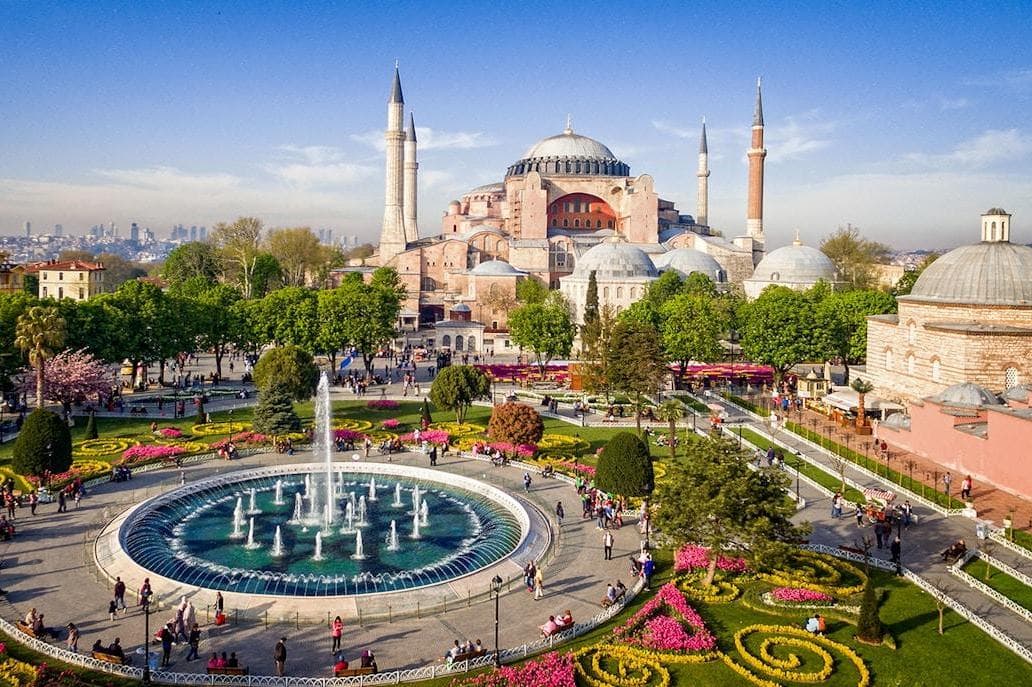
Hagia Sophia (Ayasofya in Turkish), situated in the historic heart of Istanbul, stands as a monumental testament to millennia of architectural innovation and shifting cultural identities. Originally conceived as a grand Christian basilica, it later became an imperial mosque, then a museum, and most recently, a mosque again. Its colossal dome, intricate mosaics, and layered structures embody the profound historical narrative of the city itself, reflecting its Byzantine and Ottoman legacies. Sultanahmet: Istanbul's Imperial Heart, where it resides, has been the epicenter of empires, and Hagia Sophia has consistently been at the forefront of this story. Its enduring presence offers a unique lens through which to understand Istanbul's intricate past and its continuous evolution. This structure is not merely a building; it is a repository of history, where every stone and fresco tells a part of the city's multifaceted story.
History
The site of Hagia Sophia has been home to three distinct churches. The first, known as the 'Great Church' (Magna Ecclesia), was inaugurated in 360 CE during the reign of Emperor Constantius II, a basilica with a wooden roof. This structure was burned down during a riot in 404 CE. A second basilica, also a wooden-roofed structure, was rebuilt and consecrated in 415 CE under Emperor Theodosius II. This second church was destroyed during the Nika riots in 532 CE, a major uprising against Emperor Justinian I. Following this devastation, Emperor Justinian I commissioned the construction of the current Hagia Sophia, intending to create a structure of unprecedented scale and grandeur. The architects tasked with this ambitious project were Anthemius of Tralles and Isidore of Miletus. The new basilica was completed with remarkable speed, consecrated in 537 CE, and immediately hailed as an architectural marvel, serving as the patriarchal cathedral of Constantinople for over nine centuries. It witnessed significant events, including imperial coronations and major religious councils. After the Fourth Crusade in 1204, it was converted into a Roman Catholic cathedral for a period until the Byzantines recaptured Constantinople in 1261. With the Ottoman conquest of Constantinople in 1453 by Sultan Mehmet II, Hagia Sophia underwent a significant transformation. Mehmet II, often referred to as 'Fatih' (the Conqueror), immediately ordered its conversion into an imperial mosque. The building was structurally reinforced, and Islamic features such as minarets, a mihrab (prayer niche indicating the direction of Mecca), and a minbar (pulpit) were added over subsequent centuries. Many of the Byzantine mosaics were plastered over or covered, though some were preserved. For nearly 500 years, Hagia Sophia served as Istanbul's principal imperial mosque, influencing the design of many later Ottoman mosques. In 1934, under the leadership of Mustafa Kemal Atatürk, the founder of the Republic of Turkey, Hagia Sophia was secularized and reopened as a museum, an act intended to symbolize the new republic's commitment to secularism and to make the monument accessible to all humanity. This status allowed for extensive restoration work to uncover and preserve both its Byzantine Christian mosaics and its Ottoman Islamic elements. In July 2020, following a presidential decree, Hagia Sophia was converted back into a mosque.
Architecture
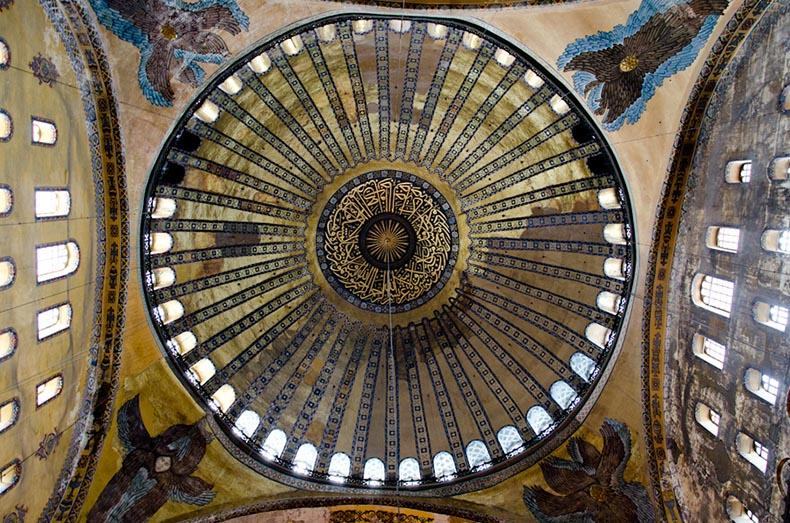
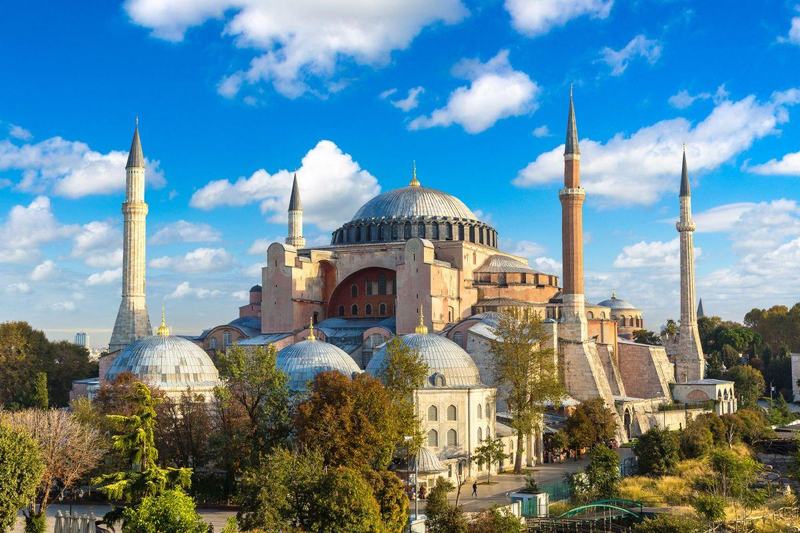
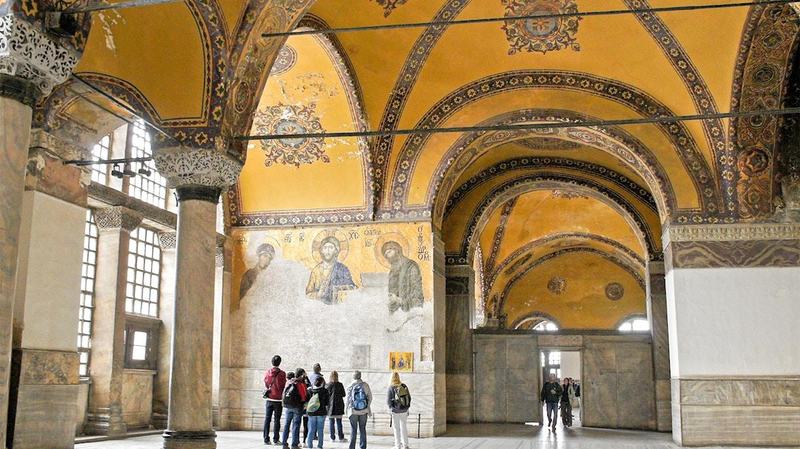
Hagia Sophia's architecture is a singular blend of Byzantine engineering and later Ottoman additions, a harmonious dialogue between two monumental empires. Its most iconic feature is its colossal central dome, which appears to float above the main nave. This dome, with a diameter of approximately 31 meters (102 feet), was a revolutionary feat of engineering for its time, supported by four massive pendentives that seamlessly transition from the square base to the circular dome. The interior space is vast and open, illuminated by numerous windows at the base of the dome and along the walls, creating an ethereal glow that captivated visitors for centuries. The original Byzantine construction utilized luxurious materials, including various types of marble from across the Mediterranean, and elaborate gold mosaics depicting Christian figures and decorative patterns. After its conversion to a mosque, Ottoman architects and artists added new elements that complemented its existing structure. Four slender minarets, built at various times by different sultans, stand at its corners. Large calligraphic panels adorned with Arabic script, including the names of Allah, Prophet Muhammad, and the first four caliphs, were installed within the interior. The original Byzantine mosaics were carefully plastered over, preserving them beneath a layer of whitewash, and some have since been uncovered during restoration efforts, revealing the building's dual religious identity. Exterior buttresses were added over centuries to stabilize the massive structure, a testament to continuous maintenance and adaptation.
Practical Information
Location: Sultan Ahmet, Ayasofya Meydanı No: 1, Fatih, Istanbul.
Opening hours: Open daily, generally 09:00–19:30. Visitor access may be restricted or adjusted during religious services and special occasions.
Admission: Paid admission for the visitor area. The ground-floor prayer area remains accessible to worshippers, while the designated visitor route is ticketed.
Museum Pass: Museum Pass Türkiye is not valid for Hagia Sophia's visitor area.
Visit duration: Allow approximately 1–1.5 hours. If you want to appreciate the surrounding Sultanahmet monuments as well, allow 2–3 hours for the area.
Accessibility: The ground floor has relatively good access, but Hagia Sophia is a historic building with steps, uneven surfaces and restricted areas. Full wheelchair accessibility should not be assumed throughout the visitor route.
Dress code: As Hagia Sophia functions as an active mosque, modest clothing is required. Women should cover their heads. Visitors should remove shoes when entering the prayer area where required.
Photography: Photography is generally permitted in visitor areas, but flash, tripods and photography during worship may be restricted. Visitors should respect worshippers and follow on-site instructions.
Best time to visit: Early morning on weekdays is usually the best choice for avoiding the largest crowds. Avoid prayer times if your priority is sightseeing.
Public transport: The easiest option is the T1 tram to Sultanahmet station, followed by a short walk.
Visit duration: 60–90 minutes for Hagia Sophia itself.
Facilities: The surrounding Sultanahmet area has cafés, restaurants, toilets and other visitor facilities.
Tip: Hagia Sophia's story spans more than 1,500 years. Originally completed in 537 under Emperor Justinian I, it became an Ottoman imperial mosque after 1453, served as a museum from 1935, and returned to use as a mosque in 2020. Today, its architecture and decoration reflect these overlapping Byzantine and Ottoman histories.
Neighborhood: Sultanahmet: Istanbul's Imperial Heart
Frequently asked questions
What does 'Hagia Sophia' mean?
The name 'Hagia Sophia' translates from Greek as 'Holy Wisdom' (Aghia Sophia), referring to the Wisdom of God. In Turkish, it is known as 'Ayasofya'.
When was Hagia Sophia originally built?
The current structure of Hagia Sophia was built between 532 and 537 CE under the orders of Byzantine Emperor Justinian I, following the destruction of two previous churches on the same site.
What was Hagia Sophia's original purpose?
Hagia Sophia was originally constructed as the patriarchal cathedral of Constantinople, serving as the most important church of the Byzantine Empire.
When was Hagia Sophia converted into a mosque?
Following the Ottoman conquest of Constantinople in 1453, Sultan Mehmet II ordered its conversion into an imperial mosque, a function it served for nearly five centuries.
When did Hagia Sophia become a museum?
Hagia Sophia was secularized and opened as a museum in 1934, by a decree from Mustafa Kemal Atatürk, the founder of the Republic of Turkey.
What is Hagia Sophia's current status?
In July 2020, Hagia Sophia was converted back into a mosque and currently serves as a place of Muslim worship.
Are Byzantine mosaics visible in Hagia Sophia today?
Yes, some of the original Byzantine mosaics have been uncovered and restored, particularly in the upper galleries, and are visible to visitors, often alongside later Ottoman Islamic elements.
Who were the architects of Hagia Sophia?
The principal architects commissioned by Emperor Justinian I were Anthemius of Tralles and Isidore of Miletus, both renowned mathematicians and geometers of their time.
Written by Istanbook Editorial Team