Places
Haseki Hürrem Sultan Hamam: An Imperial Bathhouse in Istanbul
Overview
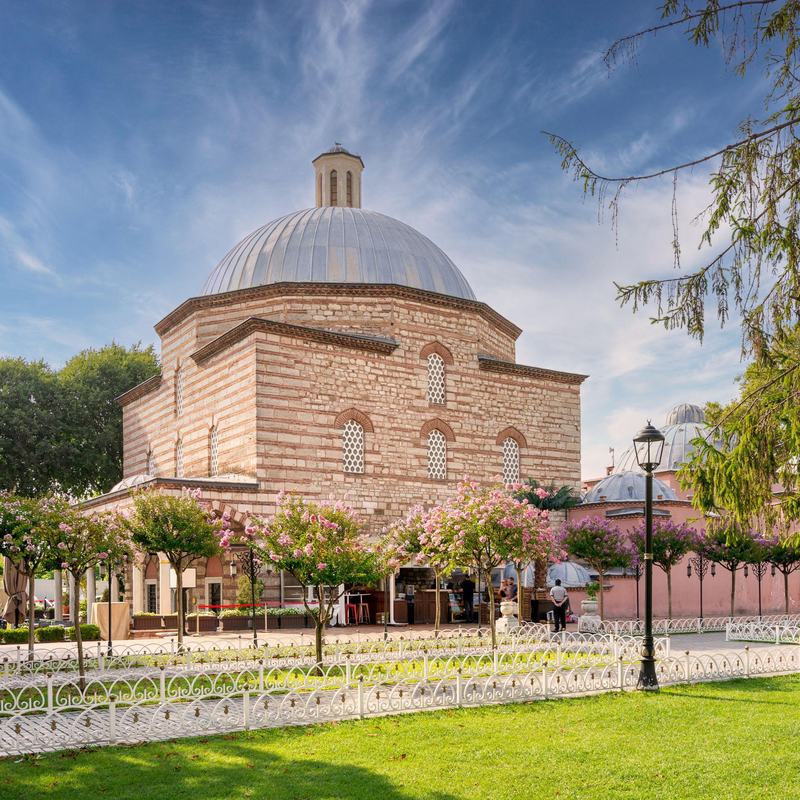
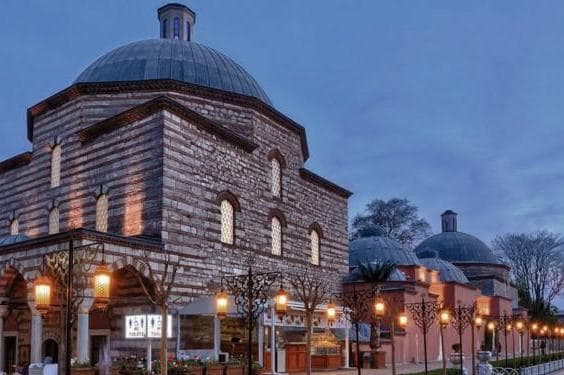
The Haseki Hürrem Sultan Hamam, an exquisite example of 16th-century Ottoman architecture, stands as a testament to both the imperial patronage of Hürrem Sultan and the masterful design of Mimar Sinan. Located prominently in Sultanahmet: Istanbul's Imperial Heart, between the iconic Hagia Sophia and the later-built Sultan Ahmed Mosque (Blue Mosque), this double public bathhouse (hamam) served a vital social function while also contributing to the grand urban fabric of the Ottoman capital. Its construction highlights the significant role of imperial women in Ottoman architectural endowments and public welfare.
History
Commissioned by Hürrem Sultan, the chief consort and later legal wife of Sultan Suleiman the Magnificent, the Haseki Hürrem Sultan Hamam was completed in the mid-16th century, likely around 1556-1557 CE (verified, historical records). Hürrem Sultan's patronage of architectural projects was a deliberate act of securing her legacy and exercising her considerable influence within the Ottoman court, moving beyond traditional roles. Her endowments, including this hamam, were part of a larger külliye (charitable complex) system, which typically comprised mosques, madrasas (theological schools), soup kitchens, and hospitals, financed through a vakıf (pious foundation) (verified, historical records). This system allowed for continuous funding and maintenance of public services, ensuring the long-term impact of imperial philanthropy (verified, historical records). The hamam's strategic placement near the Hagia Sophia underscored its imperial significance and its role in serving both the court and the general populace (verified, interpretation). After centuries of continuous use, the hamam fell into disuse and underwent various transformations, serving as a carpet bazaar for several decades in the 20th century (verified, historical accounts). A meticulous restoration project in the early 21st century aimed to return the structure to its original splendor and function, reopening it as a luxury bathhouse (verified, modern conservation reports).
Architecture
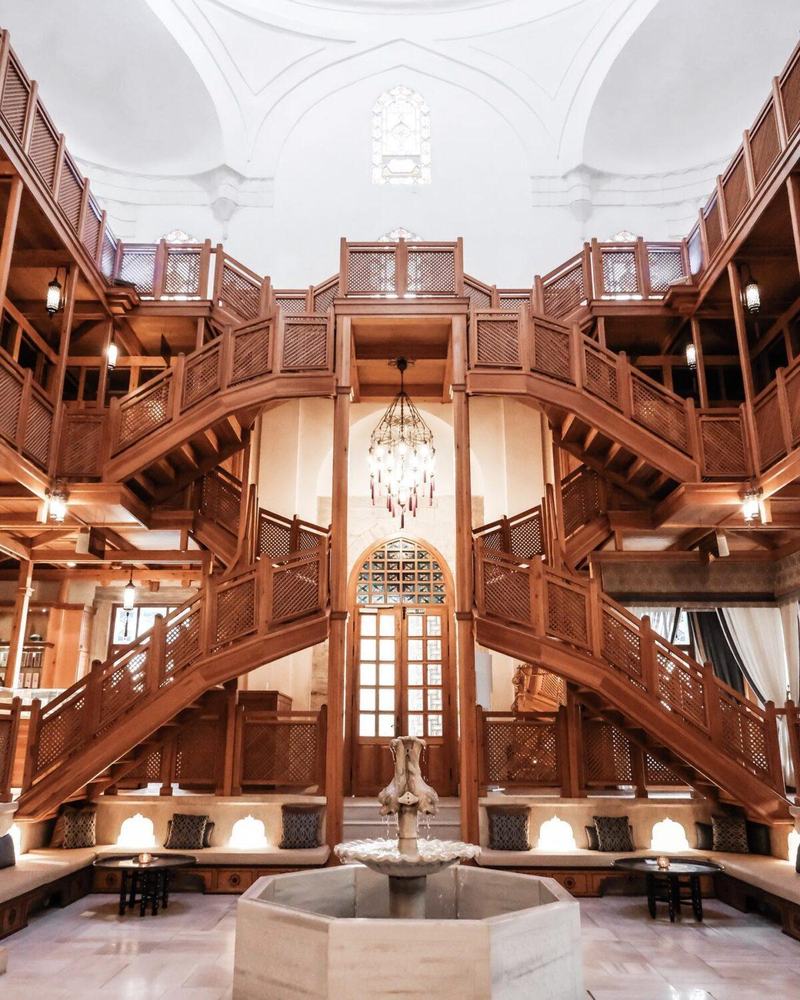
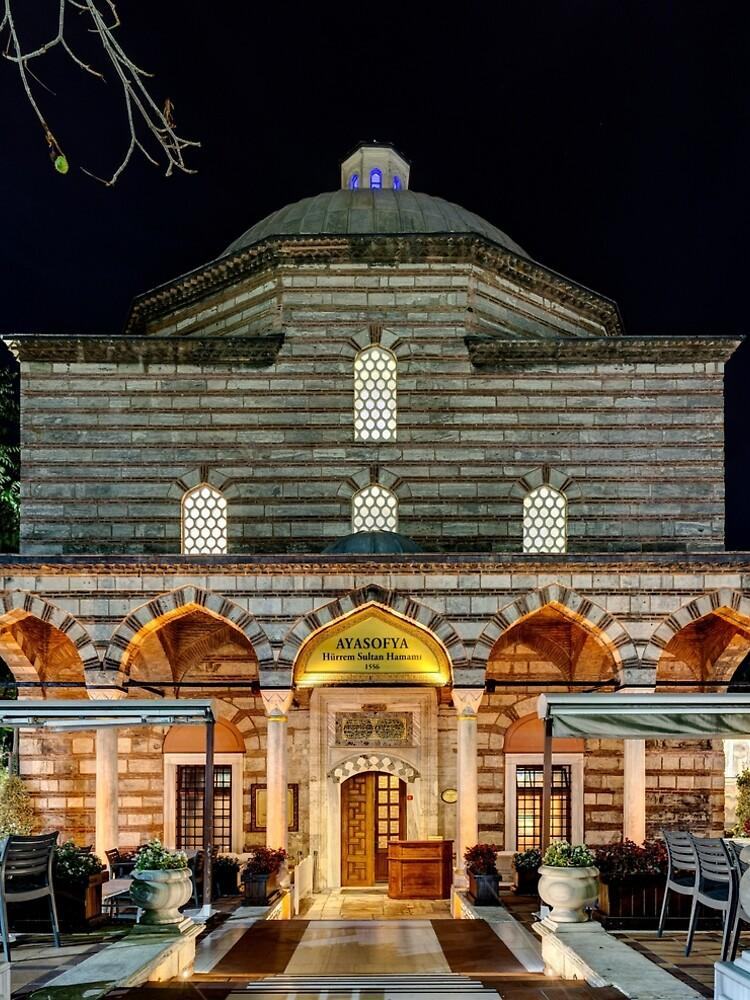
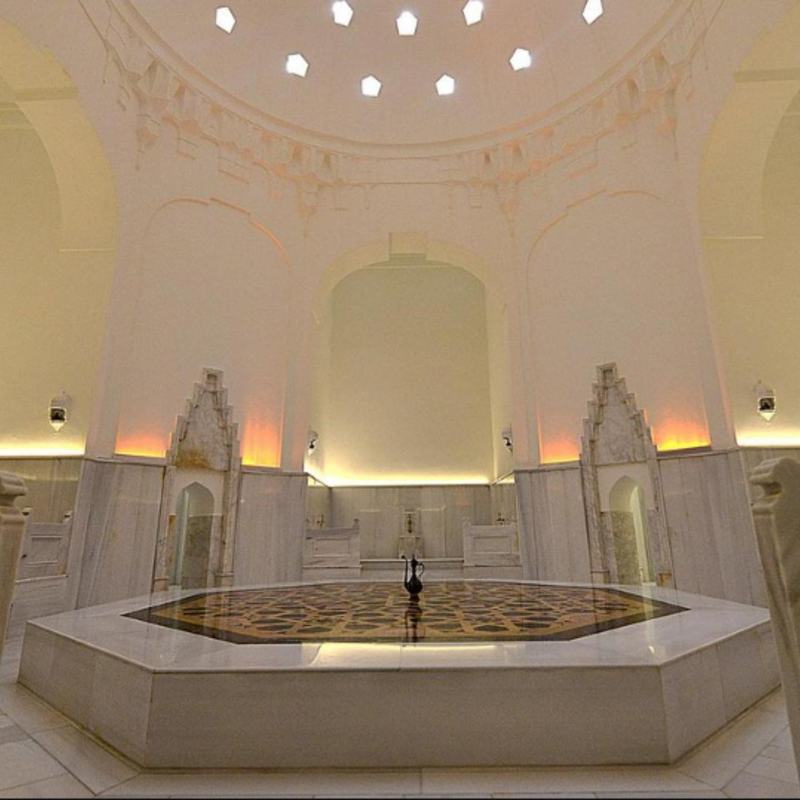
Designed by the celebrated imperial architect Mimar Sinan, the Haseki Hürrem Sultan Hamam is a prime example of classical Ottoman bathhouse architecture (verified, architectural analysis). It is notable for being a 'double hamam,' meaning it features entirely separate and symmetrical sections for men and women, each with its own entrance, changing rooms (camekan), warm rooms (ılıklık), and hot rooms (sıcaklık) (verified, architectural analysis). This innovative layout allowed for simultaneous use by both sexes while maintaining gender segregation, a common practice in Ottoman society (verified, social history). The hamam is constructed primarily from cut stone with brick courses, showcasing Sinan's characteristic use of durable materials (verified, architectural analysis). Each section typically begins with a large, domed changing room, followed by smaller domed spaces for intermediate warming and finally the intensely heated domed hot room, often featuring individual bathing niches (halvet) (verified, architectural analysis). The domes are punctuated by small, star-shaped openings, which allowed light to filter in while maintaining privacy and contributing to the steamy atmosphere (verified, architectural analysis). Its elegant proportions and functional design are hallmarks of Sinan's work, providing both aesthetic beauty and practical efficiency (verified, architectural analysis). The hamam's urban positioning between the former Byzantine imperial church of Hagia Sophia and the site where the Sultan Ahmed Mosque (Blue Mosque) would later rise, placed it at the very heart of the city's ceremonial and administrative core, making it accessible and central to public life (verified, urban history).
Practical Information
Location: Cankurtaran, Ayasofya Meydanı No: 2, Fatih, Istanbul — between Hagia Sophia and the Blue Mosque.
Opening hours: 09:00–22:00, daily. Hours may vary depending on reservations and special occasions.
Admission: Paid. This is a functioning historic Turkish bath rather than a museum. Visitors choose from different bathing and treatment packages.
Booking: Advance reservation is strongly recommended, particularly during the high tourist season. Walk-ins may be possible depending on availability.
Separate sections: The historic hamam has separate men's and women's bathing sections. Guests are served by attendants of the same gender.
Visit duration: Allow approximately 1.5–2 hours for a full traditional hamam experience.
Accessibility: The building is a 16th-century historic structure, so full wheelchair accessibility should not be assumed. Visitors with mobility limitations should contact the hamam before booking.
What to bring: Towels and traditional hamam essentials are generally provided as part of the experience. Guests should check what is included in their selected package when booking.
Photography: Photography is generally restricted in the bathing areas to protect guests' privacy. Exterior and designated public areas are more suitable for photography.
Best time to visit: Weekday mornings or early afternoons are usually a quieter choice. Booking ahead is especially important in summer.
Public transport: The hamam is in Sultanahmet, within easy walking distance of the T1 Sultanahmet tram stop.
Tip: The hamam was commissioned by Hürrem Sultan, the wife of Sultan Süleyman the Magnificent, and designed by the famous Ottoman architect Mimar Sinan. Completed in the 1550s, it was built on the site traditionally associated with the ancient Baths of Zeuxippus and was designed to serve both men and women.
Neighborhood: Sultanahmet: Istanbul's Imperial Heart
Frequently asked questions
Who commissioned the Haseki Hürrem Sultan Hamam?
The Haseki Hürrem Sultan Hamam was commissioned by Hürrem Sultan, the influential wife of Sultan Suleiman the Magnificent, in the mid-16th century (verified, historical records).
Which famous architect designed the Haseki Hürrem Sultan Hamam?
The hamam was designed by the renowned Ottoman imperial architect Mimar Sinan, considered one of the greatest architects in Ottoman history (verified, architectural history).
What is unique about the architecture of the Haseki Hürrem Sultan Hamam?
It is a 'double hamam,' meaning it has completely separate and symmetrical sections for men and women, each with its own entrance and bathing facilities, designed for simultaneous use while maintaining segregation (verified, architectural analysis).
Where is the Haseki Hürrem Sultan Hamam located?
The hamam is strategically located in Sultanahmet: Istanbul's Imperial Heart, positioned between two of Istanbul's most famous landmarks, the Hagia Sophia and the Sultan Ahmed Mosque (Blue Mosque) (verified, geographical location).
What was the historical function of the hamam?
Historically, it functioned as a public bathhouse, providing a place for hygiene, social interaction, and relaxation for both men and women of the city, serving as part of Hürrem Sultan's charitable endowments (verified, social history).
How does the Haseki Hürrem Sultan Hamam relate to Ottoman charitable systems?
The hamam was part of a vakıf (pious foundation) established by Hürrem Sultan, which funded charitable complexes (külliyes) that provided public services and contributed to the welfare of the community (verified, historical records).
What is the modern use of the Haseki Hürrem Sultan Hamam?
After a period of disuse and serving as a carpet bazaar, the hamam underwent extensive restoration and now operates as a luxury public bathhouse, offering traditional Turkish bath experiences (verified, modern conservation reports).
What was Hürrem Sultan's role in commissioning such a significant building?
Hürrem Sultan's patronage of the hamam, and other architectural projects, signifies her powerful position and influence within the Ottoman court, allowing her to make substantial contributions to the empire's urban and social infrastructure (verified, historical interpretation).
Written by Istanbook Editorial Team