Places
Little Hagia Sophia: From Byzantine Church to Ottoman Mosque
Overview
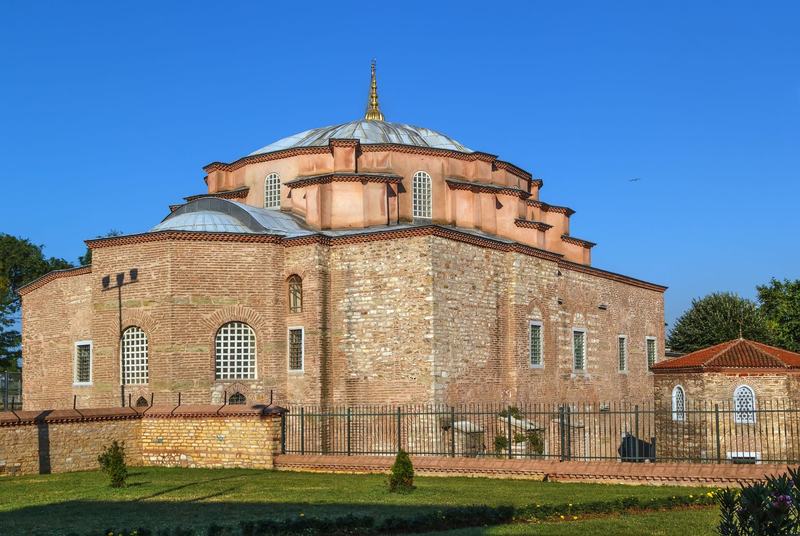
The Little Hagia Sophia Mosque, originally consecrated as the Church of Saints Sergius and Bacchus, stands as a pivotal early example of Byzantine architecture in Istanbul. Constructed in the 6th century, it showcases the innovative spirit of Emperor Justinian's reign and offers crucial insights into the architectural development that would culminate in the grander Hagia Sophia: A Layered History. Its distinctive design and structural experimentation make it a significant historical site, reflecting the rich layers of Istanbul's imperial past.
History
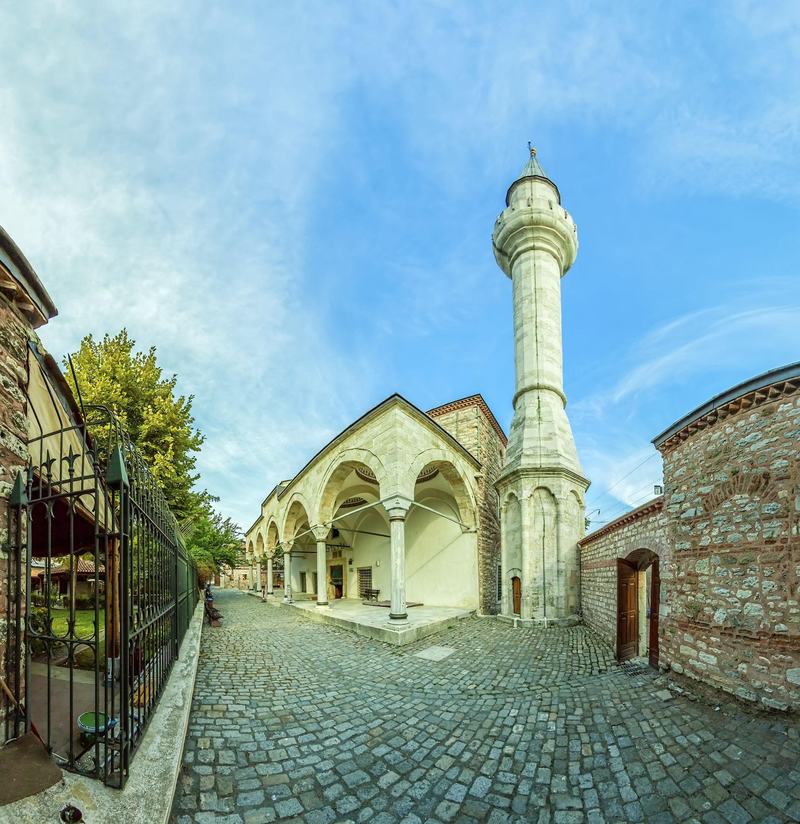
The Church of Saints Sergius and Bacchus was commissioned by Emperor Justinian I and Empress Theodora in the early 6th century, prior to the construction of Hagia Sophia: A Layered History. Dedicated to two Roman soldier-saints revered in the Byzantine Empire, its construction is historically placed between 527 and 536 CE. This period marked a fervent era of building under Justinian, aiming to reaffirm imperial power and piety. The church stood as part of a larger complex, adjacent to a palace and a church dedicated to Saints Peter and Paul (needs_verification: specific details of the complex are sometimes debated among historians). Its design served as a significant architectural experiment, exploring structural solutions and spatial configurations that would later be refined in the construction of the Great Church. Following the Ottoman conquest of Constantinople in 1453, the building retained its Christian use for a period (needs_verification: exact duration varies by accounts). However, in the early 16th century, during the reign of Sultan Bayezid II, it was converted into a mosque by Hüseyin Ağa, the chief eunuch of the Bab-ı Saadet, or 'Gate of Felicity'. This conversion saw the addition of a minaret, a mihrab (prayer niche indicating the direction of Mecca), and a minbar (pulpit), adapting the Byzantine structure for Islamic worship. The surrounding area, now part of the historic Sultanahmet: Istanbul's Imperial Heart district, developed around the mosque, creating a vibrant community.
Architecture
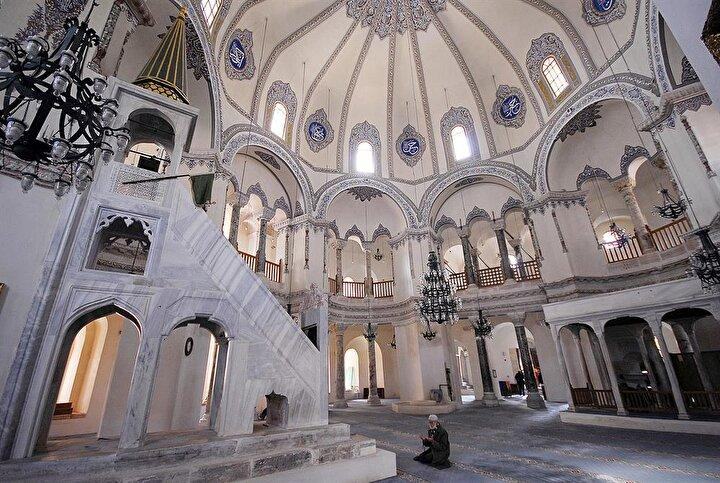
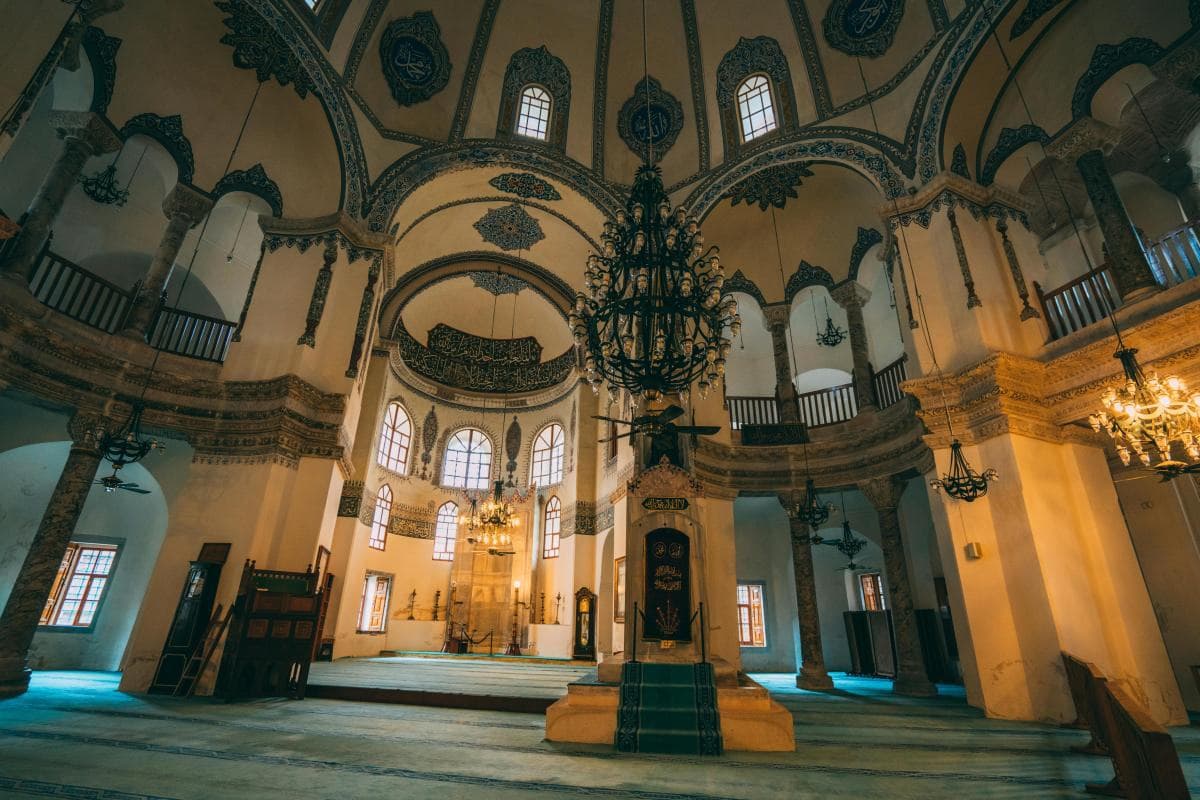
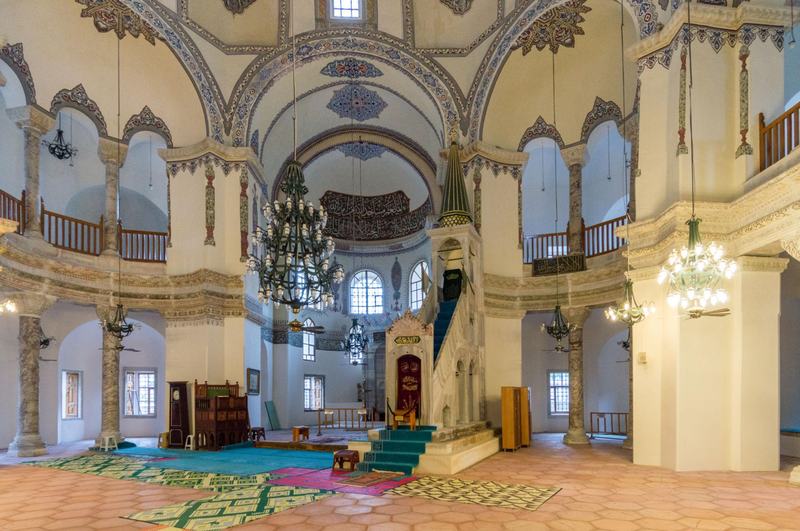
The architecture of the Little Hagia Sophia is notable for its innovative domed basilica design, distinguishing it from typical basilica forms of its time. Its most striking feature is the central octagonal space, enclosed within a rectangular outer shell. This octagonal core supports a ribbed dome, which rests on eight massive piers. The transition from the octagonal base to the circular dome is achieved through sophisticated squinches, demonstrating an early mastery of dome construction. Surrounding the central octagon is an ambulatory and a two-story gallery, creating a complex interplay of light and shadow within the interior. The building's decorative program originally featured exquisite marble revetments, intricate column capitals carved with monograms of Justinian and Theodora, and potentially vibrant mosaics, though most of these have not survived or were altered during its conversion. The column capitals exhibit a distinctive 'Theodosian' style, characterized by drill-carved acanthus leaves. During its transformation into a mosque, the original mosaics and frescoes were either plastered over or removed in accordance with Islamic aniconism. A minbar and a mihrab were installed, and a portico (or narthex) was added. The minaret, a later addition, further reshaped its silhouette. The Little Hagia Sophia is crucial for understanding the evolution of Byzantine architecture, as it represents a significant step towards the monumental scale and structural complexity achieved in the Hagia Sophia: A Layered History. It demonstrates early Byzantine architects' willingness to experiment with central-plan domed structures, moving beyond the traditional basilica format and laying groundwork for future imperial commissions.
Practical Information
Location: Küçük Ayasofya Mahallesi, Küçük Ayasofya Caddesi No: 2, Fatih, Istanbul.
Opening hours: Open daily, but visiting hours can vary because the building is an active mosque. Access may be temporarily restricted during prayer times and religious services.
Admission: Free.
Visit duration: Allow approximately 30–45 minutes to explore the mosque and surrounding courtyard.
Accessibility: The historic building and surrounding area include steps, uneven surfaces and narrow passages, so full wheelchair accessibility should not be assumed.
Dress code: As an active mosque, visitors should dress modestly. Women should cover their heads, and shoulders and knees should be covered. Shoes must be removed before entering the prayer area.
Photography: Photography is generally permitted outside prayer times, but visitors should avoid photographing worshippers and follow any restrictions announced by mosque staff.
Best time to visit: Weekday mornings outside prayer times are generally best for a quieter visit. Always check prayer times before planning a sightseeing visit.
Public transport: The mosque is within walking distance of Sultanahmet and Cankurtaran areas. The nearest T1 tram stop is Sultanahmet, followed by a walk through the historic peninsula.
Facilities: Cafés, restaurants and visitor facilities can be found throughout the surrounding Sultanahmet/Küçük Ayasofya area.
Tip: The building was originally constructed as the Byzantine Church of Saints Sergius and Bacchus, probably during the reign of Emperor Justinian I in the 6th century. After the Ottoman conquest, it was converted into a mosque and became known as Küçük Ayasofya (“Little Hagia Sophia”). Its octagonal interior and distinctive dome make it one of the most fascinating surviving examples of early Byzantine architecture in Istanbul.
Nearby: Combine it with Hagia Sophia, the Blue Mosque, Hippodrome and the Great Palace Mosaic Museum for a compact Byzantine-and-Ottoman walking route.
Neighborhood: Sultanahmet: Istanbul's Imperial Heart
Frequently asked questions
What was the original name of the Little Hagia Sophia?
The Little Hagia Sophia was originally known as the Church of Saints Sergius and Bacchus.
When was the Little Hagia Sophia built?
It was built between 527 and 536 CE, during the reign of Byzantine Emperor Justinian I and Empress Theodora.
Who commissioned the construction of the Church of Saints Sergius and Bacchus?
Emperor Justinian I and Empress Theodora commissioned its construction.
What is unique about the architectural design of the Little Hagia Sophia?
It features an innovative central octagonal space supporting a ribbed dome, enclosed within a rectangular outer shell, and employs sophisticated squinches for the dome transition.
When and by whom was the church converted into a mosque?
It was converted into a mosque in the early 16th century by Hüseyin Ağa, the chief eunuch of the Bab-ı Saadet, during the reign of Sultan Bayezid II.
Why is the Little Hagia Sophia important for understanding Byzantine architecture?
It is a pivotal early example of Byzantine domed architecture, showcasing structural experiments and spatial arrangements that were precursors to the monumental Hagia Sophia: A Layered History and crucial for the development of later Byzantine church design.
What changes were made to the building during its conversion to a mosque?
A minaret, a mihrab (prayer niche), and a minbar (pulpit) were added, and original Christian decorative elements like mosaics were either covered or removed.
Where is the Little Hagia Sophia located in Istanbul?
It is located in the historic area that is now broadly part of the Sultanahmet: Istanbul's Imperial Heart district, near the former Great Palace complex.
Written by Istanbook Editorial Team