Places
Mihrimah Sultan Mosque at Edirnekapı
Overview
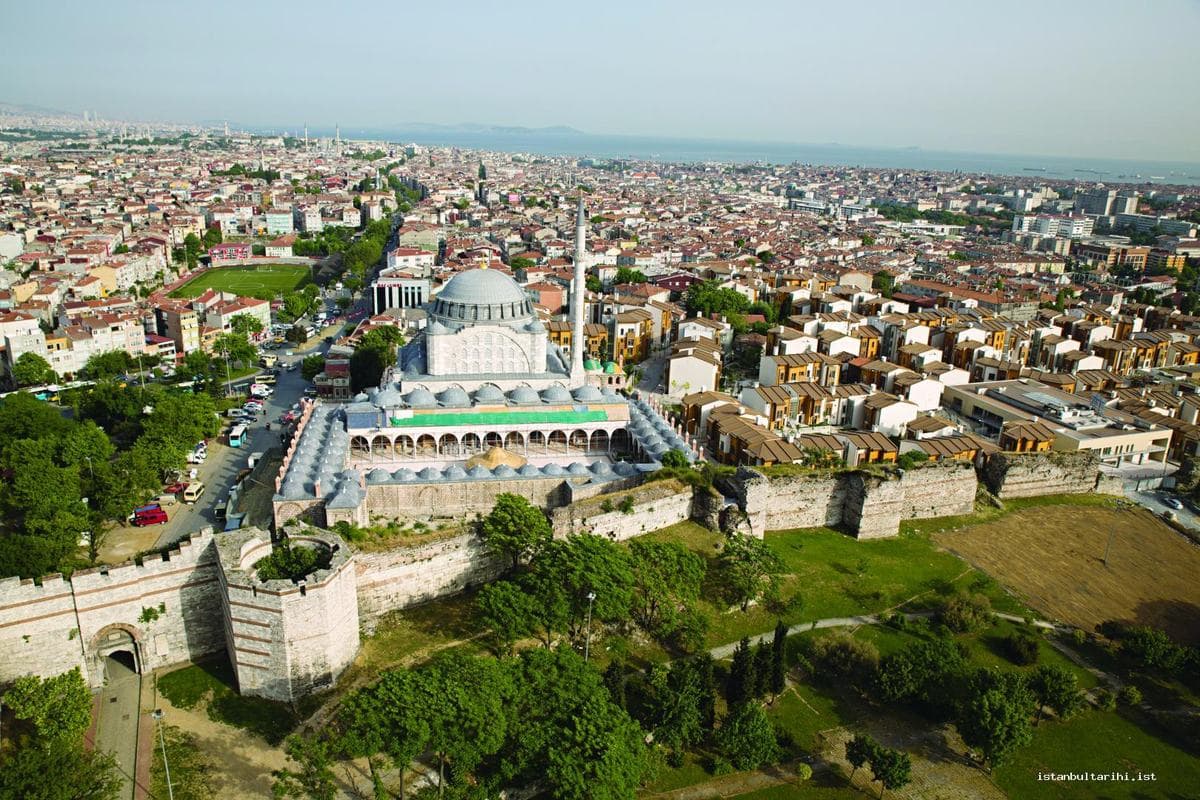
The Mihrimah Sultan Mosque at Edirnekapı stands as one of Istanbul's most significant imperial mosques, a testament to 16th-century Ottoman architecture and patronage. Commissioned by Mihrimah Sultan, the influential daughter of Sultan Süleyman I, and designed by the celebrated architect Mimar Sinan, it is renowned for its innovative design that prioritizes light and spaciousness. Located strategically near the historic Edirnekapı gate and The Theodosian Walls of Constantinople, the mosque presents a commanding presence on Istanbul's cityscape.
History
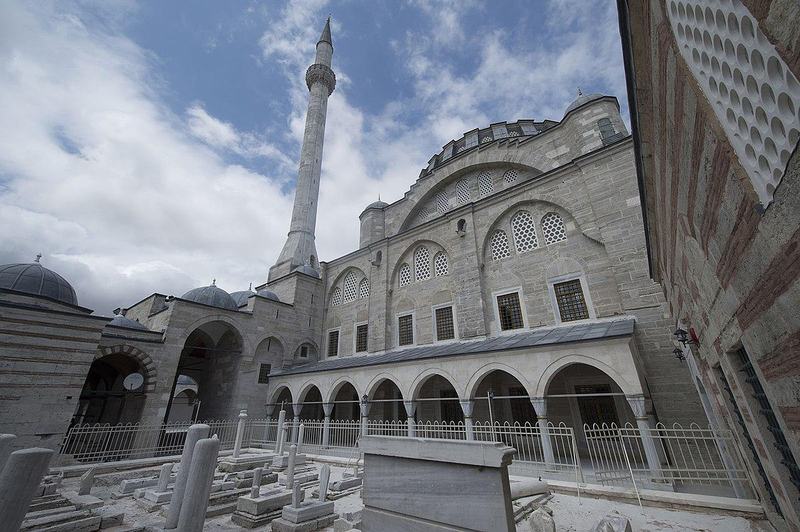
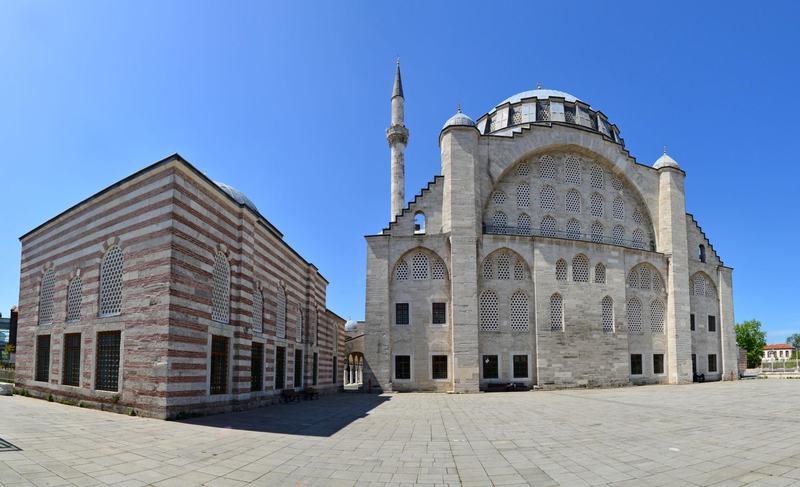
Construction of the Mihrimah Sultan Mosque at Edirnekapı took place in the mid-16th century, generally dated between 1562 and 1565 or 1565 and 1570, reflecting a period of peak imperial power. The mosque's patron, Mihrimah Sultan, was a prominent figure within the Ottoman imperial family. As the daughter of Sultan Süleyman I and Hurrem Sultan, she wielded considerable influence and wealth. Her patronage of such a grand architectural project underscored her status and power, making her one of the most significant female patrons in Ottoman history. The mosque was designed by Mimar Sinan, the chief Ottoman architect, who was at the height of his career. This commission provided Sinan with an opportunity to further explore themes of light and space, concepts he would masterfully apply in his subsequent works. The choice of location, near the historic Edirnekapı (Adrianople Gate), one of the principal land gates of ancient Constantinople, placed Mihrimah Sultan's mosque at a crucial entry point to the city, symbolically extending imperial reach and piety to a key urban edge. The original complex was not solely a place of worship but encompassed a broader social function, including a madrasa (theological school) and a hammam (bathhouse), integral to Ottoman urban life.
Architecture
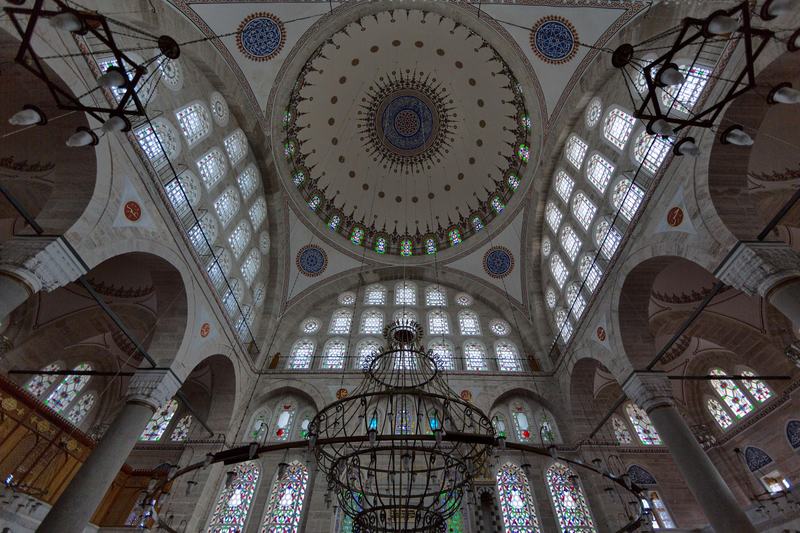
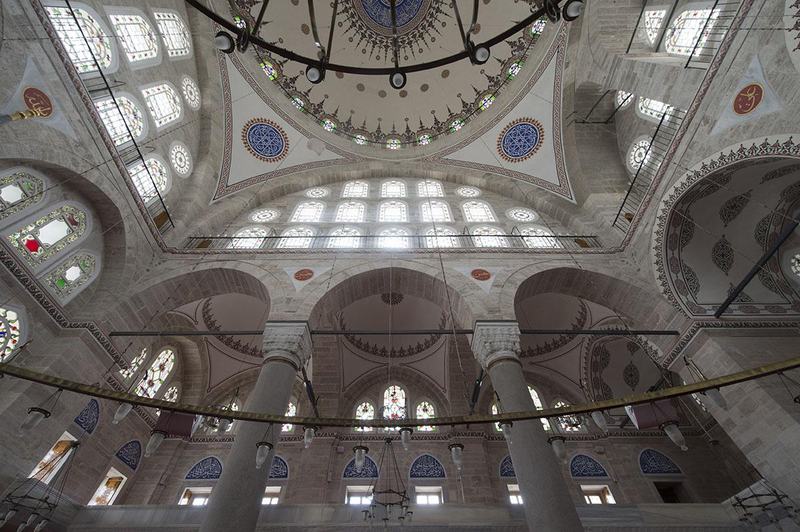
The architectural composition of the Mihrimah Sultan Mosque at Edirnekapı is a prime example of Mimar Sinan's mature style, characterized by its extraordinary emphasis on light and structural elegance. Sinan designed an interior space that feels remarkably open and ethereal, an effect achieved by the extensive use of windows, which number 161 in total, allowing natural light to flood the prayer hall from all directions. The central dome, which appears to float, is supported by elaborate pendentives rather than heavy piers, contributing to the mosque's sense of weightlessness and spaciousness. This innovative approach to dome support creates an uninterrupted flow of space, a departure from earlier Ottoman mosque designs. The mosque's elevated position at Edirnekapı also plays a crucial role in its architectural impact, allowing it to dominate the skyline and be visible from significant distances, thus forming a powerful visual dialogue with the city's topography and The Theodosian Walls of Constantinople. The interior ornamentation is delicate, featuring fine Iznik tiles and stained-glass windows, which enhance the interplay of light rather than overwhelming the space with heavy decoration.
Practical Information
Opening Hours
The mosque is an active place of worship rather than a museum, so there is no fixed visitor timetable. Visitors are welcome between prayer times, but access to the prayer hall may be restricted during prayers.
Admission
Free. No entrance ticket or museum card is required.
Best Time to Visit
For a quieter visit and to appreciate the mosque's natural light, morning or late afternoon outside prayer times is recommended.
Accessibility
The mosque is a historic building on a raised site, and step-free access cannot be guaranteed throughout the complex. Visitors with mobility needs should check access arrangements locally before visiting.
Dress Code
As an active mosque, visitors should dress modestly. Shoulders and knees should be covered, and women should cover their hair when entering the prayer area.
Visiting Etiquette
Remove your shoes before entering the prayer hall, keep voices low, silence your phone, and avoid walking in front of people who are praying. Photography should never disturb worshippers.
Getting There
The mosque is in Edirnekapı, Fatih, beside the historic land walls. It can be reached by public transport, including the T4 tram, with Edirnekapı among the nearby stops.
Nearby
Combine the visit with a walk along the Theodosian Land Walls and a visit to Kariye for a deeper look at Istanbul's Byzantine and Ottoman layers.
Neighborhood: Zeyrek: Istanbul's Enduring Byzantine and Ottoman Layers
People
Suleiman IOttoman Sultan, lawgiver, and patron of arts
Suleiman I, often called Suleiman the Magnificent in the West and Suleiman the Lawgiver (Kanuni) in the East, was the tenth and longest-reigning Sultan of the Ottoman Empire, ruling from 1520 until 1566. His reign is considered the "Golden Age" of the Ottoman Empire, during which it reached the height of its political, military, economic, and cultural power. Born in Trabzon in 1494, Suleiman ascended to the throne at 26. He played a crucial role in transforming Constantinople into Istanbul, establishing it as a significant center for a great Turkish and Islamic empire. Suleiman was a great patron of the arts, architecture, and literature, overseeing an era of significant development. He commissioned the Süleymaniye Mosque complex, designed by Mimar Sinan, and other vital infrastructure like water systems for Istanbul. He was also known as "the Lawgiver" for codifying and reforming the Ottoman legal system and was an accomplished poet.
Mimar SinanChief Ottoman architect
Mimar Sinan, also known as Koca Mi'mâr Sinân Âğâ, was the chief Ottoman architect, engineer, and mathematician, widely regarded as the greatest architect of the classical period of Ottoman architecture. Born around 1488 or 1490 near Kayseri, he died in Istanbul on July 17, 1588. He began his career as a military engineer after being recruited into the Janissary Corps through the devşirme system and converting to Islam in 1512. Around 1538 or 1539, at approximately 50 years old, Sinan was appointed chief royal architect, a position he held for nearly 50 years, serving three sultans: Suleiman the Magnificent, Selim II, and Murad III. His extensive work significantly shaped Istanbul's iconic skyline, including masterpieces like the Süleymaniye Mosque, the Şehzade Mosque, two Mihrimah Sultan Mosques, the Rüstem Paşa Mosque, the Kılıç Ali Paşa Mosque, and the Haseki Hürrem Sultan Bathhouse. He also rebuilt the Matbah-ı Âmire (Palace Kitchens) at Topkapi Palace and constructed the Kırkçeşme Water Supply System, among many other civic structures like madrasas, külliyes, bridges, and aqueducts. Sinan also trained many future distinguished architects, including Sedefkar Mehmed Agha.
Frequently asked questions
Who commissioned the Mihrimah Sultan Mosque at Edirnekapı?
The Mihrimah Sultan Mosque at Edirnekapı was commissioned by Mihrimah Sultan, the daughter of Sultan Süleyman I and Hurrem Sultan. She was a powerful and influential figure in the Ottoman imperial family.
Who was the architect of the Mihrimah Sultan Mosque at Edirnekapı?
The mosque was designed by Mimar Sinan, the chief Ottoman architect, who was responsible for many of the empire's most significant buildings during the 16th century.
What is unique about the Mihrimah Sultan Mosque's architectural design?
The mosque is renowned for its innovative use of light and spaciousness. Mimar Sinan achieved this through numerous large windows and a central dome that appears to float, creating an ethereal and open interior.
What other structures were historically part of the Mihrimah Sultan Mosque complex?
Beyond the mosque itself, the original complex historically included a madrasa (theological school) and a hammam (bathhouse), serving broader social and community functions.
Where is the Mihrimah Sultan Mosque at Edirnekapı located?
The mosque is situated near the historic Edirnekapı (Adrianople Gate), one of the principal land gates of ancient Constantinople, adjacent to The Theodosian Walls of Constantinople.
How does the mosque's location relate to Istanbul's history?
Its location at Edirnekapı places it at a historically significant entry point to the city, linking the Ottoman architectural marvel to the ancient Byzantine defenses of The Theodosian Walls of Constantinople, symbolizing the layered history of Istanbul.
What is the significance of light in the mosque's architecture?
Light is a central element in the mosque's design. The abundant use of windows floods the interior with natural light, creating a sense of openness and airiness that is characteristic of Mimar Sinan's mature style.
How does [[Mihrimah Sultan]]'s patronage reflect her role in the Ottoman Empire?
Her patronage of such a grand and prominent mosque complex demonstrates her significant wealth, influence, and status as an imperial princess within the Ottoman dynasty. It highlights the important role women of the imperial family played in commissioning major architectural and charitable works.
Written by Istanbook Editorial Team
Sources (2)
- archnet.org — archnet.org
- archnet.org — archnet.org