Places
Ortaköy Mosque: An Ottoman Neo-Baroque Icon on the Bosphorus
Overview
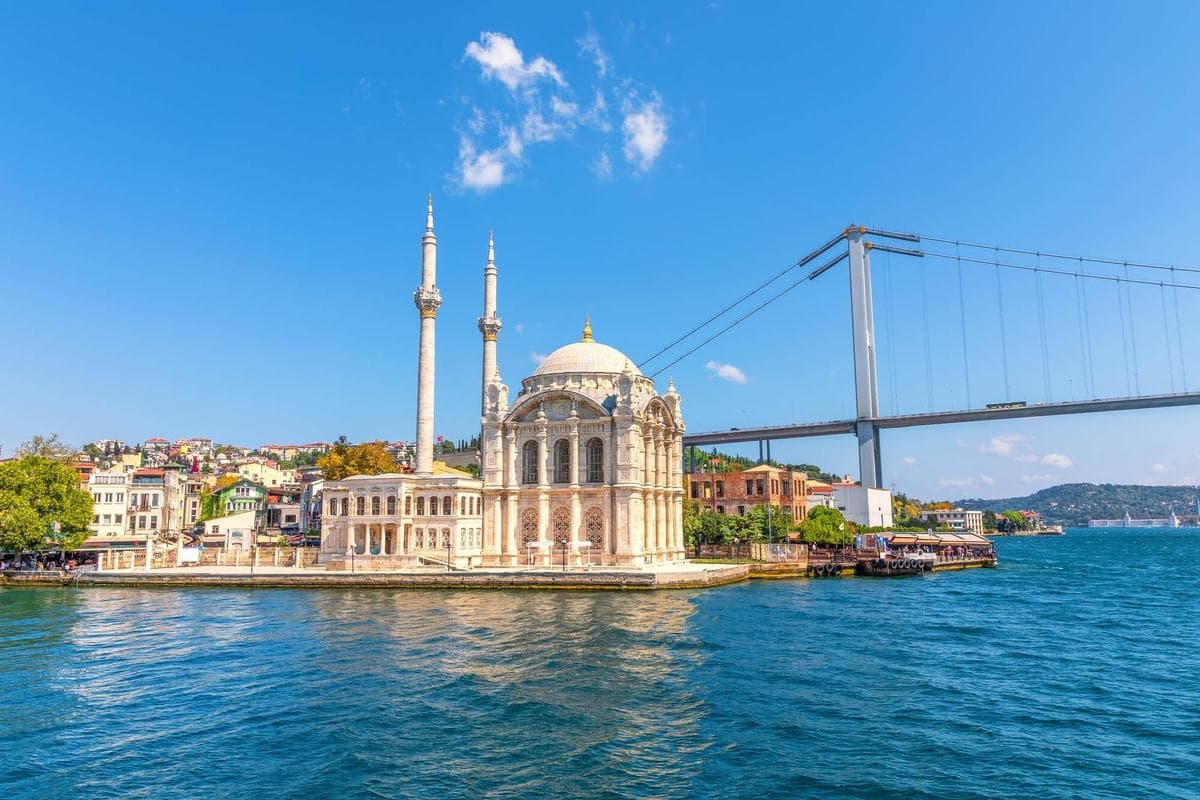
The Ortaköy Mosque, officially known as the Büyük Mecidiye Mosque (Grand Imperial Mosque of Sultan Abdülmecid), stands as a distinctive landmark on Istanbul's Bosphorus shoreline. Built in the mid-19th century under the patronage of Sultan Abdülmecid I, it embodies the late Ottoman Empire's embrace of European architectural styles, particularly the Neo-Baroque. Its elegant presence against the backdrop of the Bosphorus Strait and its historical context within the diverse Ortaköy: Istanbul's Bosphorus Crossroads neighborhood make it more than just a place of worship; it is a symbol of 19th-century Istanbul's changing urban identity and imperial grandeur.
History
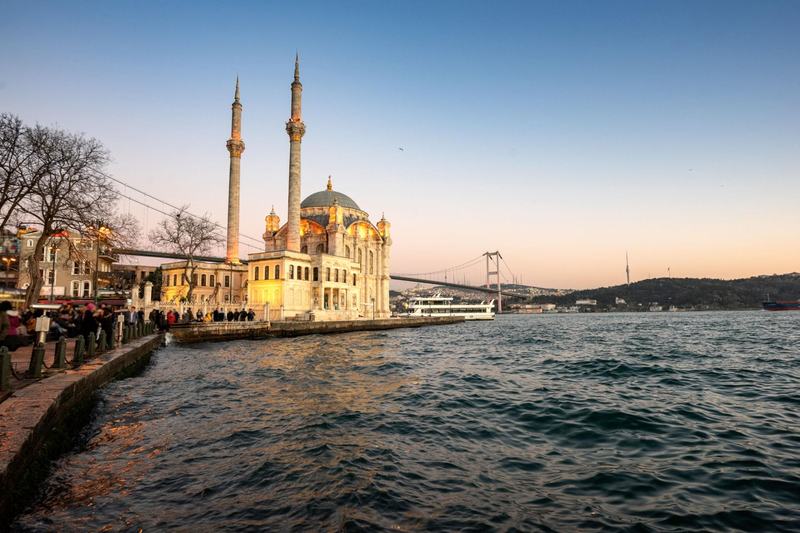
The construction of the Ortaköy Mosque took place between 1853 and 1856, during the reign of Sultan Abdülmecid I. It was designed by the Armenian father-and-son architectural team Garabet Balyan and Nigoğos Balyan, renowned for their work on other significant imperial structures of the period, including the Dolmabahçe Palace: A Symbol of Ottoman Modernization. The mosque was built on the site of an earlier mosque constructed in the 18th century by Mahmut Ağa, the son-in-law of Grand Vizier Damat İbrahim Pasha. Sultan Abdülmecid I commissioned this new structure to reflect the modernizing aspirations of his empire, positioning it prominently on the Bosphorus to be admired by both land and sea travelers. Ortaköy itself was a vibrant and diverse neighborhood during this era, home to communities of Turks, Greeks, Armenians, and Jews, making the mosque a significant addition to an already rich multicultural tapestry. The mosque has undergone several restorations throughout its history to preserve its architectural integrity, including significant work in the late 20th and early 21st centuries.
Architecture
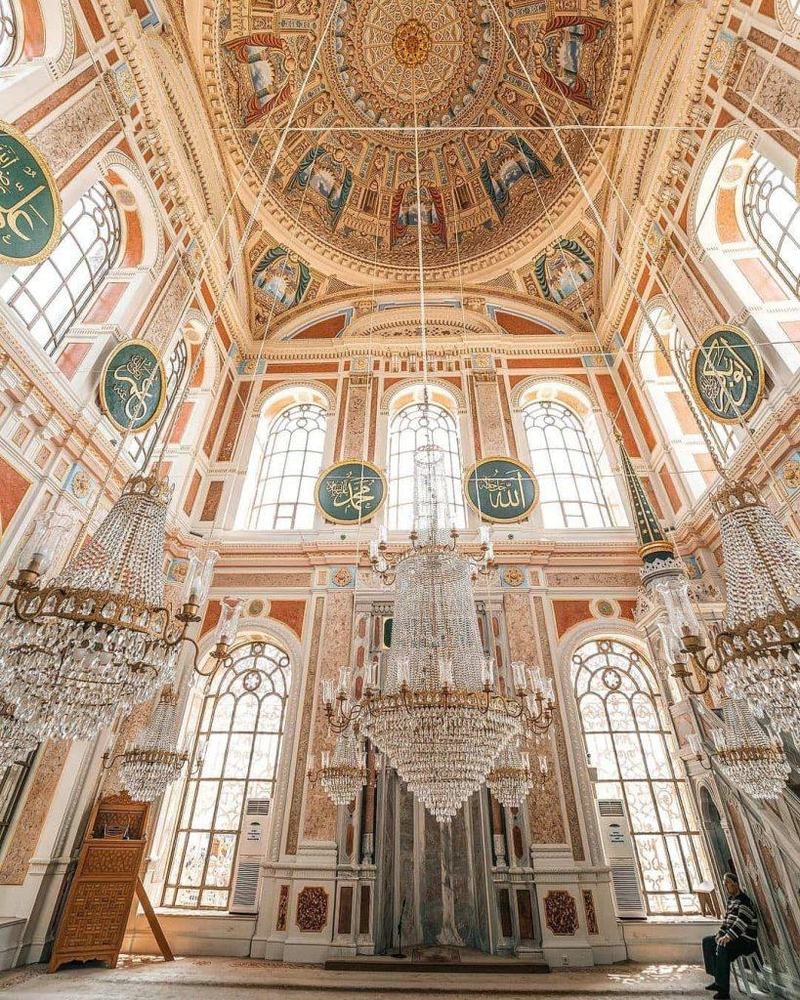
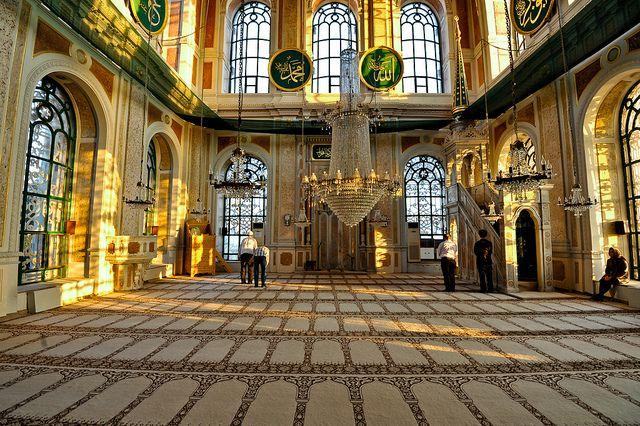
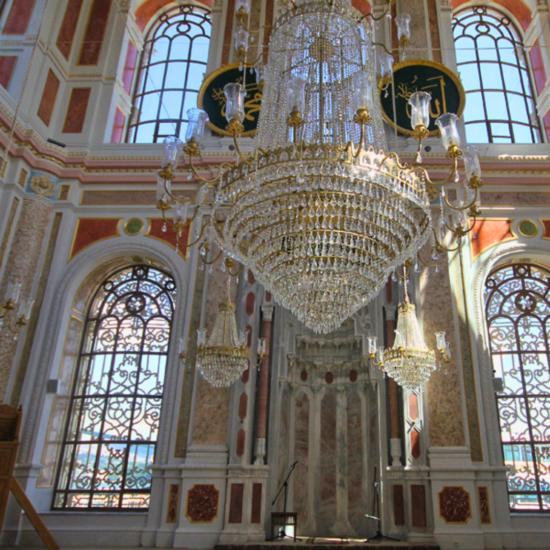
The Ortaköy Mosque is a prime example of the Neo-Baroque style, characterized by its ornate detailing and graceful proportions. Its waterfront setting is integral to its design, with its elegant façade directly facing the Bosphorus, creating a striking silhouette against the sky. The mosque features a single large dome, supported by a square base, which is characteristic of Ottoman imperial mosques. Flanking the main structure are two slender minarets, each with a single şerefe (balcony), adding to its symmetrical and balanced appearance. The exterior is adorned with intricate stone carvings, reflecting the decorative flourishes of the Baroque tradition. Inside, the mosque's prayer hall is illuminated by large windows that offer views of the Bosphorus and fill the space with natural light. The interior decoration is notable for its rich calligraphy, executed by Sultan Abdülmecid I himself, featuring verses from the Quran. The Mihrab (niche indicating the direction of Mecca) and Minbar (pulpit) are crafted from carved marble, showcasing exquisite craftsmanship. The mosque's design, along with nearby imperial structures like Dolmabahçe Palace: A Symbol of Ottoman Modernization and Beylerbeyi Palace: Imperial Life on the Bosphorus, defines the imperial landscape along the Bosphorus during the 19th century, reflecting a shift towards European architectural tastes in the Ottoman court.
Practical Information
Opening Hours
Ortaköy Mosque is an active place of worship, so it does not operate like a museum with fixed visitor hours. Visitors should plan their visit between prayer times, as access to the interior may be restricted during prayers.
Admission
Free. There is no entrance fee for visiting the mosque.
Accessibility
The mosque is a historic building, and full step-free accessibility should not be assumed. Visitors with mobility needs may wish to check current access arrangements before visiting.
Dress Code
As an active mosque, visitors should dress modestly. Women should bring a head covering for entering the prayer area.
Visiting Etiquette
Remove your shoes before entering the prayer area, keep voices low, silence your phone, and avoid photographing worshippers without permission.
Best Time to Visit
For the best combination of quiet interiors and natural light, visit outside prayer times, preferably in the morning or late afternoon.
Getting There
Ortaköy Mosque is located directly on the Bosphorus waterfront in Ortaköy, Beşiktaş. It is easily reached by bus from central Istanbul, and the waterfront promenade makes it convenient to combine with a walk through Ortaköy.
Nearby
The mosque is surrounded by Ortaköy Square, the Bosphorus waterfront and historic waterfront mansions, making it easy to combine with an exploration of the neighborhood.
Tip
Come shortly before sunset if you want to experience the mosque's exterior with the Bosphorus and evening light—but allow enough time to visit the interior before prayer time begins.
Neighborhood: Ortaköy: Istanbul's Bosphorus Crossroads
Frequently asked questions
What is the official name of the Ortaköy Mosque?
The official name of the Ortaköy Mosque is the Büyük Mecidiye Mosque, which translates to the Grand Imperial Mosque of Sultan Abdülmecid.
When was the Ortaköy Mosque built?
The Ortaköy Mosque was constructed between 1853 and 1856.
Which Sultan commissioned the Ortaköy Mosque?
Sultan Abdülmecid I commissioned the construction of the Ortaköy Mosque.
Who were the architects of the Ortaköy Mosque?
The mosque was designed by the Armenian father-and-son architectural team Garabet Balyan and Nigoğos Balyan.
What is the architectural style of the Ortaköy Mosque?
The Ortaköy Mosque is known for its Neo-Baroque architectural style, characterized by ornate detailing and graceful forms.
What makes the Ortaköy Mosque's location significant?
Its location directly on the Bosphorus shoreline is highly significant, making it a prominent landmark and an integral part of Istanbul's waterfront imperial landscape.
What notable feature is found in the mosque's interior?
The interior of the Ortaköy Mosque features rich calligraphy, reportedly executed by Sultan Abdülmecid I himself.
How does the Ortaköy Mosque relate to the neighborhood it is in?
The mosque is located in the historic Ortaköy: Istanbul's Bosphorus Crossroads neighborhood, which was known for its diverse communities of Turks, Greeks, Armenians, and Jews in the 19th century, placing the mosque within a rich multicultural context.
Written by Istanbook Editorial Team