Places
Rumeli Fortress: Sultan Mehmed II's Strategic Stronghold
Overview
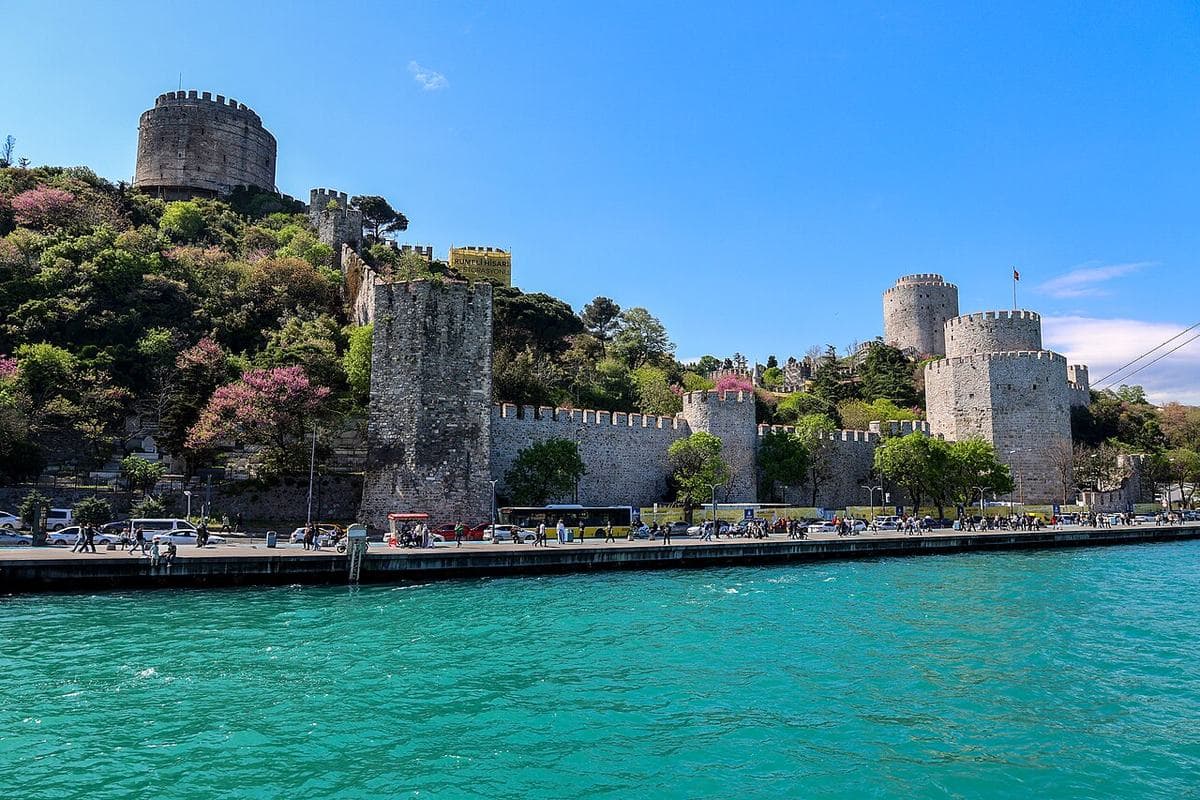
Perched on the European shore of the Bosphorus, the Rumeli Fortress (Rumeli Hisarı) stands as a monumental testament to Ottoman military strategy. Built by Sultan Mehmed II in 1452, just prior to the Conquest of Constantinople, its primary purpose was to sever the vital maritime link between the Black Sea and the Byzantine capital. This formidable structure, alongside its counterpart, the Anadolu Fortress, transformed the Bosphorus into an Ottoman-controlled passage, isolating Constantinople and paving the way for its eventual fall. Today, it remains a powerful symbol of Istanbul's strategic importance and a striking example of medieval military architecture, offering sweeping views of the strait it once commanded.
History
The construction of Rumeli Fortress began in the spring of 1452, under the direct orders and supervision of Sultan Mehmed II. Its erection was a critical preparatory step for the Ottoman siege of Constantinople, aimed at cutting off any potential relief or supplies reaching the Byzantine capital from the Black Sea. Strategically located at the narrowest point of the Bosphorus, approximately 660 meters (2,165 feet) across from the earlier-built Anadolu Fortress (Anadolu Hisarı) on the Asian shore, the two fortresses effectively created an impenetrable choke point. This strategic positioning allowed the Ottomans to control all maritime traffic, preventing ships from passing without permission and thus denying Constantinople access to crucial resources. The fortress was constructed with remarkable speed, reportedly completed in just four months, a testament to the organizational prowess of Sultan Mehmed II and his engineers. During the siege of Constantinople in 1453, Rumeli Fortress played a pivotal role by controlling the Bosphorus, using its cannons to sink any ships attempting to breach the blockade. This control prevented any Byzantine allies from providing naval assistance or supplies to the besieged city. While popular stories sometimes suggest its cannons were used to bombard the Land Walls of Constantinople, its primary and documented military function was the naval blockade of the Bosphorus. Following the conquest, Rumeli Fortress lost some of its initial military urgency but continued to serve various functions. It initially functioned as a customs checkpoint and later as a prison. Over centuries, like many ancient structures, it fell into disrepair. The fortress underwent significant restoration efforts in the 20th century, notably in the 1950s, to preserve its historical and architectural integrity. Today, Rumeli Fortress serves as a museum and an open-air theatre, hosting various cultural events. Its commanding position overlooking the Bosphorus continues to underscore its historical significance as a guardian of the strait and a symbol of Ottoman dominance.
Architecture
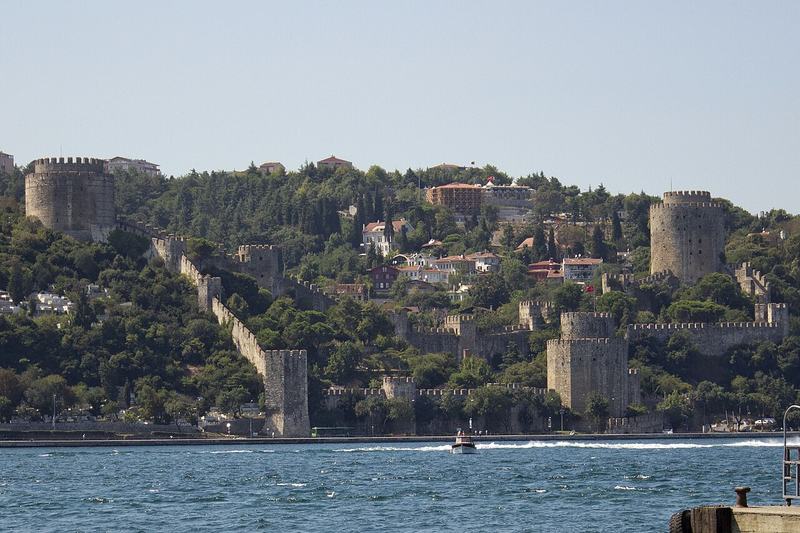
Rumeli Fortress is a masterpiece of defensive architecture, sprawling across approximately 31,250 square meters (7.7 acres) on the steep hills of the Bosphorus European shore. The fortress's design is unique, reportedly incorporating the Arabic letters that spell 'Muhammad' or 'Mehmed' when viewed from above, an 'ai_suggestion' that is often cited but remains an 'interpretation' rather than a 'verified' historical fact. Its layout features three large main towers and 13 smaller watchtowers, all connected by robust curtain walls. The three prominent towers are named after the viziers who oversaw their construction: Saruca Pasha Tower, Halil Pasha Tower, and Zağanos Pasha Tower. The Saruca Pasha Tower, a polygonal structure, stands near the water's edge. The Halil Pasha Tower, a cylindrical design, is situated in the middle. The Zağanos Pasha Tower, another polygonal tower, occupies the highest point. The walls connecting these towers vary in thickness from 1.5 to 7 meters (5 to 23 feet) and reach heights of up to 8 meters (26 feet). The construction materials primarily consisted of local stone, salvaged Byzantine ruins, and lime mortar, often mixed with crushed brick. The fortress was equipped with three main gates, one large gate on the seaside and two smaller gates on the land side, along with several hidden postern gates. Its formidable structure was specifically designed to withstand prolonged sieges and project overwhelming firepower across the Bosphorus, effectively turning the strait into an Ottoman lake. The strategic placement of artillery within the towers allowed for overlapping fields of fire, ensuring comprehensive control over shipping.
Neighborhood: Çengelköy: Istanbul's Historic Bosphorus Village
Frequently asked questions
When was Rumeli Fortress built?
Rumeli Fortress was constructed by Sultan Mehmed II in 1452, just one year before the Ottoman conquest of Constantinople.
What was the main purpose of Rumeli Fortress?
Its main purpose was to establish Ottoman control over the Bosphorus, preventing any naval traffic, especially supplies and reinforcements, from reaching Constantinople from the Black Sea.
How does Rumeli Fortress relate to Anadolu Fortress?
Rumeli Fortress was built directly across from the older Anadolu Fortress, creating a strategic choke point at the narrowest section of the Bosphorus. Together, they formed an unbreachable barrier, enabling the Ottomans to fully control the strait.
How long did it take to build Rumeli Fortress?
The fortress was built with remarkable speed, reportedly completed in approximately four months.
What is the significance of its name?
Rumeli refers to the European side of Turkey. The fortress is also historically known as Boğazkesen, which translates to 'throat-cutter' or 'strait-cutter,' emphasizing its strategic role in controlling the Bosphorus.
What is Rumeli Fortress used for today?
Today, Rumeli Fortress functions as a museum and an open-air theatre, hosting various cultural events and offering visitors a chance to explore its historical architecture and panoramic views.
What are the names of the main towers?
The three main towers are named after the viziers who supervised their construction: Saruca Pasha Tower, Halil Pasha Tower, and Zağanos Pasha Tower.
Written by Istanbook Editorial Team