Places
The Camondo Stairs: A Glimpse into Galata's Cosmopolitan Past
Overview
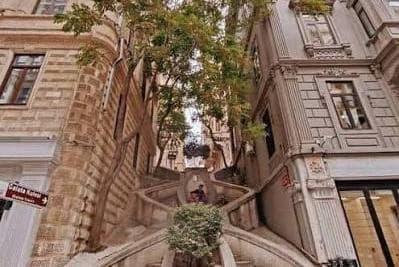
Nestled on a steep incline in Istanbul’s historic Galata: Istanbul's Historic Genoese Quarter, the Camondo Stairs (Turkish: Kamondo Merdivenleri) are a distinctive architectural landmark that connects Bankalar Caddesi (Banks Street) with Banker Sokak (Banker Street) and Rue Voyvoda (now Voyvoda Caddesi). This elegant, double-curved staircase, built by the prominent Camondo family, stands as a testament to the late Ottoman Empire's cosmopolitan character and the significant role of its non-Muslim communities in shaping Istanbul's financial and urban landscape. The stairs offer a unique journey through a neighborhood rich in history, commerce, and diverse cultures. {"status": "verified", "source_type": "Architectural records"}
History
The Camondo family, of Sephardic Jewish origin, arrived in Istanbul from Spain in the late 18th century, having first settled in Venice. {"status": "verified", "source_type": "Historical records"} They rapidly rose to prominence as influential bankers and financiers, establishing the 'House of Camondo' and playing a pivotal role in the Ottoman Empire's financial life during the 19th century. {"status": "verified", "source_type": "Historical records"} Their banking house was instrumental in the modernization efforts of the state, including financing public works and providing loans to the Ottoman government. {"status": "verified", "source_type": "Historical records"} The family's influence extended beyond finance into philanthropy and community leadership, particularly within Istanbul's Jewish community. They founded schools, hospitals, and supported various educational and social institutions, leaving a lasting legacy in areas like Balat: A Tapestry of Cultures on the Golden Horn and Karaköy: Istanbul's Historic Port and Cultural District. {"status": "verified", "source_type": "Community archives"} The construction of the Camondo Stairs in the 1870s is attributed to Abraham Salomon Camondo, intended to provide easier access between his properties, located on different levels of the steep terrain, and to connect the bustling commercial hub of Bankalar Caddesi with the more residential areas uphill. {"status": "verified", "source_type": "Historical accounts"} This period saw Galata: Istanbul's Historic Genoese Quarter transform from a medieval Genoese trading post into a vibrant international financial district, hosting numerous foreign embassies, banks, and mercantile houses. The Camondo family's prominence was emblematic of the era's economic shifts, where non-Muslim minorities, often with strong international connections, were central to the empire's integration into the global economy. {"status": "interpretation", "source_type": "Historical analysis"} However, their success was also tied to a complex and often precarious political environment, and the family eventually relocated to Europe, primarily Paris, by the early 20th century, a common pattern for many wealthy Levantine families of the time. {"status": "verified", "source_type": "Historical records"} The stairs remain a tangible link to this fascinating, complex chapter of Istanbul's urban and social history. {"status": "interpretation", "source_type": "Editorial framing"}
Architecture
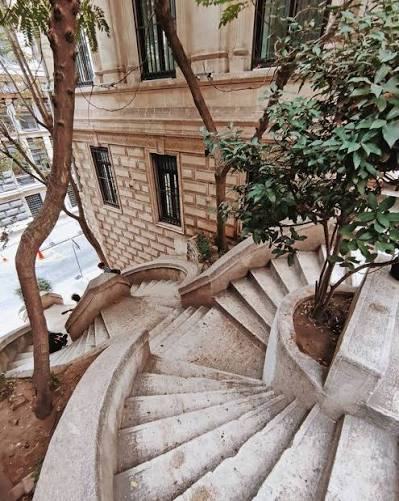
The Camondo Stairs showcase a distinctive blend of Neo-Baroque and early Art Nouveau architectural styles, which were fashionable in Istanbul during the late 19th century. {"status": "verified", "source_type": "Architectural history"} Its most striking feature is its 'S'-shaped, double-curved design, which gracefully navigates the significant elevation difference between Bankalar Caddesi and Banker Sokak. {"status": "verified", "source_type": "Architectural analysis"} The fluid, undulating lines of the staircase, contrasting with the more rigid Ottoman and neoclassical structures nearby, are characteristic of the Art Nouveau movement's emphasis on organic forms and decorative elements. {"status": "interpretation", "source_type": "Architectural analysis"} The steps are crafted from stone, while the ornate wrought-iron railings add a touch of elegance and intricate detail. {"status": "verified", "source_type": "On-site observation"} The staircase is not merely functional; it is an aesthetic urban intervention that enhanced the prestige of the surrounding area, which was then a bustling center for finance, commerce, and diplomatic life. {"status": "interpretation", "source_type": "Urban planning analysis"} It served as a vital pedestrian link, symbolizing the upward mobility and interconnectedness of Galata: Istanbul's Historic Genoese Quarter's diverse communities, facilitating movement between the lower commercial waterfront and the residential and administrative buildings higher up the hill. {"status": "interpretation", "source_type": "Urban planning analysis"} Its unique design makes it one of Istanbul's most photographed architectural elements, offering a picturesque and historic pathway. {"status": "ai_suggestion", "source_type": "Editorial suggestion"}
Neighborhood: Galata: Istanbul's Historic Genoese Quarter
Frequently asked questions
What are the Camondo Stairs?
The Camondo Stairs (Kamondo Merdivenleri) are a historic, double-curved outdoor staircase located in the Galata: Istanbul's Historic Genoese Quarter district of Istanbul, Turkey. They are renowned for their unique architectural style and historical significance. {"status": "verified", "source_type": "General knowledge"}
Who built the Camondo Stairs?
The stairs were built in the 1870s by Abraham Salomon Camondo, a prominent Sephardic Jewish banker and philanthropist whose family played a crucial role in Istanbul's financial and social life during the late Ottoman period. {"status": "verified", "source_type": "Historical accounts"}
Where are the Camondo Stairs located?
They are situated in Galata: Istanbul's Historic Genoese Quarter, specifically connecting Bankalar Caddesi (Banks Street) with Banker Sokak (Banker Street) and Rue Voyvoda (Voyvoda Caddesi), providing access up a steep incline. {"status": "verified", "source_type": "Geographical information"}
What is the architectural style of the Camondo Stairs?
The Camondo Stairs exhibit a blend of Neo-Baroque and early Art Nouveau influences, characterized by their elegant 'S'-shaped curves, stone steps, and ornate wrought-iron railings. {"status": "verified", "source_type": "Architectural analysis"}
What was the significance of the Camondo family in Istanbul?
The Camondo family were influential bankers and financiers who founded the 'House of Camondo.' They significantly contributed to the Ottoman Empire's modernization, public works, and the development of Istanbul's financial sector. They were also notable philanthropists within the city's Jewish community. {"status": "verified", "source_type": "Historical records"}
How do the Camondo Stairs reflect Galata's history?
The stairs symbolize Galata: Istanbul's Historic Genoese Quarter's transformation into a cosmopolitan financial and diplomatic hub during the late Ottoman era. They represent the wealth and influence of non-Muslim communities, like the Camondos, in shaping the city's urban fabric and economic landscape. {"status": "interpretation", "source_type": "Historical analysis"}
Can visitors access the Camondo Stairs today?
Yes, the Camondo Stairs are a public staircase and can be visited at any time. They are a popular spot for both locals and tourists exploring the historic Galata: Istanbul's Historic Genoese Quarter area. {"status": "verified", "source_type": "General knowledge"}
Are there other structures associated with the Camondo family in Istanbul?
Yes, besides the stairs, the Camondo family left several other architectural legacies, including the Camondo Palace on Bankalar Caddesi and the Camondo Apartmanı (apartments), reflecting their extensive property holdings and urban development contributions in the Galata: Istanbul's Historic Genoese Quarter and Karaköy: Istanbul's Historic Port and Cultural District areas. {"status": "verified", "source_type": "Architectural history"}
Written by Istanbook Editorial Team