Places
The Galata Bridge: Istanbul's Living Connection
Overview
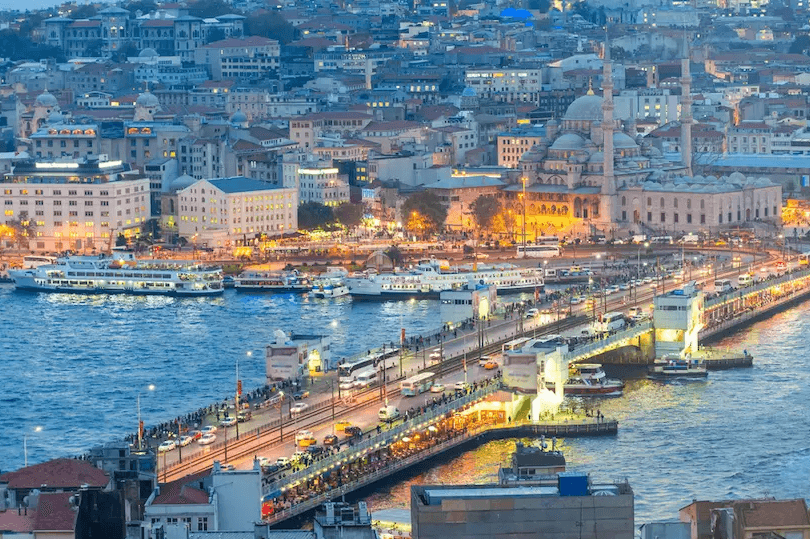
More than just a passage, the Galata Bridge is a pulsating artery connecting Istanbul's historic heart to its more modern districts. Spanning the Golden Horn (Haliç), it links Eminönü: Istanbul's Historic Port and Trading Hub on the historic peninsula with Galata: Istanbul's Historic Genoese Quarter (specifically Karaköy: Istanbul's Historic Port and Cultural District) on the northern shore. This iconic bridge serves as a vibrant stage for daily life, a symbol of urban dynamism, and a crucial crossing where countless stories unfold, reflecting the city's layered past and bustling present.
History
The idea of a bridge across the Golden Horn to connect these two vital shores is not new; rudimentary crossings have existed for centuries. A bridge attributed to the Byzantine Emperor Justinian I in the 6th century represents one of the earliest known attempts to span the waterway, though its exact location and nature remain debated by historians. Later, Leonardo da Vinci himself proposed a single-span design for the Golden Horn in 1502, though this ambitious project was never realized. The modern history of the Galata Bridge began in 1836 with the construction of a pontoon bridge, known as the Hayratiye Bridge, under the patronage of Sultan Mahmud II. This was followed by the first proper Galata Bridge, named Cisr-i Cedid (New Bridge), inaugurated in 1845. Its toll collection was a significant source of income for the imperial treasury. As Istanbul grew, so did the need for a more robust connection. The bridge was successively replaced in 1863, 1899, and then again in 1912 with a significant iron structure that would serve the city for decades. This fourth Galata Bridge became an enduring landmark until it was severely damaged by fire in 1992 and subsequently replaced. The current, fifth Galata Bridge, completed in 1994, continues this long lineage, a testament to Istanbul's perpetual need to bridge its different worlds. Each iteration of the bridge has played a pivotal role in shaping the city's transport infrastructure, facilitating trade, and evolving alongside Istanbul's expanding urban fabric.
Architecture
The current Galata Bridge is a double-deck bascule bridge, meaning it can open to allow large ships to pass through the Golden Horn. Its design is both functional and aesthetically integrated into Istanbul's historic skyline. The upper deck serves as a thoroughfare for vehicle traffic, tram lines, and pedestrians, offering sweeping views of the historic peninsula, the Süleymaniye Mosque Complex, and the Galata Tower: Istanbul's Enduring Sentinel. Below, the lower deck houses a bustling array of restaurants and cafes, many specializing in seafood, drawing locals and visitors alike. This dual-level structure not only provides essential connectivity but also creates a vibrant social space, making the bridge itself a destination rather than just a crossing.
Neighborhood: Eminönü: Istanbul's Historic Port and Trading Hub
Frequently asked questions
What is the Galata Bridge?
The Galata Bridge is an iconic double-deck bridge in Istanbul that spans the Golden Horn (Haliç), connecting the historic district of Eminönü on the historic peninsula with the Karaköy area of Galata on the northern shore.
Where is the Galata Bridge located?
The Galata Bridge is located in the heart of Istanbul, Turkey. It connects the neighborhoods of Eminönü: Istanbul's Historic Port and Trading Hub (part of the Old City) and Karaköy: Istanbul's Historic Port and Cultural District (part of Galata: Istanbul's Historic Genoese Quarter) across the Golden Horn.
How many Galata Bridges have there been throughout history?
There have been five distinct Galata Bridges constructed across the Golden Horn since the mid-19th century, with the current bridge being the fifth iteration. Prior to these, there were earlier temporary pontoon bridges and even a proposed design by Leonardo da Vinci.
What is the significance of the Galata Bridge in Istanbul?
The Galata Bridge is profoundly significant as it serves as a vital transportation artery, a bustling hub for trade and fishing, and a vibrant social and cultural meeting point. It symbolically and literally bridges different economic and social worlds within Istanbul, connecting the old city with the more modern districts.
What can visitors do on or around the Galata Bridge?
Visitors can walk across the bridge, observe the numerous fishermen, enjoy panoramic views of the city's skyline, and dine at the seafood restaurants located on its lower deck. The areas at either end, Eminönü: Istanbul's Historic Port and Trading Hub and Karaköy: Istanbul's Historic Port and Cultural District, offer bustling markets, historic sites, and ferry terminals.
Are there restaurants on the Galata Bridge?
Yes, the lower deck of the current Galata Bridge is home to many restaurants and cafes, primarily specializing in fresh fish and seafood, offering unique dining experiences right over the Golden Horn.
Why is fishing so popular on the Galata Bridge?
Fishing from the Galata Bridge has been a long-standing tradition and remains a popular activity for both locals and visitors. It's a source of livelihood for many, provides fresh catch for the bridge's restaurants, and has become an iconic image of Istanbul's daily life.
How does the Galata Bridge connect different parts of Istanbul?
The Galata Bridge acts as a crucial link, physically and culturally. It connects the historic, Ottoman-era commercial hub of Eminönü: Istanbul's Historic Port and Trading Hub (home to the Istanbul's Spice Bazaar (Mısır Çarşısı) and Grand Bazaar: Istanbul's Historic Covered Market) with Karaköy: Istanbul's Historic Port and Cultural District, which historically served as a more European-influenced trade and financial center, leading up to the modern districts of Beyoğlu: Istanbul's Cosmopolitan Heart.
Written by Istanbook Editorial Team