Places
Yıldız Palace: A Late Ottoman Imperial Residence
Overview
Nestled on a wooded hillside overlooking the Bosphorus in Istanbul's Beşiktaş: Istanbul's Bosphorus Crossroads district, Yıldız Palace (Yıldız Sarayı) stands not as a single grand structure, but as a sprawling imperial complex that served as the primary residence and administrative center for Ottoman sultans in the late 19th and early 20th centuries. Far from the exposed grandeur of its Bosphorus-facing predecessors, Yıldız offered a more secluded and strategically advantageous location. Its development into a self-contained city within a city reflects the shifting political landscape and security concerns of the Ottoman Empire during its final decades, particularly under the reign of Sultan Abdülhamid II. The complex, with its diverse array of pavilions, gardens, workshops, and administrative buildings, embodies a unique blend of Ottoman tradition and European architectural influences, offering a nuanced glimpse into the twilight of an empire.
History
While the grounds of Yıldız Palace were initially established as imperial hunting grounds and a series of kiosks in the 17th and 18th centuries, its true transformation into a significant imperial residence began in the mid-19th century. Sultan Abdülaziz initiated some construction, but it was Sultan Abdülhamid II (reigned 1876–1909) who decisively shaped Yıldız into the administrative and political heart of the Ottoman Empire. Following a period of political instability and security concerns, including incidents that highlighted the vulnerability of Dolmabahçe Palace: A Symbol of Ottoman Modernization due to its direct exposure to the Bosphorus, Abdülhamid II chose Yıldız as his primary residence and seat of government. This move, which began around 1877, allowed for greater security and control over access, making it a more secure haven for the monarch and the bureaucracy. Under Abdülhamid II, Yıldız expanded dramatically to include not only residential quarters but also ministries, a porcelain factory, an imperial theatre, a library, an armory, and various workshops. It became a self-sufficient complex, allowing the Sultan to govern from within its fortified walls. This development reflects a broader political atmosphere of increasing centralization and a desire for stability in a period of significant internal and external challenges for the Ottoman state. After the deposition of Abdülhamid II in 1909, Yıldız Palace largely lost its status as the imperial residence. In the Republican era, parts of the complex served various functions, including a military academy, a hotel, and eventually, a museum and cultural center. Its current status continues to evolve, with ongoing efforts to restore and repurpose its historic structures for public and cultural use.
Architecture
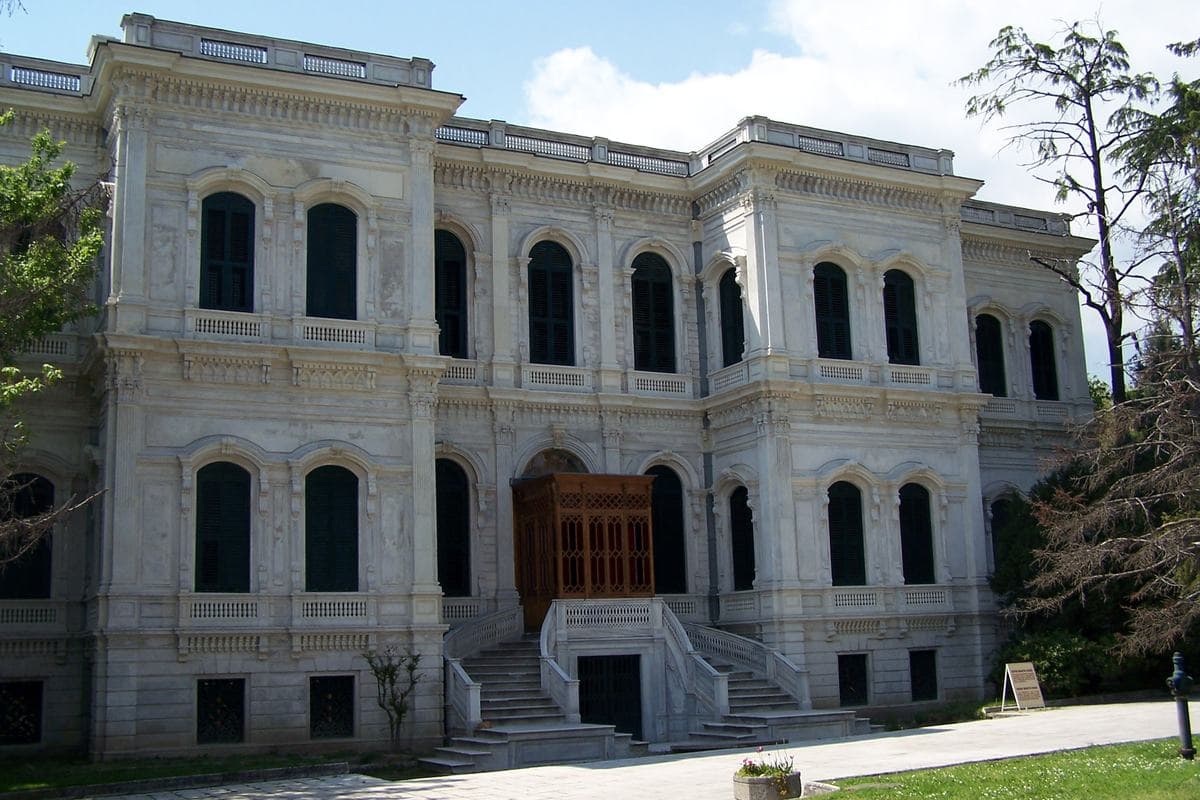
The architecture of Yıldız Palace is characterized by its eclectic nature, a reflection of the late Ottoman period's openness to European influences while retaining distinct Ottoman elements. Unlike the singular monumental facade of Dolmabahçe Palace: A Symbol of Ottoman Modernization, Yıldız is a sprawling ensemble of buildings spread across a vast park. Key structures include the Şale Köşkü, a magnificent wooden mansion that served as the Sultan's main residence and guesthouse for foreign dignitaries, showcasing elaborate wooden ornamentation and opulent interiors. The Malta Köşkü and Çadır Köşkü are other prominent pavilions, each with unique architectural styles and surrounded by lush gardens that were meticulously landscaped. The complex also features an impressive Imperial Theatre (Yıldız Sarayı Tiyatrosu), an ornate structure designed in a European style, emphasizing the cultural and diplomatic functions of the palace. Within the grounds, the Yıldız Porcelain Factory (Yıldız Porselen Fabrikası), established by Abdülhamid II, produced fine porcelain in both traditional Ottoman and European styles, serving the palace and as diplomatic gifts. The relationship with the surrounding Beşiktaş: Istanbul's Bosphorus Crossroads area was one of integration through its vast parklands, which provided a natural buffer and a visual connection to the city below, while the palace itself remained a relatively secluded imperial world. The overall design emphasizes a blend of functionality, luxury, and defensive considerations, creating a diverse architectural tapestry that speaks to the complex identity of the late Ottoman court.
Neighborhood: Beşiktaş: Istanbul's Bosphorus Crossroads
Frequently asked questions
What was the main purpose of Yıldız Palace?
Yıldız Palace served as the primary residence and administrative center of the Ottoman Empire, particularly under Sultan Abdülhamid II, from the late 19th to the early 20th century. It housed the Sultan, his court, and key governmental offices.
Why did Sultan Abdülhamid II move to Yıldız Palace?
Sultan Abdülhamid II moved to Yıldız Palace primarily for security reasons. Unlike the more exposed Dolmabahçe Palace, Yıldız offered a secluded, elevated, and easily defensible location away from the Bosphorus, which was considered strategically vulnerable during a period of political unrest and internal challenges.
Is Yıldız Palace a single building?
No, Yıldız Palace is not a single building but a vast imperial complex comprising numerous pavilions, kiosks, residential buildings, administrative offices, workshops, an imperial theatre, and extensive gardens spread across a large area in Beşiktaş.
What are some notable buildings within the Yıldız Palace complex?
Key structures include the Şale Köşkü, which served as the Sultan's main residence, the Malta Köşkü, the Çadır Köşkü, the Imperial Theatre (Yıldız Sarayı Tiyatrosu), and the Yıldız Porcelain Factory (Yıldız Porselen Fabrikası).
What happened to Yıldız Palace after the Ottoman Empire?
After the end of the Ottoman Empire, Yıldız Palace ceased to be an imperial residence. Parts of the complex were used for various purposes, including a military academy and a hotel, before being transformed into a museum and cultural center, as well as housing institutions like Yıldız Technical University.
Can visitors tour Yıldız Palace today?
Yes, parts of the Yıldız Palace complex, including some pavilions and gardens, are open to the public as a museum and park. Visitors can explore the historical grounds and some of the restored buildings to experience its late Ottoman grandeur.
What architectural style is prevalent at Yıldız Palace?
Yıldız Palace features an eclectic architectural style, blending traditional Ottoman elements with various European influences, including Art Nouveau and neoclassical styles, which were popular during the late 19th century. This mix reflects the era's engagement with Western design trends.