Places
Zeyrek: Istanbul's Byzantine-Ottoman Crossroads
Overview
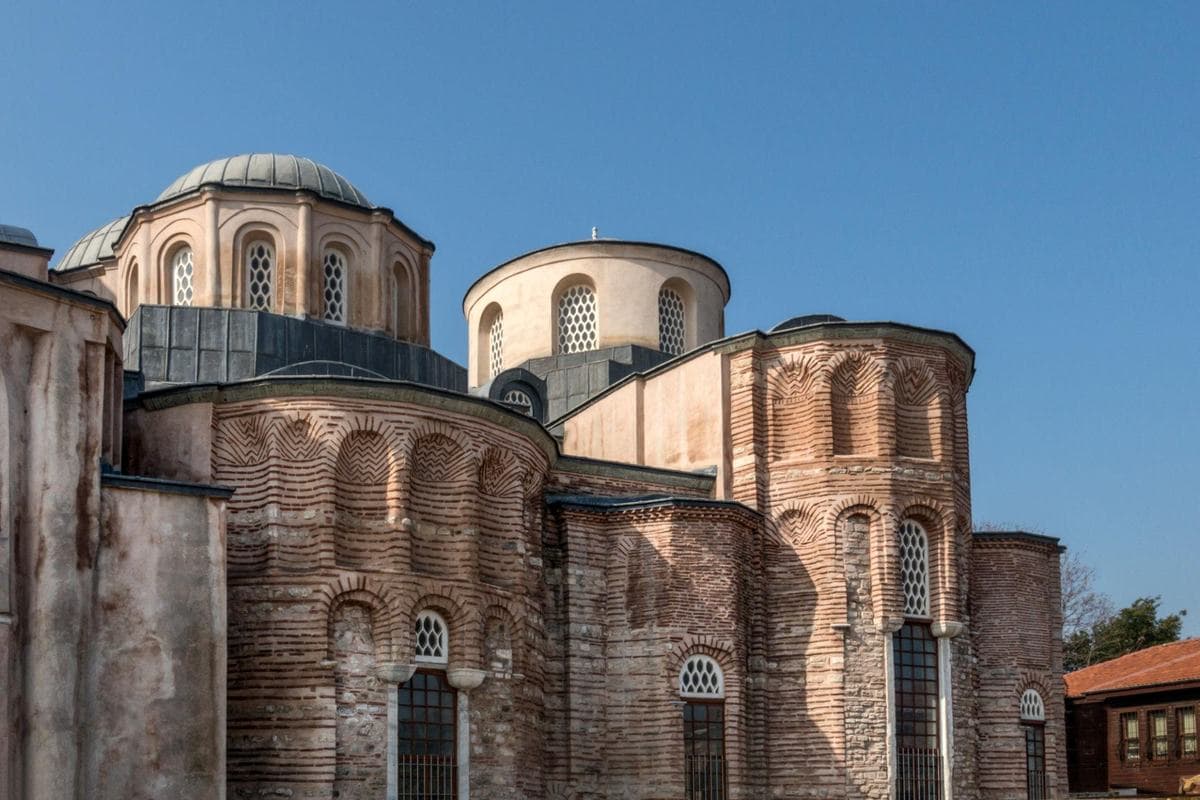
Nestled on one of Istanbul's historic hills overlooking the Golden Horn, the neighborhood of Zeyrek: Istanbul's Enduring Byzantine and Ottoman Layers offers a vivid journey through the city's layered past. Its centerpiece is the Zeyrek Mosque (Zeyrek Camii), a monumental structure that began its life as the Byzantine Monastery of Christ Pantokrator. Today, this complex stands as one of the most compelling examples of Istanbul's continuous transformation across empires, where the architectural grandeur of Byzantium meets the adaptive ingenuity of the Ottoman era. The surrounding Zeyrek: Istanbul's Enduring Byzantine and Ottoman Layers neighborhood, with its narrow cobblestone streets and traditional wooden Ottoman houses, further enhances the sense of stepping back in time, presenting a remarkably preserved urban fabric that complements the mosque's profound historical narrative.
History
The history of the Zeyrek Mosque begins in the Byzantine period, not as a mosque, but as the Monastery of Christ Pantokrator (Pantokrator Manastırı), an immense imperial complex founded by Empress Irene Komnena between 1118 and 1124 CE. Following her death, her husband, Emperor John II Komnenos, completed the monastery by adding a church dedicated to St. Michael, which served as the imperial mausoleum for the Komnenos dynasty. The complex was renowned in its time, comprising three churches, a hospital, a library, and a bathhouse. It was the second-largest religious structure in Constantinople after Hagia Sophia: A Layered History and a significant center for learning and healing. After the Ottoman conquest of Constantinople in 1453, the monastery was converted into a mosque and a madrasa (theological school). It was renamed Zeyrek Mosque, taking its name from Molla Zeyrek Mehmet Efendi, a scholar who taught at the newly established madrasa. This transformation involved significant adaptations, including the addition of a minaret and internal features such as a mihrab (prayer niche) and minbar (pulpit). While many of its Byzantine mosaics and frescoes were either removed or plastered over, the fundamental structure and an undeniable sense of its imperial Byzantine origins remained, demonstrating the Ottoman practice of repurposing and integrating existing monumental architecture.
Architecture
The architectural composition of the Zeyrek Mosque is a remarkable testament to its dual identity, revealing distinct Byzantine and Ottoman layers. The complex originally comprised three churches: the south church (dedicated to Christ Pantokrator), the north church (dedicated to the Theotokos Eleousa), and a central domed church (the katholikon, dedicated to St. Michael), which connected the two and served as the imperial mausoleum. These three distinct spaces, built over a period, showcase variations in Byzantine brickwork, masonry techniques, and spatial arrangements. Visitors can still observe the intricate brick patterns and the distinct Byzantine cross-in-square plan that defines the original churches. Fragments of original marble revetment and intricate geometric floor mosaics from the Byzantine era have also survived in certain sections. The transition to an Ottoman mosque saw the interior spaces reconfigured for congregational prayer, with the mihrab and minbar carefully integrated. The addition of a minaret stands as the most visible Ottoman alteration to the exterior silhouette. The surrounding Zeyrek: Istanbul's Enduring Byzantine and Ottoman Layers neighborhood itself is part of this architectural tapestry, featuring numerous traditional Ottoman wooden houses (Yalı) that line its winding streets, some dating back several centuries. These structures, often built with projecting upper floors and ornate facades, provide a striking contrast to the stone monumental mosque and offer further insight into Istanbul's historical urban development, especially their relationship with the Golden Horn landscape.
Neighborhood: Zeyrek: Istanbul's Enduring Byzantine and Ottoman Layers
Frequently asked questions
What was the original name of Zeyrek Mosque?
Zeyrek Mosque was originally known as the Monastery of Christ Pantokrator (Pantokrator Manastırı) during the Byzantine Empire.
Who built the Monastery of Christ Pantokrator?
The Monastery of Christ Pantokrator was founded by Empress Irene Komnena between 1118 and 1124 CE, with additions made by her husband, Emperor John II Komnenos.
What was the purpose of the Byzantine monastery complex?
The complex served as an imperial monastery, a hospital, a library, and a mausoleum for the Komnenos imperial family, notably housing the tomb of Emperor John II Komnenos.
How did the building transform into a mosque?
Following the Ottoman conquest of Constantinople in 1453, the monastery was converted into a mosque and a madrasa (theological school) and renamed Zeyrek Mosque.
What can visitors see of its Byzantine past today?
Visitors can observe the original Byzantine brickwork, the cross-in-square plan of the churches, and some surviving fragments of marble revetment and geometric floor mosaics.
Why is the Zeyrek neighborhood significant?
The Zeyrek: Istanbul's Enduring Byzantine and Ottoman Layers neighborhood is significant for being one of the clearest places in Istanbul where Byzantine and Ottoman architectural layers are visibly preserved together, offering a unique glimpse into the city's continuous historical transformation.
Are there traditional houses in Zeyrek?
Yes, the neighborhood is known for its many traditional Ottoman wooden houses, which contribute to its historic atmosphere and offer a distinct architectural contrast to the monumental mosque.
Where is Zeyrek located in Istanbul?
Zeyrek is located on one of Istanbul's historic hills, offering views of the Golden Horn, near areas like Vefa: A Neighborhood of Deep History and Enduring Life.