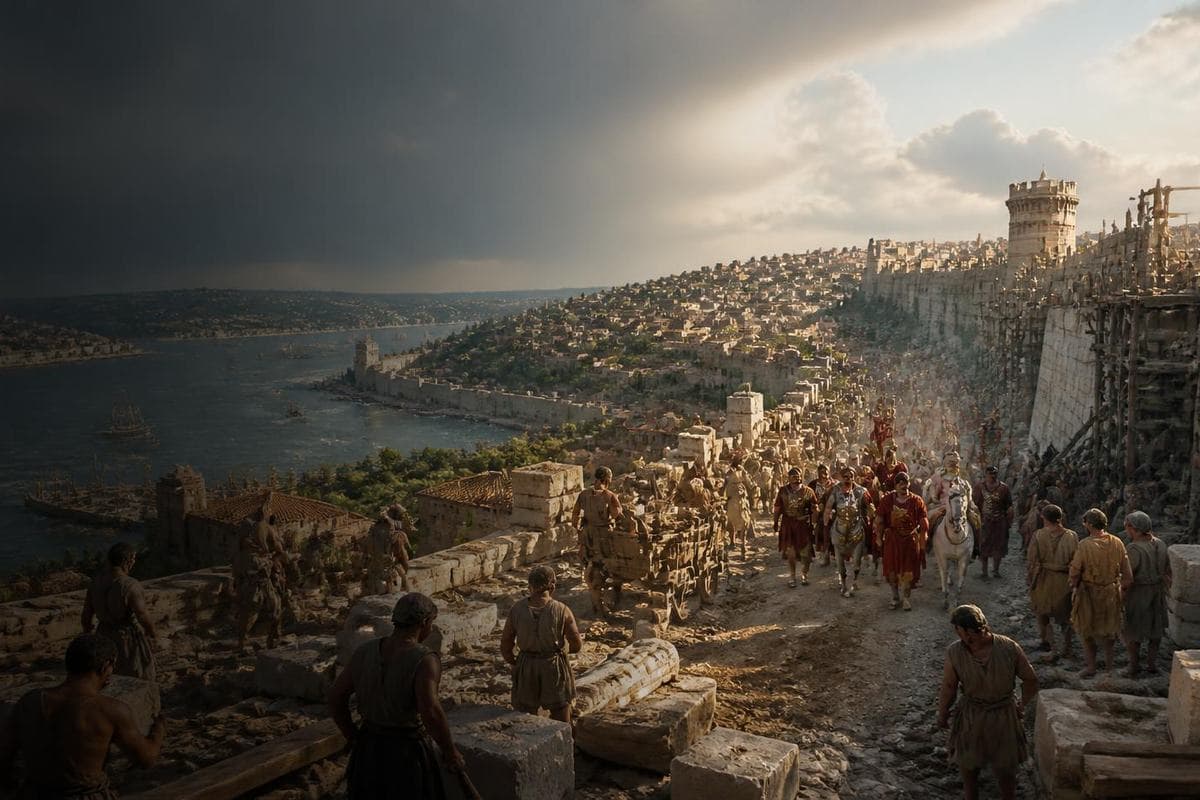
324–330 CE
Constantinople's Founding Under Constantine the Great
Overview
The transformation of the ancient city of Byzantium into Constantinople, the new imperial capital of the Roman Empire, was a pivotal event spearheaded by Emperor Constantine I. This strategic decision was driven by the diminishing geographical centrality and defensibility of Old Rome, especially as the empire's eastern provinces grew in importance. Constantine also envisioned a new capital that would be a Christian center from its very inception, in contrast to Rome's pagan traditions.
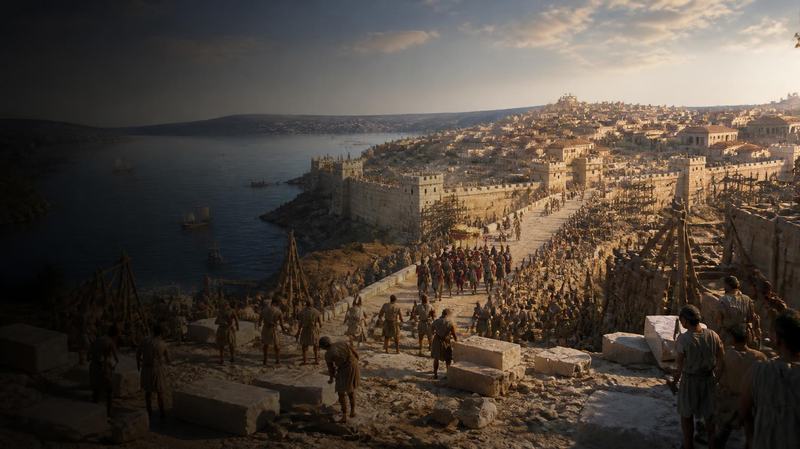
Byzantium's location on the Bosporus Strait offered significant strategic and economic advantages, controlling vital land and sea routes connecting Europe and Asia. Its natural fortifications and proximity to crucial frontiers like the Danube and Euphrates also made it an ideal defensive stronghold.
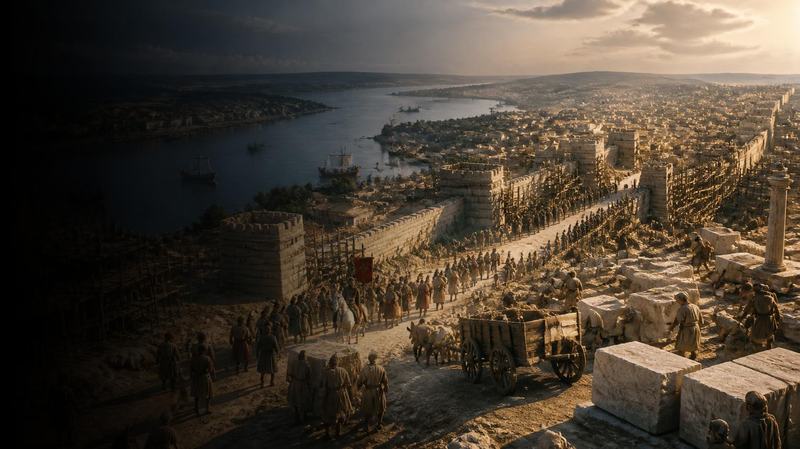
Construction began in 324 CE, with the city officially 'founded' on November 24, 326 CE, marked by the laying of its western wall. Initially named Nova Roma (New Rome), it quickly became known as Constantinople, the "City of Constantine." The formal dedication and consecration occurred on May 11, 330 CE, celebrated with elaborate ceremonies. Constantine heavily invested in its development, modeling it after Rome with 14 regions and numerous public works. Key constructions included a grand forum, an imperial palace, The Hippodrome of Constantinople for chariot racing, public cisterns, baths, a senate house, and triumphal arches. Materials like columns, marbles, and significant works of art were brought from across the empire to adorn the new capital. Among the churches built were those dedicated to Dynamis, Irene, and Sophia, including the earliest form of Hagia Irene: Istanbul's Ancient Imperial Church of Holy Peace. Another prominent feature was the Column of Constantine (Çemberlitaş).
While Constantine's vision was ambitious, the city's full development continued under his successors. Initially, Constantinople held a slightly lesser administrative status than old Rome, lacking an urban prefect and having senators with lower titles. Nevertheless, it rapidly grew to become one of the largest and wealthiest cities in Europe and the Middle East, establishing itself as the political, cultural, and economic heart of the Eastern Roman Empire, later known as the Byzantine Empire.
Key Events
- 324 CE — Emperor Constantine I began construction of the new imperial capital at the site of ancient Byzantium.
- Nov 24, 326 CE — The city was officially 'founded' with the laying out of its western wall.
- May 11, 330 CE — The formal dedication and consecration of Constantinople took place.
- Constantine's Reign — Constantine oversaw the construction of a forum, imperial palace, hippodrome, and several churches, including those dedicated to Dynamis, Irene, and Sophia.
Related Places
Frequently asked questions
Why did Emperor Constantine decide to move the capital from Rome to Byzantium?
Constantine's decision was influenced by several factors. Old Rome was becoming less central geographically and harder to defend militarily, particularly given the growing importance of the empire's eastern provinces. Additionally, Constantine sought a new capital that could serve as a Christian center from its inception, distinguishing it from Rome's pagan heritage.
What strategic advantages did Byzantium offer as a new capital?
Byzantium's location on the Bosporus Strait provided immense strategic and economic benefits, controlling crucial land and sea routes between Europe and Asia. It also offered natural fortifications and was closer to important defensive frontiers like the Danube and Euphrates rivers.
When was Constantinople officially founded and dedicated?
Construction of the new city began in 324 CE. It was officially 'founded' on November 24, 326 CE, with the laying of its western wall. The formal dedication and consecration of Constantinople occurred on May 11, 330 CE.
What was Constantinople initially named by Emperor Constantine?
Constantine initially named the city Nova Roma, meaning "New Rome." However, it soon became widely known as Constantinople, which translates to the "City of Constantine."
What major public works did Constantine initiate in the new capital?
Constantine invested heavily in public works, modeling the city after Rome. Key constructions included:
- A grand forum
- An imperial palace
- The Hippodrome of Constantinople for chariot racing
- Public cisterns and baths
- A senate house
- Triumphal arches
- Churches dedicated to Dynamis, Irene, and Sophia, including the earliest form of Hagia Irene: Istanbul's Ancient Imperial Church of Holy Peace
The city was also adorned with columns and significant works of art brought from other parts of the empire, such as the Column of Constantine (Çemberlitaş).
How did Constantinople differ from old Rome in its early days?
Constantinople was conceived as a Christian city from its beginning, in contrast to old Rome's pagan foundations. Initially, it did not possess all the dignities of old Rome, having a proconsul rather than an urban prefect and senators with lesser titles. Despite this, it quickly grew to become a major political, cultural, and economic center.
Did Constantine complete all the planned development for Constantinople?
While Constantine initiated ambitious plans and extensive construction, the city's full development and expansion continued under his successors, who further enhanced its infrastructure and institutions.
Written by Istanbook Editorial Team · Last updated September 6, 2026
Sources (6)
- american.edu — american.edu
- thebyzantinelegacy.com — thebyzantinelegacy.com
- istanbultarihi.ist — istanbultarihi.ist
- realclearhistory.com — realclearhistory.com
- lumenlearning.com — lumenlearning.com
- wikipedia.org — wikipedia.org