11th Century–1453 CE
The Last Centuries of the Byzantine Empire
Overview
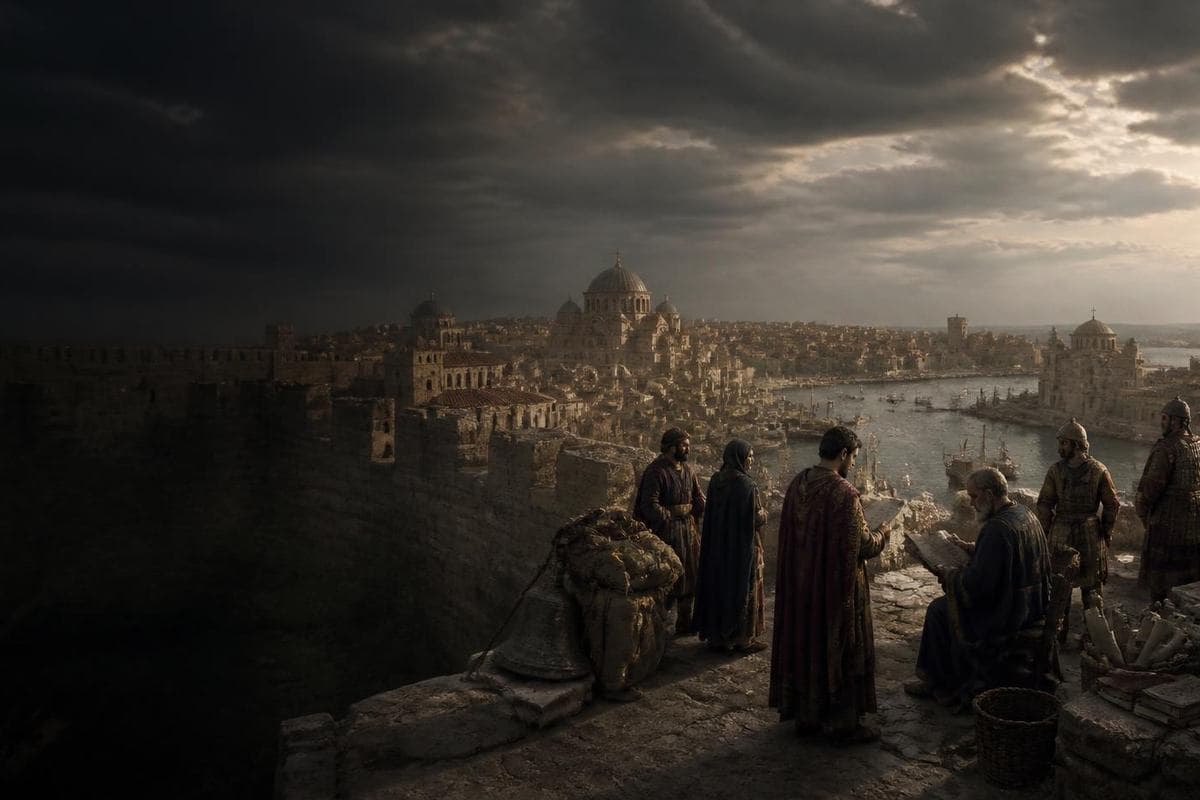
The final centuries of the Byzantine Empire were a period marked by intense military engagements, intricate court politics, and a significant decline in population. This era ultimately led to the empire's gradual weakening and its eventual collapse.
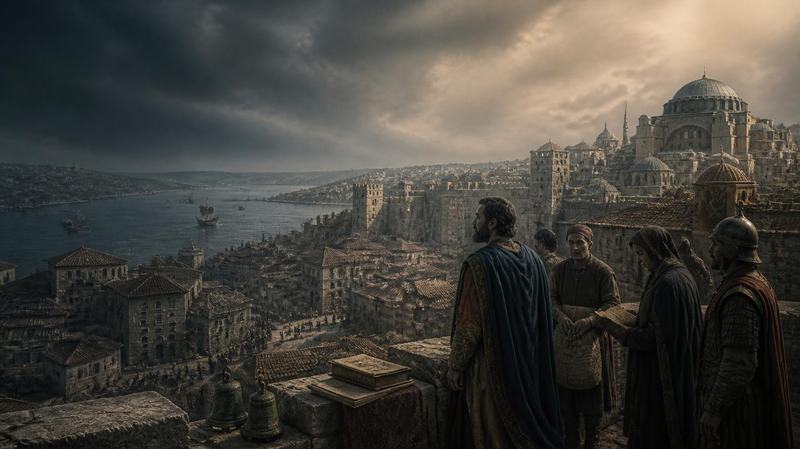
Despite experiencing considerable losses during the expansion of Islam in the 7th century, the Byzantine Empire sustained itself for nearly a millennium. However, a critical turning point arrived in the 11th century with the Battle of Manzikert in 1071, after which the empire lost much of its territory in Anatolia to the Seljuk Turks. Another devastating blow came in 1204, when forces from the Fourth Crusade sacked Constantinople and fragmented the empire. This event severely hampered Byzantium's attempts at recovery, leading to traumatic changes such as Latinization and Westernization. Throughout its history, Constantinople faced over twenty sieges, including Arab sieges between 674-678 and an internal rebellion led by Leon Tornikios in 1047. The empire finally met its end with the Ottoman conquest of Istanbul in 1453, led by Sultan Mehmed II.
This period was characterized by such complex court politics that the term "Byzantine intrigues" is said to have originated from it. Power struggles between emperors and patriarchs, intricate tactics involving local commanders, minor principalities, and rival kingdoms, internal civil wars, and the contest for dominance among nobles, soldiers, and merchants were hallmarks of this era. The monarchy in Constantinople struggled to survive amid plots, violence, and deception, with even emperors and empresses being brutally murdered. For instance, Phocas, an army officer during Emperor Maurice's reign, led a revolt, usurped the imperial office, and executed Maurice. Phocas himself was later overthrown and beheaded by Heraclius. Noble families such as the Komnenos and Palaiologos dynasties constructed palaces within the imperial court complex during these final centuries, underscoring their roles in these political rivalries.
The Byzantine Empire experienced significant population fluctuations throughout its history. While the empire reached its peak in population and trade in the 6th century, a major pandemic known as the Justinian Plague caused a severe decline. It is estimated that the imperial population, around 26 million in 540, fell to 17 million by 600, even without accounting for the plague's full impact and subsequent territorial losses. Following the Arab conquests, the Byzantine population dropped to 8 million by the 850s. Although it exceeded 12 million by 1025, it steadily decreased to 9 million after the sacking of Constantinople in 1204, and further to 5 million by 1282 with the arrival of the Turks. After the empire's fragmentation in 1204, the population plummeted to 2 million within a century. The population of the capital city, Constantinople, estimated at around one million in the 10th century, is believed to have shrunk to about seventy-five thousand by its conquest in 1453. However, another source suggests approximately 50,000 people lived within the city walls when the Turks besieged it.
Key Events
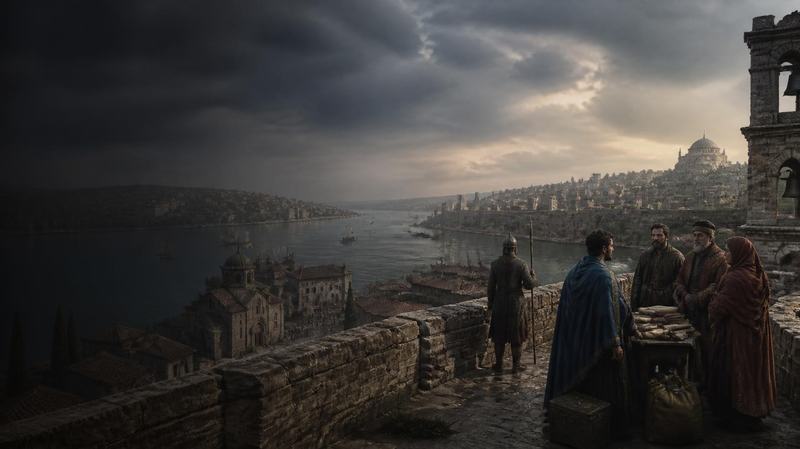
- 1047 — An internal rebellion led by Leon Tornikios resulted in a siege of Constantinople, highlighting early internal instability.
- 1071 — The Battle of Manzikert led to the loss of much of Anatolia, marking a major turning point in the empire's decline.
- 1204 — Forces of the Fourth Crusade sacked Constantinople and fragmented the Byzantine Empire, severely weakening it.
- 1261 — Michael VIII Palaiologos recaptured Constantinople, re-establishing the Byzantine Empire under the Palaiologos dynasty, though in a weakened state.
- 1453 — The Ottoman army, led by Fatih Sultan Mehmed, conquered Constantinople, bringing an end to the Byzantine Empire.
Related Places
Frequently asked questions
What were the main characteristics of the Byzantine Empire's final centuries?
The final centuries of the Byzantine Empire were largely characterized by intense sieges against its capital, intricate and often violent palace intrigues, and a significant decline in its overall population.
Which major military events contributed to the decline of the Byzantine Empire?
Key military events included the Battle of Manzikert in 1071, which led to the loss of much of Anatolia, and the devastating sacking of Constantinople by the Fourth Crusade in 1204, which fragmented the empire and severely hindered its recovery efforts.
What is meant by 'Byzantine intrigues' in the context of this period?
'Byzantine intrigues' refers to the complex and often ruthless court politics of the era, involving power struggles between emperors and patriarchs, tactical maneuvering with rival kingdoms, internal civil wars, and a constant competition for dominance among various societal groups. The period was notorious for plots, violence, and deception, even leading to the murder of emperors and empresses.
How did the population of Constantinople change leading up to its fall?
The population of Constantinople, estimated at around one million in the 10th century, experienced a drastic decline, shrinking to about seventy-five thousand by its conquest in 1453. Another source suggests the population was around 50,000 during the final Ottoman siege.
When and how did the Byzantine Empire finally end?
The Byzantine Empire came to its definitive end in 1453 with the conquest of Constantinople by the Ottoman army, led by Sultan Mehmed II.
Which dynasties were prominent in the later Byzantine Empire?
During these final centuries, noble families such as the Komnenos and Palaiologos dynasties played significant roles in the imperial court and its political rivalries.
Did the Byzantine Empire face many sieges?
Yes, the capital city of Constantinople faced over twenty sieges throughout its history, including several during the empire's later period, contributing to its overall weakening.
Written by Istanbook Editorial Team · Last updated September 7, 2026
Sources (7)
- ozhanozturk.com — ozhanozturk.com
- arkeofili.com — arkeofili.com
- tariharsivi.org — tariharsivi.org
- istanbultarihi.ist — istanbultarihi.ist
- belleten.gov.tr — belleten.gov.tr
- wikipedia.org — wikipedia.org
- ahmetozcan.net — ahmetozcan.net