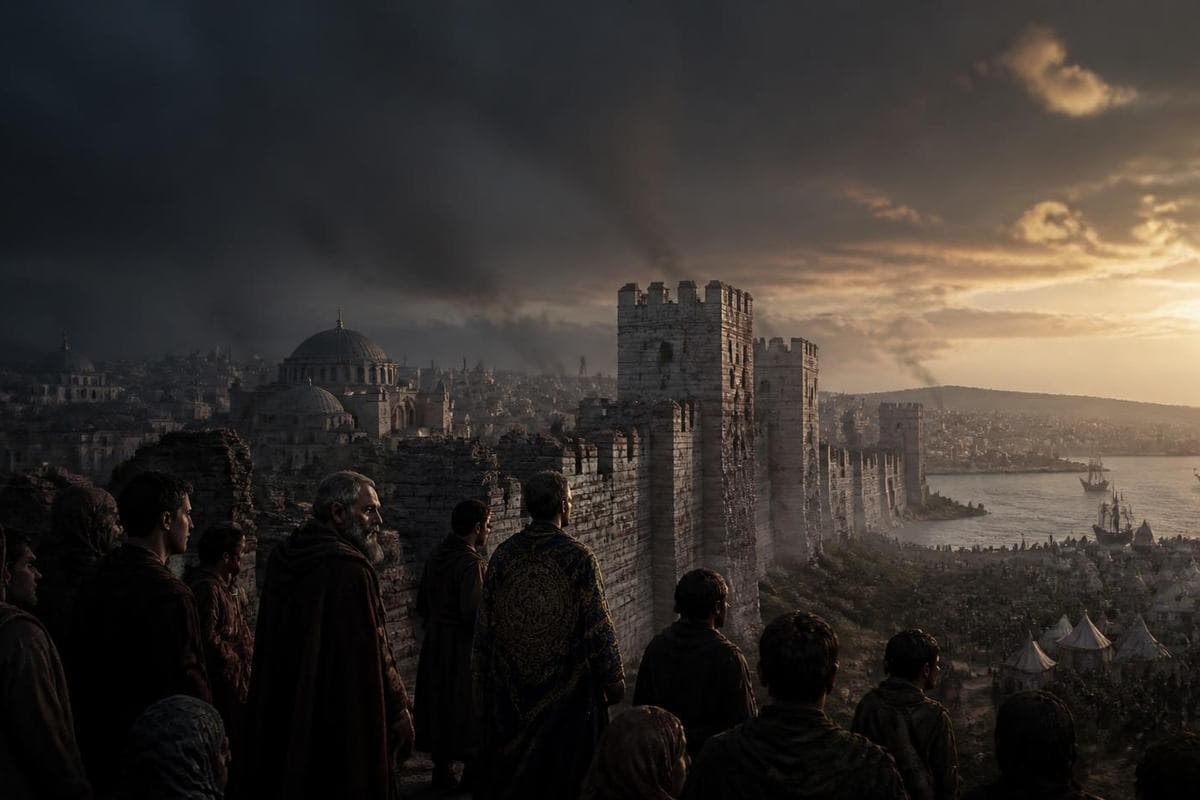
1453 CE
The Fall of Constantinople and the Ottoman Transition
Overview
The capture of Constantinople in 1453 marked a pivotal moment in history, signaling the end of the Byzantine Empire and ushering in a new era under the Ottoman Empire. This event transformed Constantinople into the capital of a burgeoning global power, a role it would hold for centuries.
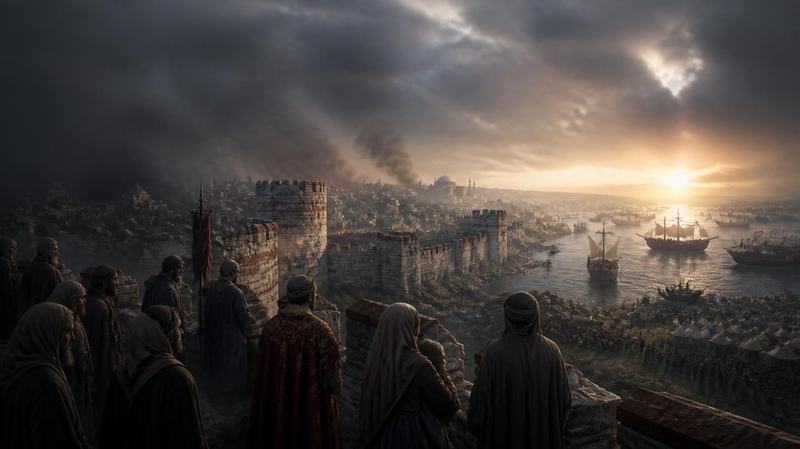
By the 15th century, the Byzantine Empire was significantly weakened. Its capital, Constantinople, had seen its population dwindle from approximately 400,000 in the 12th century to between 40,000 and 50,000 by the 1450s. Decades of internal strife and conflicts with Catholic rivals had exhausted the empire. The young Ottoman Sultan, II. Mehmed, known as Fatih Sultan Mehmed (Mehmed the Conqueror), who was just 21 years old, initiated the siege on April 6, 1453. The siege lasted 55 days (or 53 according to some sources) before the city fell on May 29, 1453.
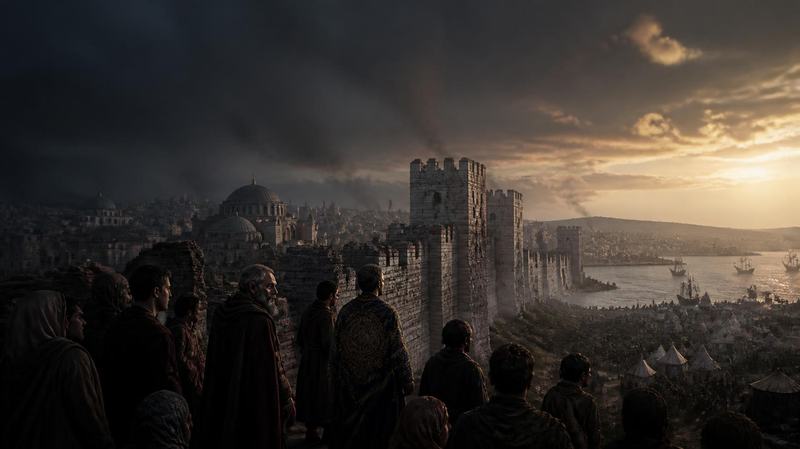
During the siege, Sultan Mehmed II employed a comprehensive strategy, blockading the city by both land and sea. He utilized immense cannons to relentlessly bombard and weaken the formidable city walls, which included structures such as The Theodosian Walls of Constantinople. The Ottoman army, estimated at 60,000 to 80,000 soldiers and equipped with 69 cannons, vastly outnumbered the Byzantine defenders. The last Byzantine Emperor, Constantine XI Palaiologos, perished in the battle.
The conquest of Constantinople brought an end to over a thousand years of the Byzantine Empire's existence, effectively concluding the legacy of the Eastern Roman Empire. Many modern historians consider this event a watershed moment, marking the end of the Middle Ages and the beginning of the Early Modern Period, and it also contributed to the intellectual shifts that characterized the Renaissance in Europe. Following the conquest, Sultan Mehmed II relocated the Ottoman capital from Edirne to Constantinople. He embarked on a mission to transform the city into a multicultural imperial center. Iconic structures, such as Hagia Sophia: A Layered History, were converted into mosques, and the city gradually became known as Istanbul. The Ottomans also introduced technological innovations, including advanced irrigation systems, which eventually reduced the historical importance of some Byzantine structures like the Basilica Cistern (Yerebatan Sarnıcı). The fall of Constantinople was also a military turning point, demonstrating the devastating effectiveness of gunpowder artillery against fortifications and signaling a shift in siege warfare tactics.
Key Events
- April 6, 1453 — The Ottoman siege of Constantinople began under Sultan II. Mehmed.
- May 29, 1453 — Constantinople fell to the Ottoman forces after a 55-day siege.
- May 29, 1453 — The last Byzantine Emperor, Constantine XI Palaiologos, died during the final assault.
- 1453 — Sultan II. Mehmed moved the Ottoman capital from Edirne to Constantinople.
- Post-1453 — Hagia Sophia was converted into a mosque, symbolizing the city's new Ottoman identity.
Related Places
Frequently asked questions
What was the primary significance of the Fall of Constantinople?
The Fall of Constantinople in 1453 marked the definitive end of the Byzantine Empire and the Eastern Roman Empire's thousand-year legacy. It also established the Ottoman Empire as a dominant global power, with Constantinople becoming its new capital, a city later known as Istanbul.
Who was the Ottoman leader responsible for the conquest?
The conquest was led by Sultan II. Mehmed, often referred to as Fatih Sultan Mehmed, or Mehmed the Conqueror. He was just 21 years old at the time of the siege.
How long did the siege of Constantinople last?
The siege of Constantinople began on April 6, 1453, and concluded with the city's fall on May 29, 1453, lasting approximately 55 days (or 53 days, according to some historical accounts).
What was the state of Constantinople and the Byzantine Empire before the siege?
Before the siege, the Byzantine Empire was significantly weakened by long-standing internal conflicts and wars with Catholic rivals. Constantinople's population had dramatically decreased to between 40,000 and 50,000 people by the 1450s, a stark contrast to its peak in the 12th century.
How did the conquest impact military history?
The fall of Constantinople was a significant turning point in military history, primarily due to the effective deployment of large gunpowder cannons. These powerful weapons demonstrated their capability to breach formidable city walls, signaling a fundamental shift in siege warfare tactics and architectural defenses.
What changes did Sultan Mehmed II implement in Constantinople after its capture?
After the conquest, Sultan Mehmed II relocated the Ottoman capital from Edirne to Constantinople. He initiated efforts to transform it into a multicultural imperial center, converting significant structures like Hagia Sophia: A Layered History into mosques and introducing technological advancements such as modern irrigation systems. The city eventually adopted the name Istanbul.
What happened to the last Byzantine Emperor?
The last Byzantine Emperor, Constantine XI Palaiologos, died in battle during the final assault on May 29, 1453, while defending his city against the Ottoman forces.
Written by Istanbook Editorial Team · Last updated September 7, 2026
Sources (5)
- worldatlas.com — worldatlas.com
- eternalcityistanbul.com — eternalcityistanbul.com
- britannica.com — britannica.com
- lumenlearning.com — lumenlearning.com
- wikipedia.org — wikipedia.org