The Silent City: Constantinople and the Plague of 542

沉默之城:君士坦丁堡与公元542年的瘟疫

一场毁灭性的大流行病,如何重塑了这座拜占庭都城。

1 min read

The Silent City: Constantinople and the Plague of 542
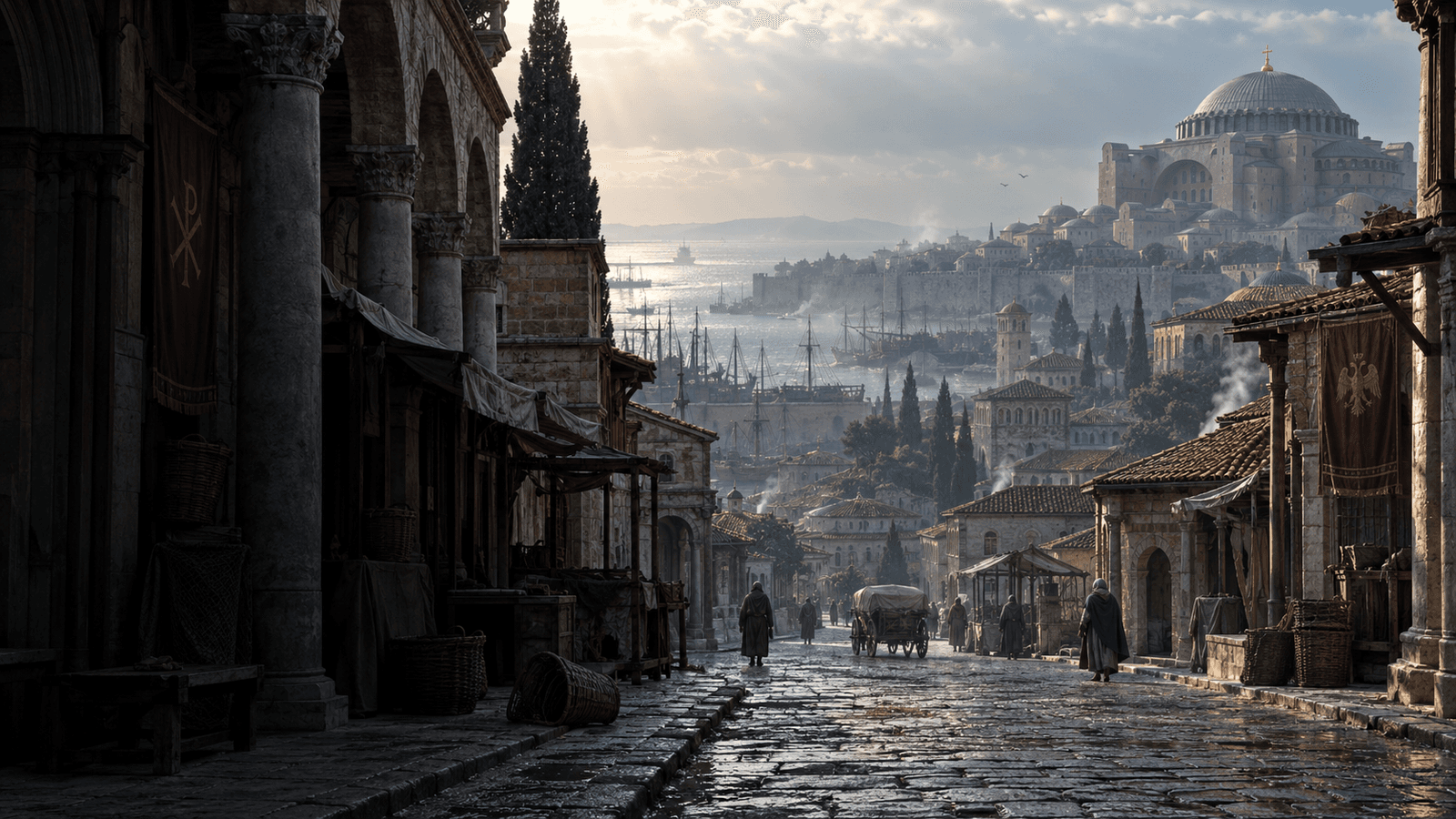
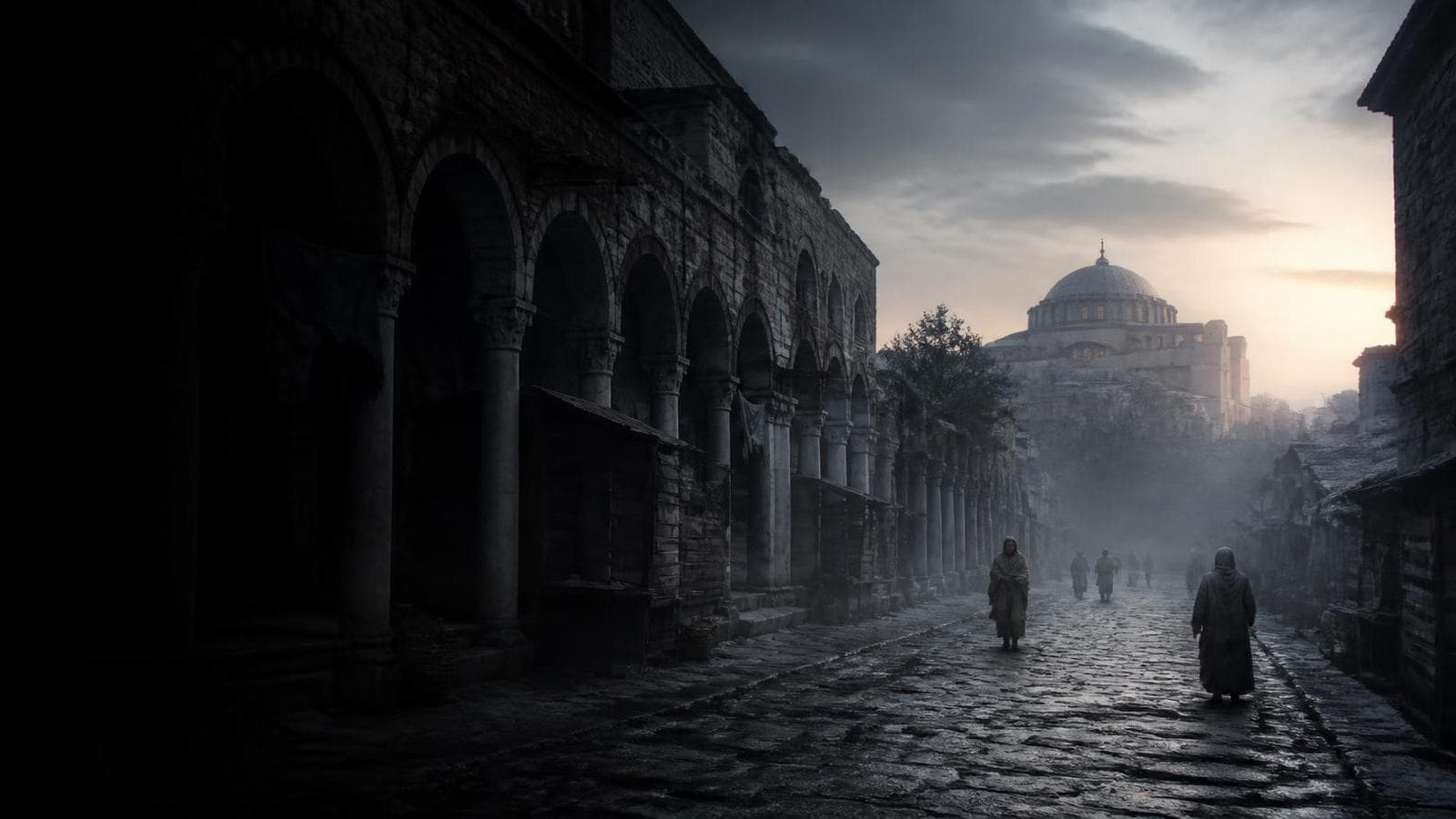
一片令人不寒而栗的死寂笼罩着君士坦丁堡——这座曾经作为拜占庭帝国心脏、喧嚣繁忙的都城。往日熙熙攘攘的街道,如今在一场无形的灾祸席卷之下,变得空无一人。

公元6世纪,是拜占庭帝国在查士丁尼一世皇帝治下雄心勃勃、力图重振罗马帝国荣光的扩张时期。作为帝国富丽堂皇的都城,君士坦丁堡是贸易、文化与权力交汇的繁华中心,人口估计达数十万之众。

这场被称为查士丁尼瘟疫的大流行病,是历史上第一次有完整记载的腺鼠疫爆发。它可能起源于远至中国或中亚的地区,于公元541年首先出现在罗马治下的埃及。这种疾病随粮船上黑鼠身上的跳蚤传播,沿着既有的贸易路线蔓延,最终横扫整个地中海地区。

Verified

瘟疫于公元542年春抵达君士坦丁堡,距离它最初出现在帝国边远行省,大约已过去一年时间。

凯撒里亚的普罗科皮乌斯等当代史学家,记录下了这场疾病骇人的症状:突发高烧、寒战、意识错乱,以及标志着这一致命疾病发作的典型症状——肿胀疼痛的淋巴结「腺肿」。这座城市的各项机能,很快便在大规模死亡的重压下濒临崩溃。

Verified

君士坦丁堡的这场疫情持续了约四个月,其中传播最为猛烈的阶段约为三个月,据估计造成这座城市20%至40%的居民死亡。

“「这座城市变成了一座坟墓。我们把死者埋进坑里、塔楼里,能埋的地方都用上了。空气中似乎都弥漫着悲伤与死者腐烂的气息。」”

瘟疫的影响远不止直接的死亡。工匠们纷纷弃工坊而去,导致严重的劳动力短缺、大范围的饥荒与通货膨胀。这场疾病的肆虐,在政治与经济上都极大地削弱了拜占庭帝国的国力,造成军中兵员短缺,也阻碍了查士丁尼的宏图大业。查士丁尼一世皇帝本人也曾染病,但奇迹般地康复了。

What remains today

尽管公元542年瘟疫的实体印记如今在伊斯坦布尔已难觅踪迹,但这段惨烈历史的记载,依然提醒着我们这座城市历经磨难而不屈的韧性,以及深藏于其繁华表象之下、从帝国雄心到面对无形之敌生死抗争的层层人类经验。

People

Justinian IByzantine emperor

Justinian I was a Byzantine emperor who reigned from 527 to 565 CE. Born Petrus Sabbatius to peasant parents in Tauresium, Dardania, he was brought to Constantinople (modern-day Istanbul, Turkey) by his uncle, Emperor Justin I, for education and military training, later adopting the name Justinianus. He became sole emperor after his uncle's death in 527 CE. Justinian I is significant for his profound impact on Constantinople through extensive urban development, including commissioning the construction of the Hagia Sophia (built between 532 and 537 CE) and the Basilica Cistern. His reign also saw the monumental codification of Roman law, known as the "Corpus Juris Civilis," which influenced legal systems for centuries. He promoted trade and experienced the widespread devastation of the Plague of Justinian, which afflicted Constantinople starting in 542 CE.

Cultures

Romans

The Roman presence in the city now known as Istanbul is fundamental to its identity, beginning with the ancient Greek colony of Byzantium becoming allied with and then part of the Roman Empire. Its significance dramatically escalated when Emperor Constantine I refounded it as Constantinople, or "New Rome," in the 4th century CE. This city then served as the capital of the Eastern Roman Empire, later known as the Byzantine Empire, for over a thousand years, preserving Roman and Hellenistic traditions and shaping much of the city's early urban fabric and cultural significance.

Byzantine Greeks

The term "Byzantine Greeks" refers to the inhabitants of the Byzantine Empire, also known as the Eastern Roman Empire. These individuals considered themselves "Romans" and their culture integrated the legal and administrative traditions of the Roman Empire with the Greek language and other Greek cultural elements. The empire was largely Greek-speaking and served as the spiritual center of the Orthodox religion. The Byzantine Greeks are profoundly important to Istanbul, as the city, then known as Constantinople, served as their capital for over a thousand years.

The City Is Made of Neighborhoods

Stories of Istanbul

Written by Istanbook Editorial Team · Last updated 2026年9月6日

Sources (4)