The Nika Riots, occurring in January 532 CE, represent one of the most devastating civil disturbances in the history of Constantinople. This week-long uprising posed an existential threat to the reign of Emperor Justinian I and profoundly impacted the city's future.
Underlying the eruption of violence was deep-seated public discontent with Justinian's government. Heavy taxation and perceived corruption among key officials fueled widespread resentment. The immediate spark, however, was a botched execution. Two men, one from the 'Blues' and one from the 'Greens'—rival factions of chariot racing enthusiasts—survived their hanging and sought sanctuary in a church, igniting calls for clemency.
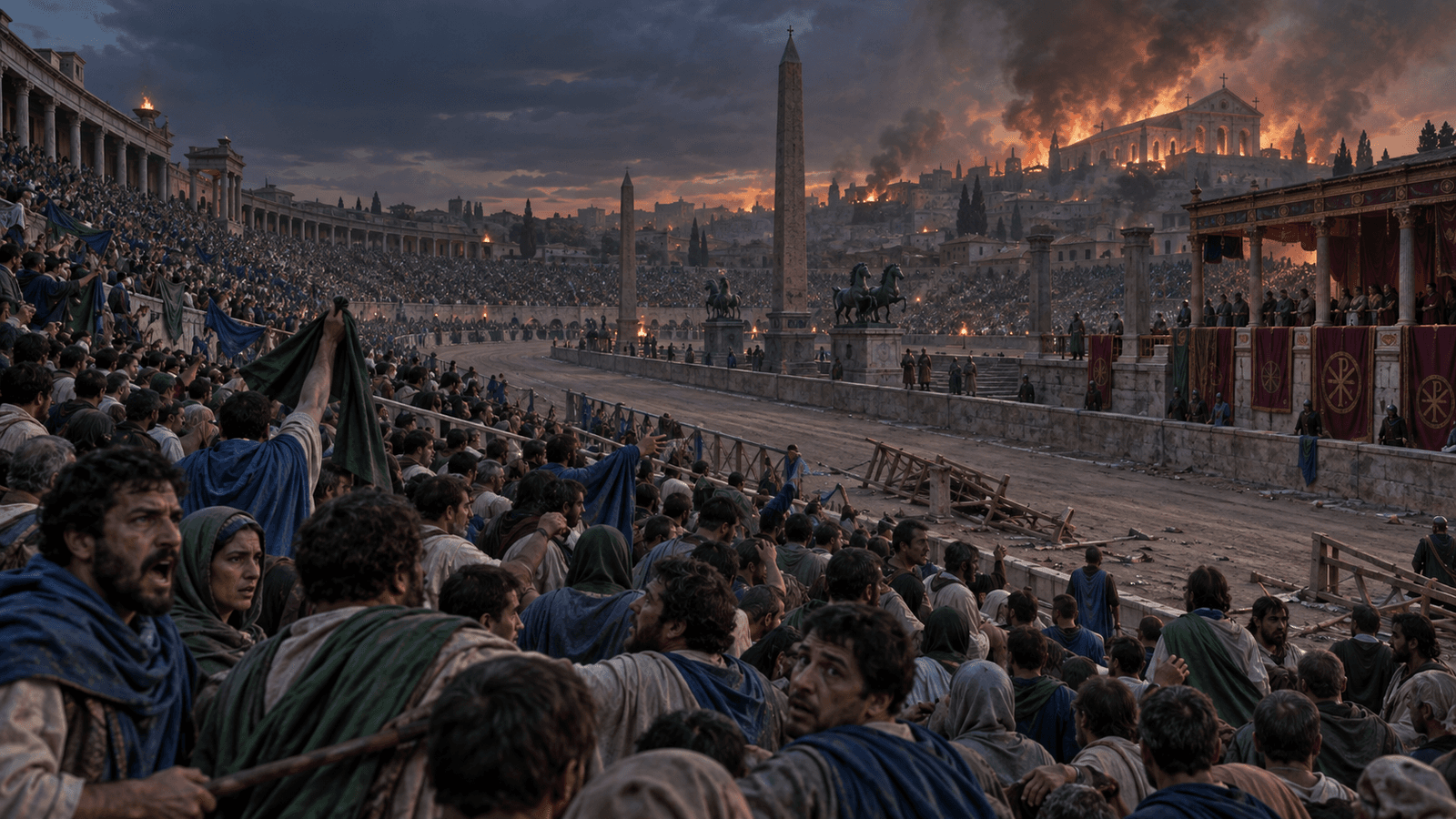
The Blues and Greens, typically bitter rivals, united in their demands for the men's pardon, chanting 'Nika!' (meaning 'conquer' or 'victory') during a chariot race at the Hippodrome.
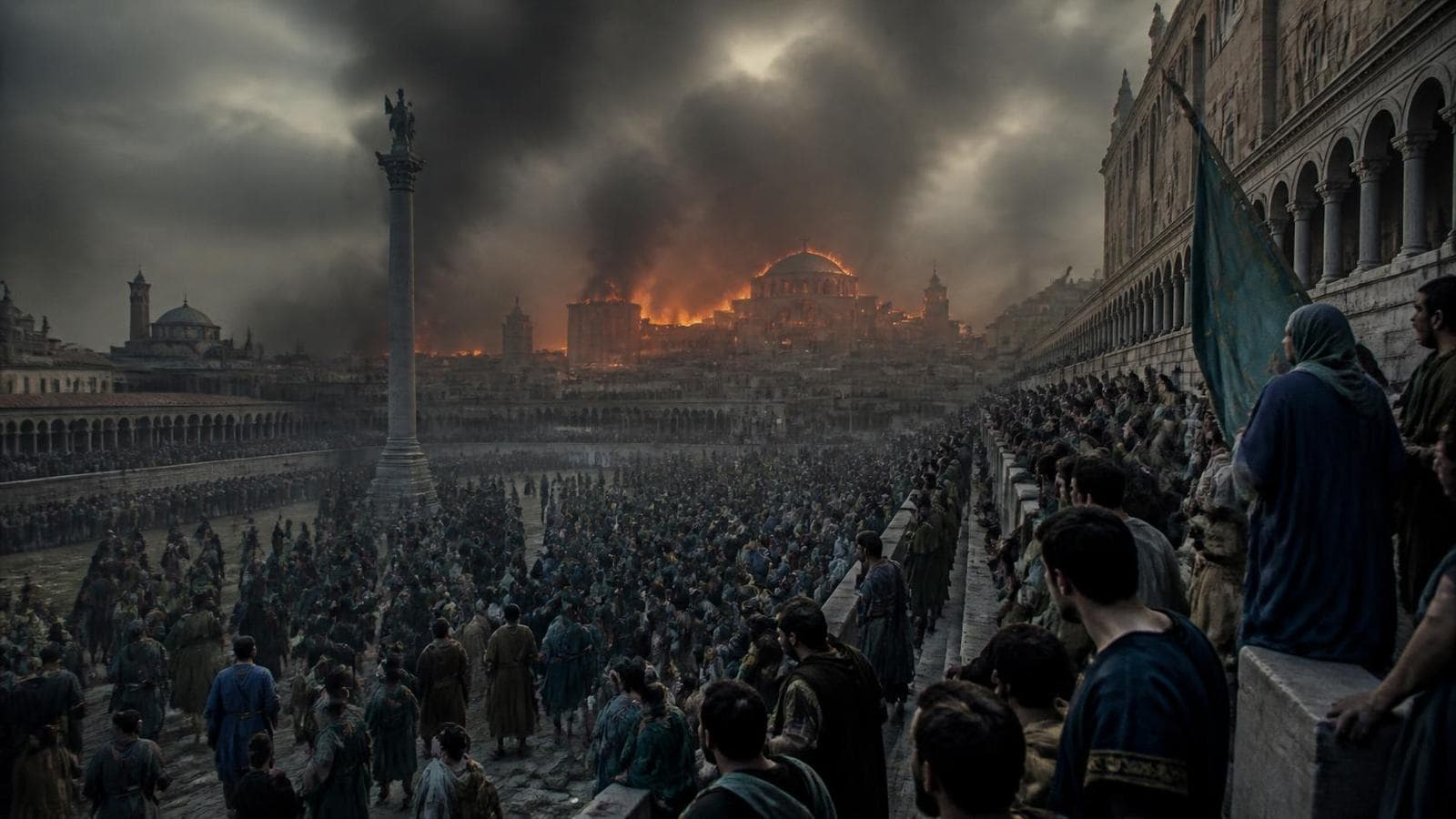
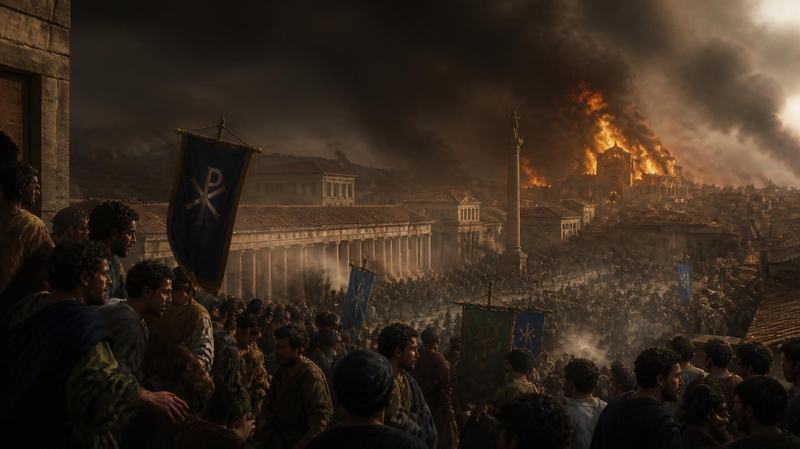
When Emperor Justinian I refused the pardon, the unified crowd's anger erupted. The Hippodrome, a massive complex central to civic life, became the focal point of the rebellion. Riots quickly spread, engulfing the city in a wave of destruction. Fires consumed numerous public buildings and parts of the imperial palace.
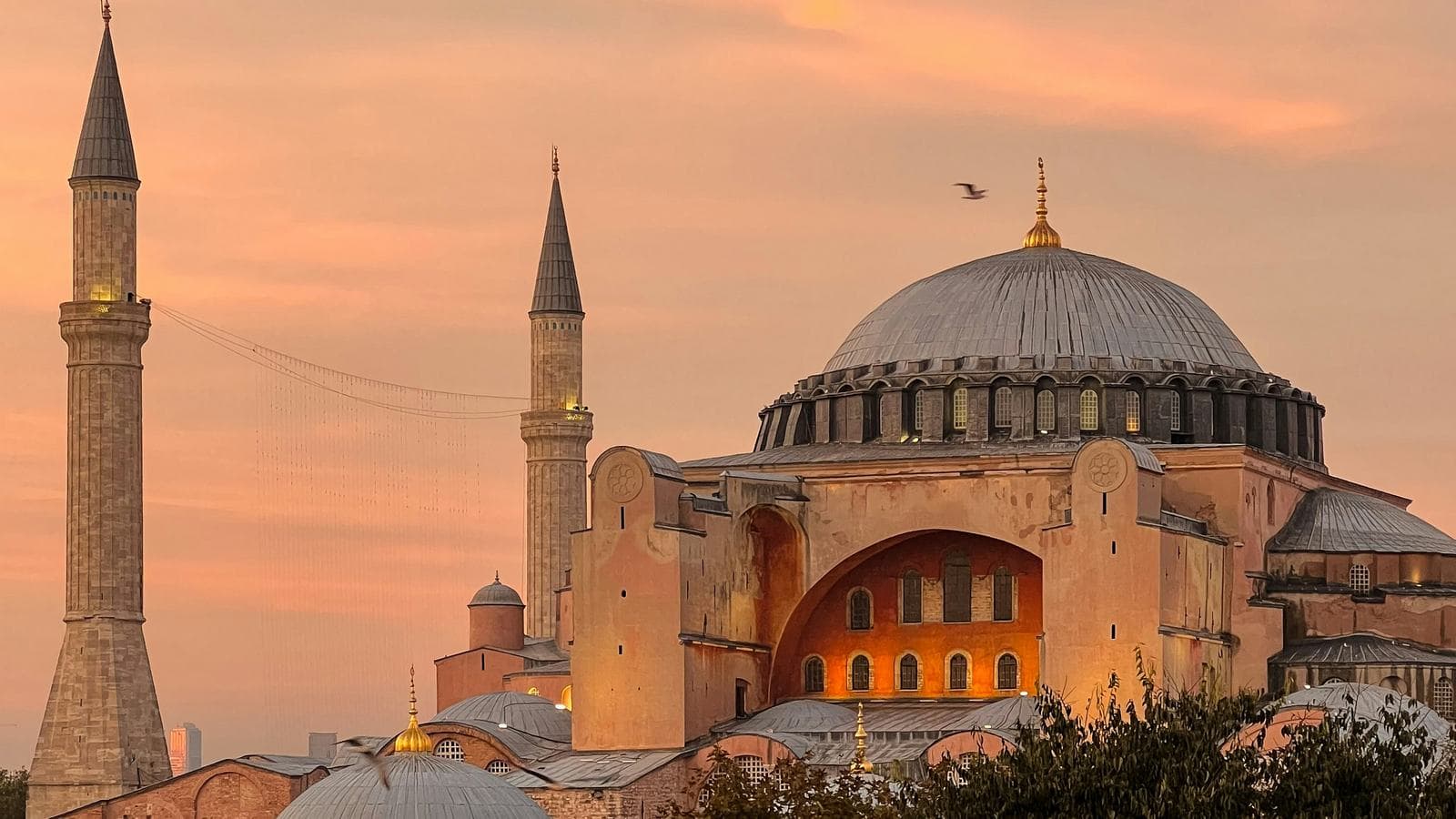
During the Nika Riots, the original Hagia Sophia church "collapsed entirely on all four sides," and nearly half of Constantinople was reportedly burned or destroyed.
“Empress Theodora, facing the emperor's contemplation of flight, famously declared, 'purple makes a fine shroud,' signifying her refusal to abandon the imperial dignity even in death.”
Theodora's unwavering resolve galvanized Justinian and his advisors. Spurred by her courage, Justinian ordered his trusted generals, Belisarius and Mundus, to take decisive action. Imperial forces moved to suppress the revolt, cornering the rioters who had gathered en masse within the Hippodrome.
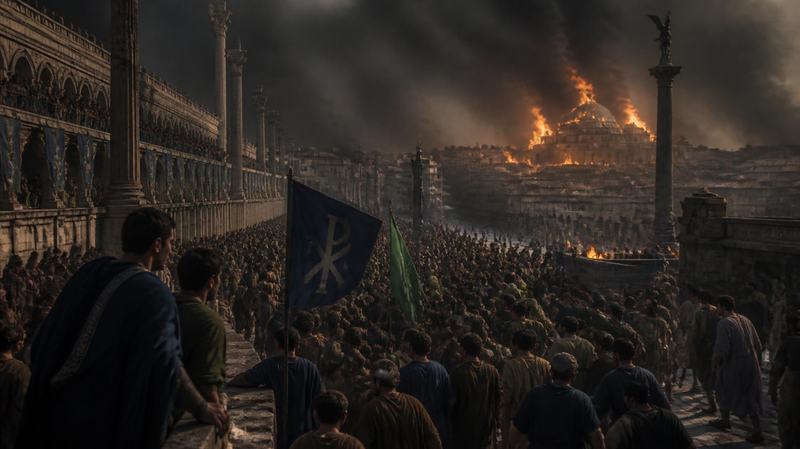
An estimated 30,000 people were killed in the brutal suppression of the Nika Riots, marking it as one of the most violent events in Constantinople's history.
What remains today
While the scars of the Nika Riots were deep, the event ultimately solidified Justinian's reign. The widespread destruction paved the way for ambitious reconstruction projects, most notably the iconic Hagia Sophia, which stands today as a testament to the city's resilience and imperial power.