The Silent City: Constantinople and the Plague of 542

The Silent City: Constantinople and the Plague of 542

How a devastating pandemic reshaped the Byzantine capital.

2 min read

Placeholder graphic — no real photo has been added yet.
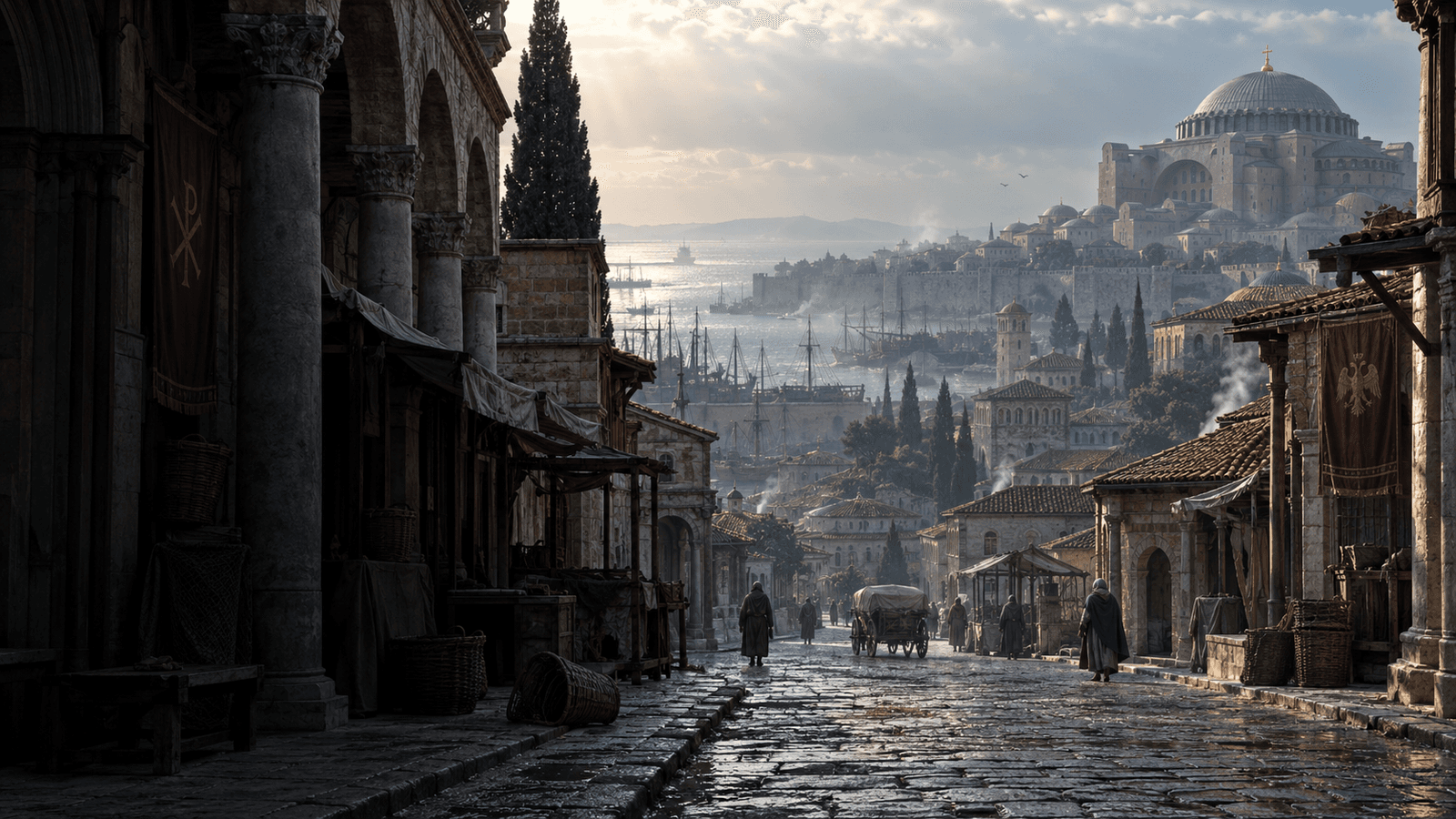
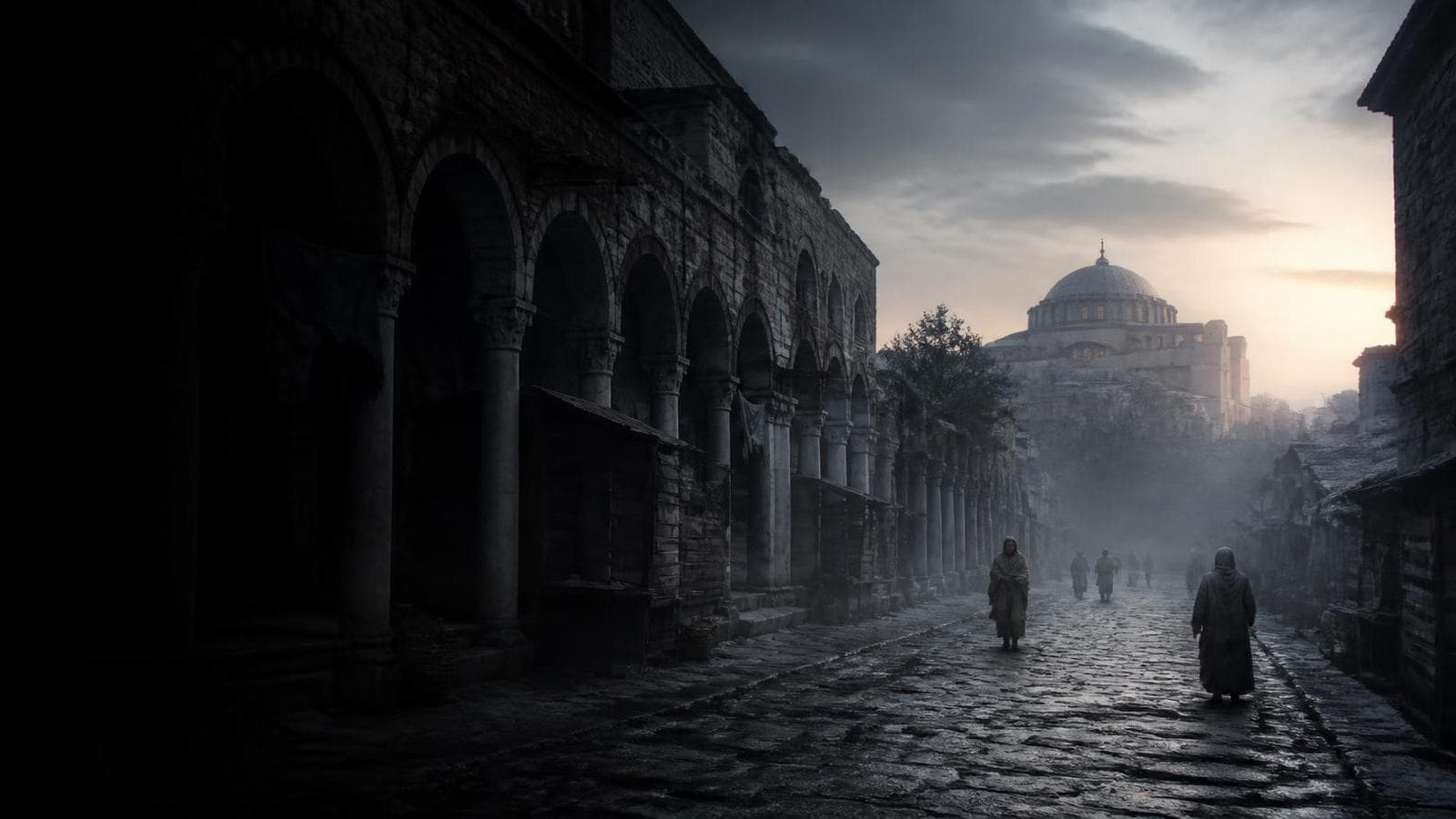
A chilling silence descended upon Constantinople, once the bustling heart of the Byzantine Empire. The streets, usually teeming with life, grew empty as an unseen enemy swept through the city.

The 6th century CE marked a period of ambitious imperial expansion for the Byzantine Empire under Emperor Justinian I, aiming to restore the glory of the Roman Empire. Constantinople, as its opulent capital, was a vibrant hub of trade, culture, and power, with a population estimated to be in the hundreds of thousands.
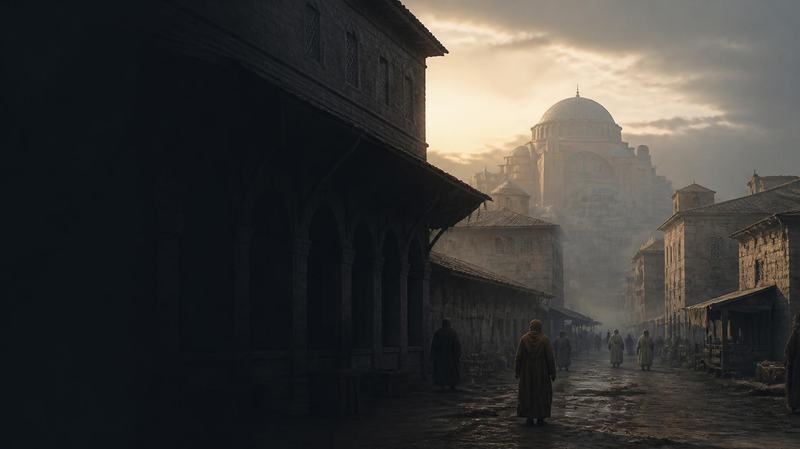
Known as the Justinianic Plague, this pandemic was the first fully documented historical outbreak of bubonic plague. It originated in regions possibly as far as China or Central Asia, before appearing in Roman Egypt in 541 CE. Carried by fleas on black rats aboard grain ships, the disease followed established trade routes, eventually making its way across the Mediterranean.

Verified

The plague reached Constantinople in the spring of 542 CE, approximately a year after its initial appearance in the empire's outer provinces.

Contemporary observers, like the historian Procopius of Caesarea, recorded the horrific symptoms: sudden fevers, chills, disorientation, and the tell-tale buboes — swollen, painful lymph nodes that marked the onset of the fatal illness. The city's infrastructure quickly buckled under the strain of mass death.

Verified

The outbreak in Constantinople lasted about four months, with its greatest virulence spanning approximately three months, leading to an estimated 20% to 40% of the city's inhabitants perishing.

“The city became a tomb. We buried our dead in pits and towers, anywhere we could. The air itself seemed heavy with sorrow and the stench of the fallen.”

The plague's impact extended beyond immediate mortality. Craftsmen abandoned their workshops, leading to severe labor shortages, widespread famine, and inflation. This period of disease significantly weakened the Byzantine Empire both politically and economically, contributing to a manpower shortage in the military and hindering Justinian's ambitions. Emperor Justinian I himself contracted the disease but remarkably recovered.
What remains today

While no physical scars of the Plague of 542 are visible in modern Istanbul, the historical accounts of this devastating period remind us of the city's enduring resilience and the deep layers of human experience that lie beneath its vibrant present, from imperial ambitions to existential struggles against unseen forces.

People

Justinian IByzantine emperor

Justinian I was a Byzantine emperor who reigned from 527 to 565 CE. Born Petrus Sabbatius to peasant parents in Tauresium, Dardania, he was brought to Constantinople (modern-day Istanbul, Turkey) by his uncle, Emperor Justin I, for education and military training, later adopting the name Justinianus. He became sole emperor after his uncle's death in 527 CE. Justinian I is significant for his profound impact on Constantinople through extensive urban development, including commissioning the construction of the Hagia Sophia (built between 532 and 537 CE) and the Basilica Cistern. His reign also saw the monumental codification of Roman law, known as the "Corpus Juris Civilis," which influenced legal systems for centuries. He promoted trade and experienced the widespread devastation of the Plague of Justinian, which afflicted Constantinople starting in 542 CE.

Cultures

Romans

The Roman presence in the city now known as Istanbul is fundamental to its identity, beginning with the ancient Greek colony of Byzantium becoming allied with and then part of the Roman Empire. Its significance dramatically escalated when Emperor Constantine I refounded it as Constantinople, or "New Rome," in the 4th century CE. This city then served as the capital of the Eastern Roman Empire, later known as the Byzantine Empire, for over a thousand years, preserving Roman and Hellenistic traditions and shaping much of the city's early urban fabric and cultural significance.

Byzantine Greeks

The term "Byzantine Greeks" refers to the inhabitants of the Byzantine Empire, also known as the Eastern Roman Empire. These individuals considered themselves "Romans" and their culture integrated the legal and administrative traditions of the Roman Empire with the Greek language and other Greek cultural elements. The empire was largely Greek-speaking and served as the spiritual center of the Orthodox religion. The Byzantine Greeks are profoundly important to Istanbul, as the city, then known as Constantinople, served as their capital for over a thousand years.

The City Is Made of Neighborhoods

Stories of Istanbul

Written by Istanbook Editorial Team · Last updated September 6, 2026

Sources (4)