The city of Constantinople, a beacon of the Byzantine Empire, had proven its resilience through years of upheaval. It had weathered the destructive Nika Riots, which razed much of its center, and endured the devastating plague that swept through its population. Yet, a new challenge emerged from the very ground beneath it, threatening its most sacred edifice.
The mid-6th century CE was a turbulent time for Constantinople. Emperor Justinian I had commissioned the Hagia Sophia as a symbol of imperial power and divine favor after the destruction of an earlier church during the Nika Riots in 532 CE. Completed in a remarkably short time in 537 CE, its massive dome was an unprecedented architectural feat. However, the region lay in an active seismic zone, and the period was marked by frequent and powerful earthquakes, foreshadowing structural weaknesses.
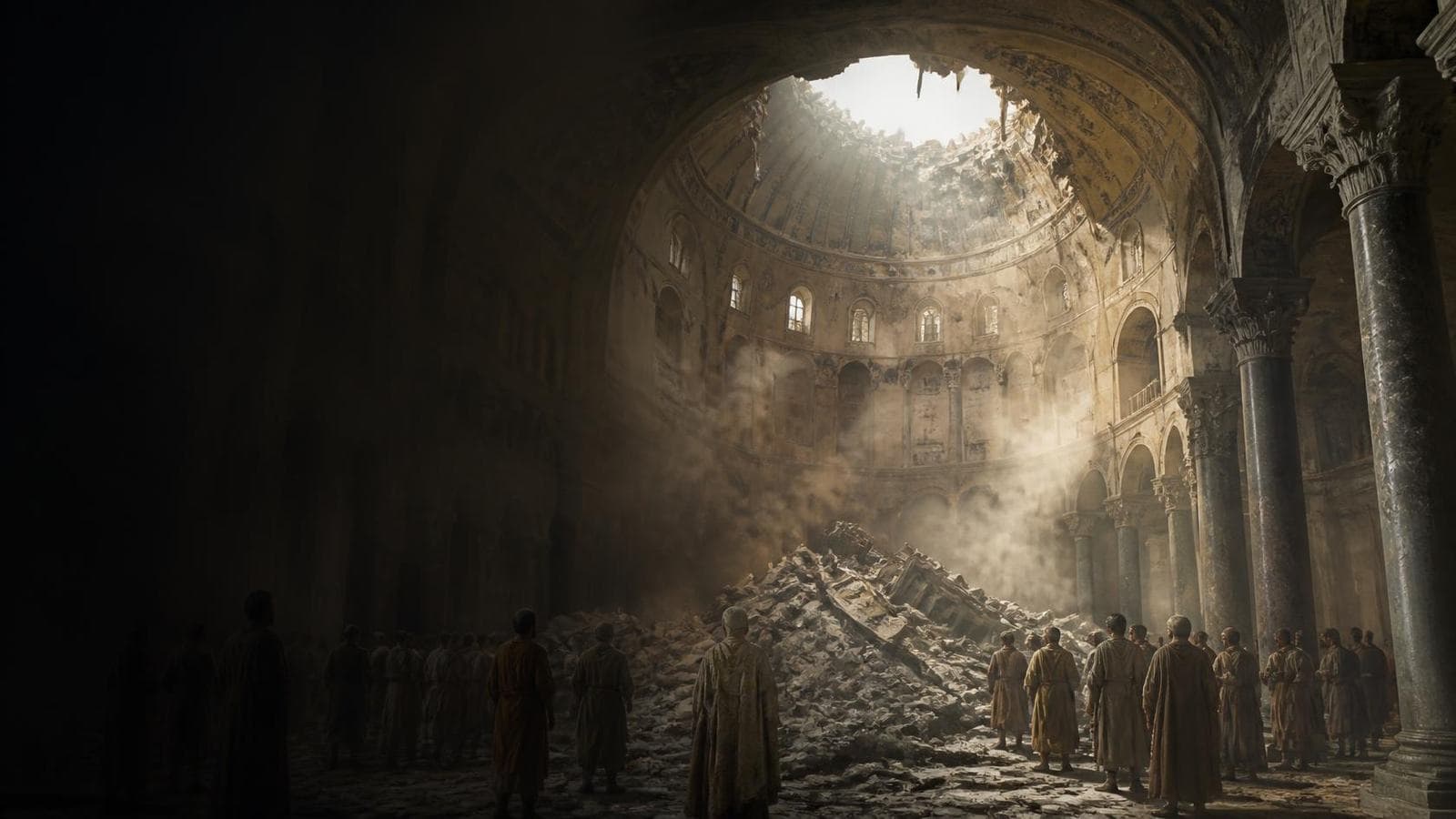
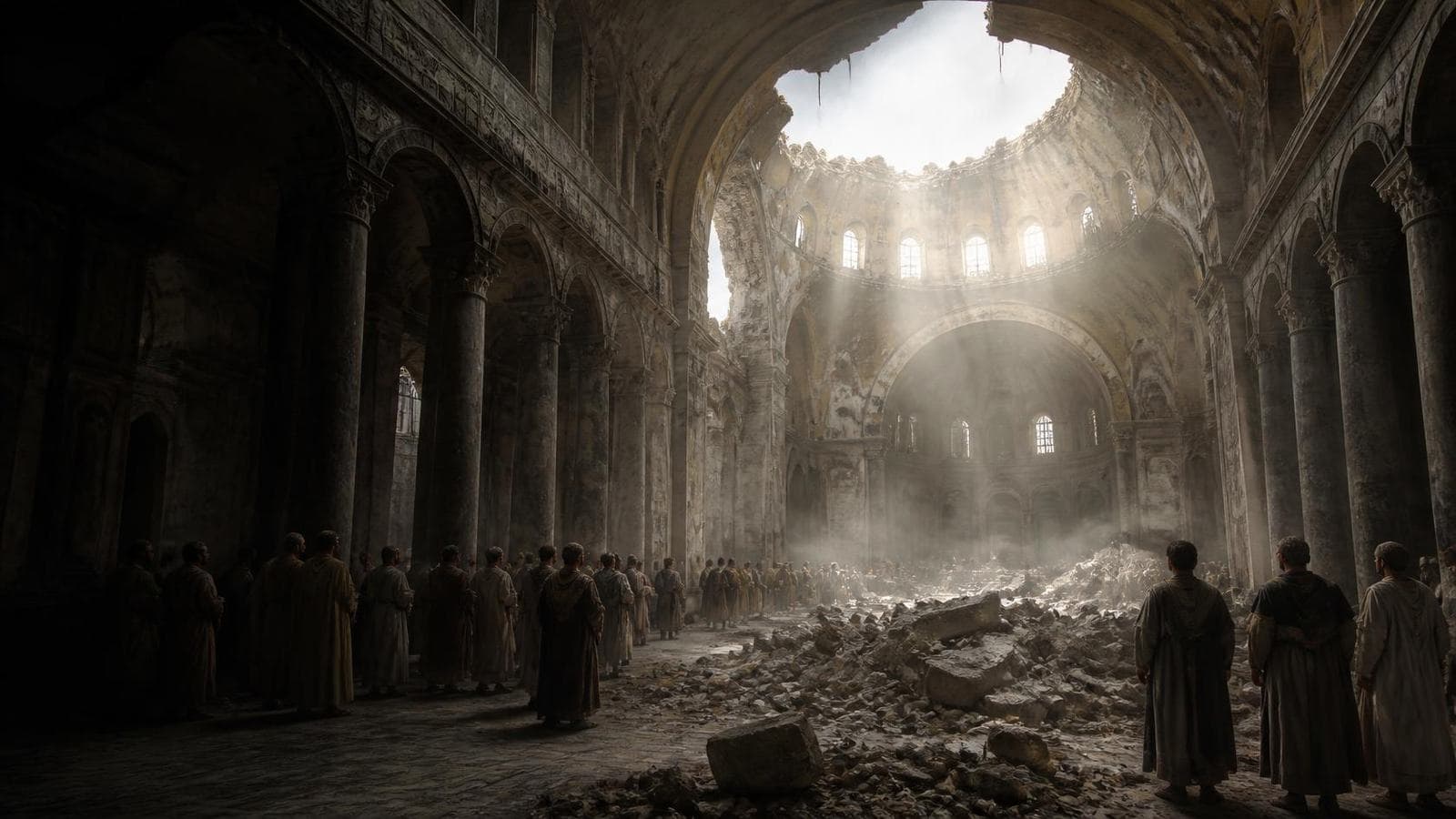
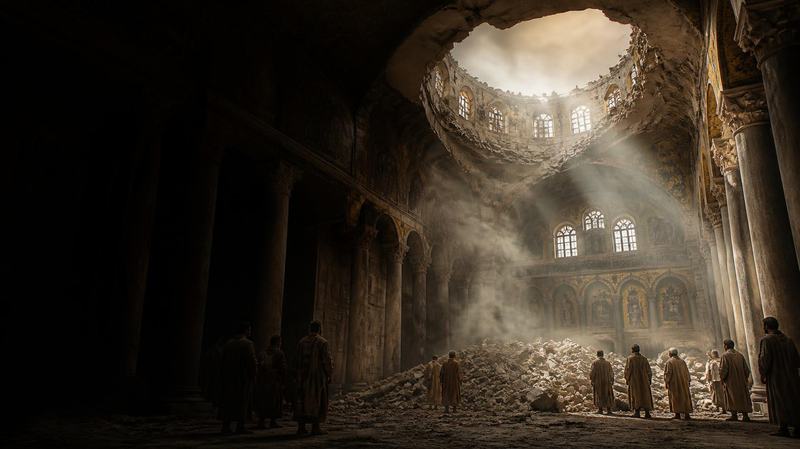
On May 7, 558 CE, the grand dome of Hagia Sophia, along with its eastern vault, collapsed.
This catastrophic event was the culmination of a series of powerful tremors. Significant earthquakes in August 553 CE, and an even more severe pair in October and December 557 CE, had already caused visible cracks and damage to the dome. The final earthquake in May 558 CE delivered the fatal blow, causing the eastern half of the dome to fall, crushing the altar and ciborium below.
““The very heavens seemed to weep as the great dome fell, a testament to God's displeasure, or perhaps merely the earth's relentless will.””
Emperor Justinian I, determined to restore the basilica to its former glory, immediately ordered its reconstruction. The monumental task was entrusted to Isidore the Younger, nephew of Isidore of Miletus, one of the original architects. Isidore the Younger embarked on a significant redesign, aiming for greater stability and durability.
The new dome for Hagia Sophia was constructed approximately 20 feet (about 10 meters) taller than its predecessor and featured a more secure, scalloped shell design with forty structural support ribs.
To reduce weight and improve resilience, lighter materials, primarily brick and mortar, were used in the new dome's construction. This ambitious rebuilding effort concluded successfully, with the church being rededicated on December 24, 562 CE, just over four and a half years after the collapse. The redesigned dome not only gave the building its present iconic form but also allowed for a significantly greater influx of natural light, a feature much celebrated by contemporary writers.
What remains today
The Hagia Sophia standing today is largely the structure rebuilt after the 558 CE collapse. Its magnificent dome, a testament to Byzantine ingenuity and resilience, continues to dominate Istanbul's skyline, having withstood centuries of history, a constant reminder of both imperial ambition and natural forces.