The Silent City: Constantinople and the Plague of 542

Die stille Stadt: Konstantinopel und die Pest von 542

Wie eine verheerende Pandemie die byzantinische Hauptstadt neu formte.

2 min read

The Silent City: Constantinople and the Plague of 542
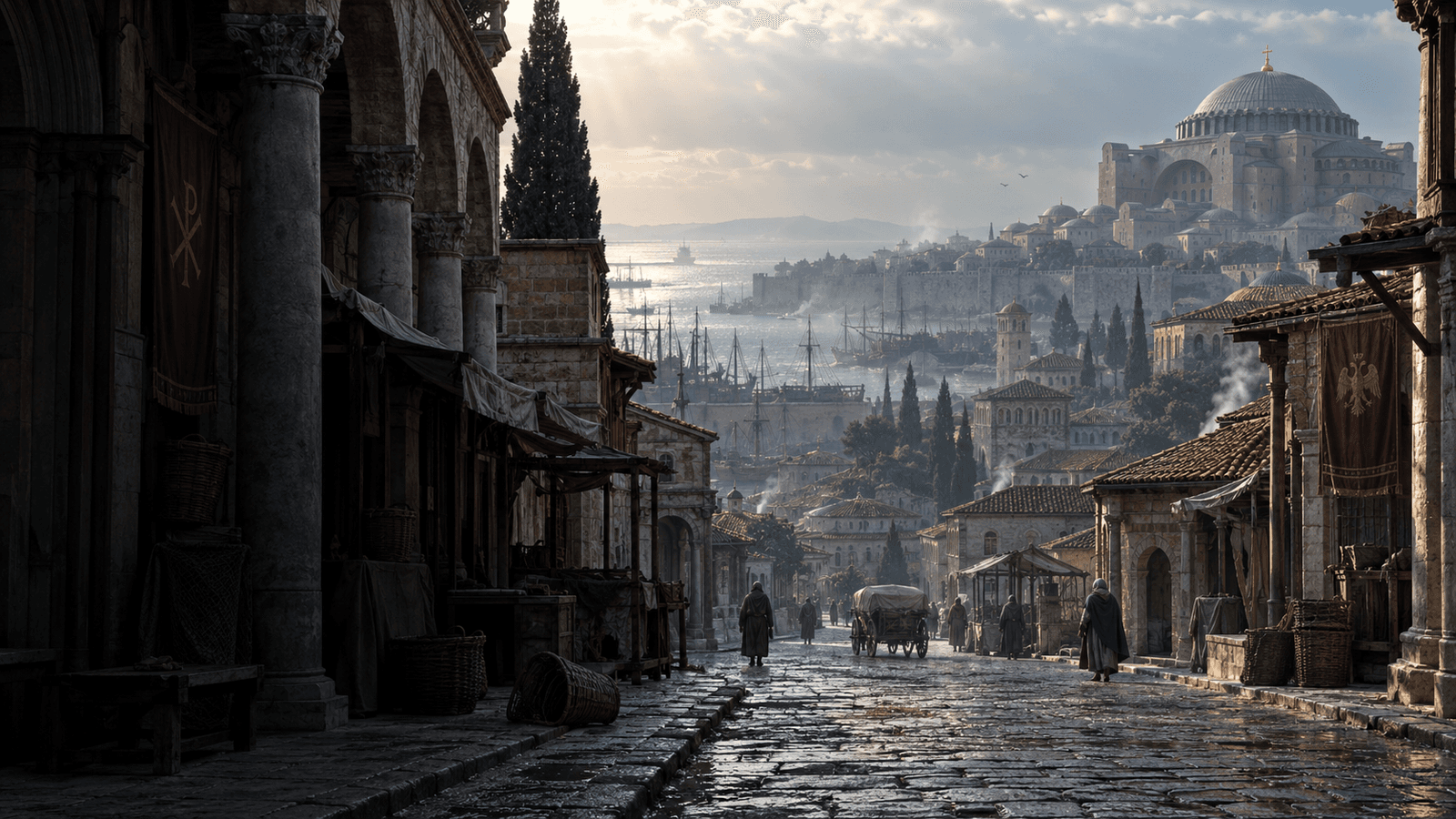
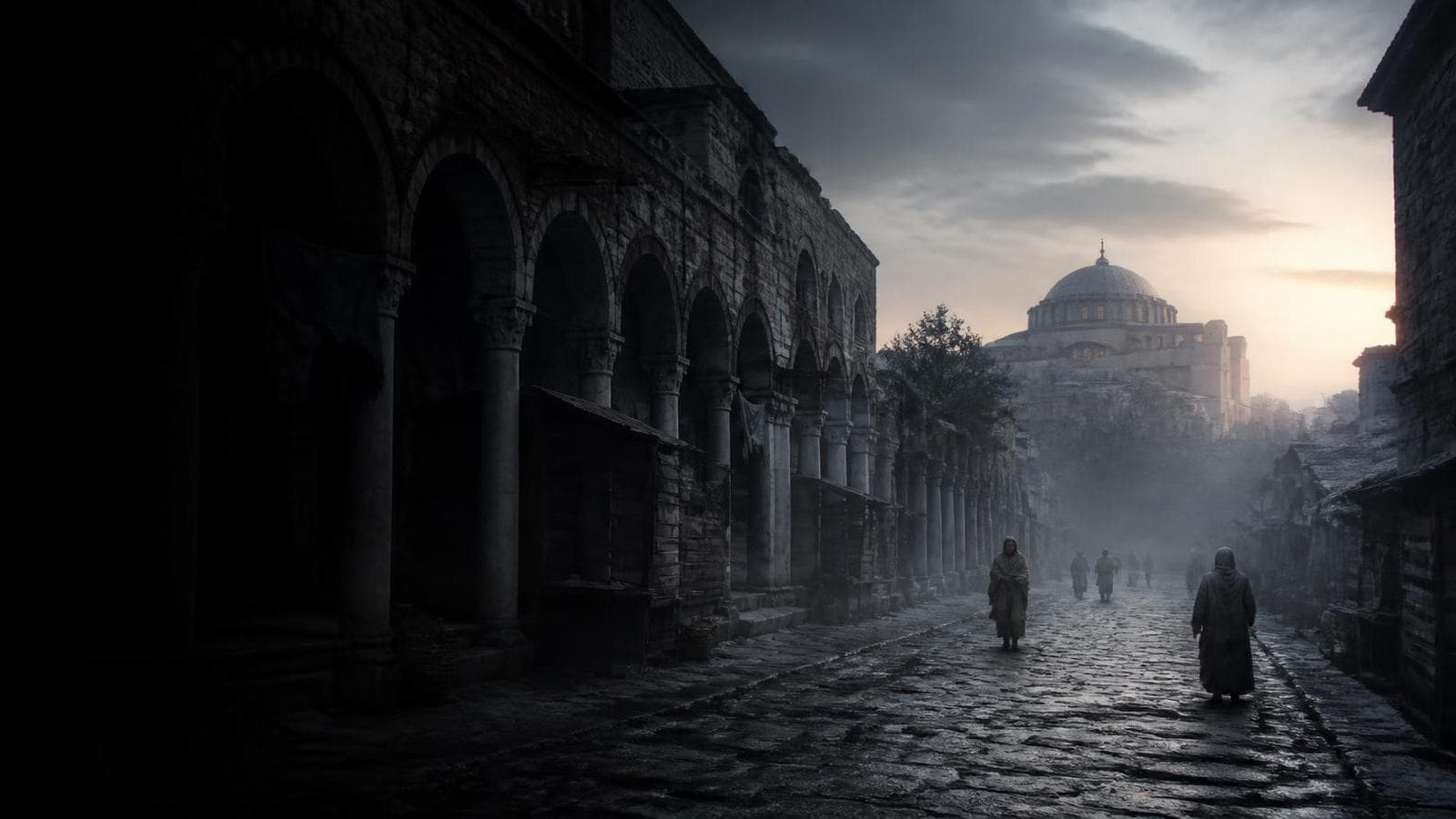
Eine unheimliche Stille legte sich über Konstantinopel, einst das geschäftige Herz des Byzantinischen Reiches. Die Straßen, normalerweise voller Leben, leerten sich, als ein unsichtbarer Feind durch die Stadt zog.

Das 6. Jahrhundert n. Chr. war eine Zeit ehrgeiziger imperialer Expansion für das Byzantinische Reich unter Kaiser Justinian I. mit dem Ziel, den Glanz des Römischen Reiches wiederherzustellen. Konstantinopel war als opulente Hauptstadt ein pulsierendes Zentrum für Handel, Kultur und Macht mit einer geschätzten Bevölkerung von Hunderttausenden.

Diese Pandemie, bekannt als Justinianische Pest, war der erste vollständig dokumentierte historische Ausbruch der Beulenpest. Sie entstand in Regionen möglicherweise so weit entfernt wie China oder Zentralasien, bevor sie 541 n. Chr. im römischen Ägypten auftauchte. Von Flöhen auf Schwarzratten an Bord von Getreideschiffen getragen, folgte die Krankheit etablierten Handelsrouten und gelangte schließlich über das Mittelmeer.

Verifiziert

Die Pest erreichte Konstantinopel im Frühjahr 542 n. Chr., etwa ein Jahr nach ihrem ersten Auftreten in den äußeren Provinzen des Reiches.

Zeitgenössische Beobachter, wie der Historiker Prokop von Caesarea, verzeichneten die schrecklichen Symptome: plötzliches Fieber, Schüttelfrost, Desorientierung und die verräterischen Beulen – geschwollene, schmerzhafte Lymphknoten, die den Beginn der tödlichen Krankheit kennzeichneten. Die Infrastruktur der Stadt brach schnell unter der Last des Massensterbens zusammen.

Verifiziert

Der Ausbruch in Konstantinopel dauerte etwa vier Monate, wobei seine größte Virulenz etwa drei Monate umfasste, was zum Tod von schätzungsweise 20 % bis 40 % der Stadtbewohner führte.

„Die Stadt wurde zu einem Grab. Wir begruben unsere Toten in Gruben und Türmen, überall wo wir konnten. Die Luft selbst schien schwer zu sein von Trauer und dem Gestank der Gefallenen.“

Die Auswirkungen der Pest reichten über die unmittelbare Sterblichkeit hinaus. Handwerker verließen ihre Werkstätten, was zu schwerem Arbeitskräftemangel, weit verbreiteter Hungersnot und Inflation führte. Diese Krankheitsperiode schwächte das Byzantinische Reich sowohl politisch als auch wirtschaftlich erheblich, trug zu einem Arbeitskräftemangel im Militär bei und behinderte Justinians Ambitionen. Kaiser Justinian I. selbst erkrankte, erholte sich aber auf bemerkenswerte Weise.

Was heute noch erhalten ist

Während im modernen Istanbul keine physischen Narben der Pest von 542 sichtbar sind, erinnern uns die historischen Berichte dieser verheerenden Periode an die anhaltende Widerstandsfähigkeit der Stadt und die tiefen Schichten menschlicher Erfahrung, die unter ihrer pulsierenden Gegenwart liegen, von imperialen Ambitionen bis hin zu existenziellen Kämpfen gegen unsichtbare Kräfte.

Personen

Justinian IByzantine emperor

Justinian I was a Byzantine emperor who reigned from 527 to 565 CE. Born Petrus Sabbatius to peasant parents in Tauresium, Dardania, he was brought to Constantinople (modern-day Istanbul, Turkey) by his uncle, Emperor Justin I, for education and military training, later adopting the name Justinianus. He became sole emperor after his uncle's death in 527 CE. Justinian I is significant for his profound impact on Constantinople through extensive urban development, including commissioning the construction of the Hagia Sophia (built between 532 and 537 CE) and the Basilica Cistern. His reign also saw the monumental codification of Roman law, known as the "Corpus Juris Civilis," which influenced legal systems for centuries. He promoted trade and experienced the widespread devastation of the Plague of Justinian, which afflicted Constantinople starting in 542 CE.

Kulturen

Romans

The Roman presence in the city now known as Istanbul is fundamental to its identity, beginning with the ancient Greek colony of Byzantium becoming allied with and then part of the Roman Empire. Its significance dramatically escalated when Emperor Constantine I refounded it as Constantinople, or "New Rome," in the 4th century CE. This city then served as the capital of the Eastern Roman Empire, later known as the Byzantine Empire, for over a thousand years, preserving Roman and Hellenistic traditions and shaping much of the city's early urban fabric and cultural significance.

Byzantine Greeks

The term "Byzantine Greeks" refers to the inhabitants of the Byzantine Empire, also known as the Eastern Roman Empire. These individuals considered themselves "Romans" and their culture integrated the legal and administrative traditions of the Roman Empire with the Greek language and other Greek cultural elements. The empire was largely Greek-speaking and served as the spiritual center of the Orthodox religion. The Byzantine Greeks are profoundly important to Istanbul, as the city, then known as Constantinople, served as their capital for over a thousand years.

Die Stadt besteht aus Stadtvierteln

Geschichten aus Istanbul

Verfasst von Istanbook Editorial Team · Zuletzt aktualisiert am 6. September 2026

Quellen (4)