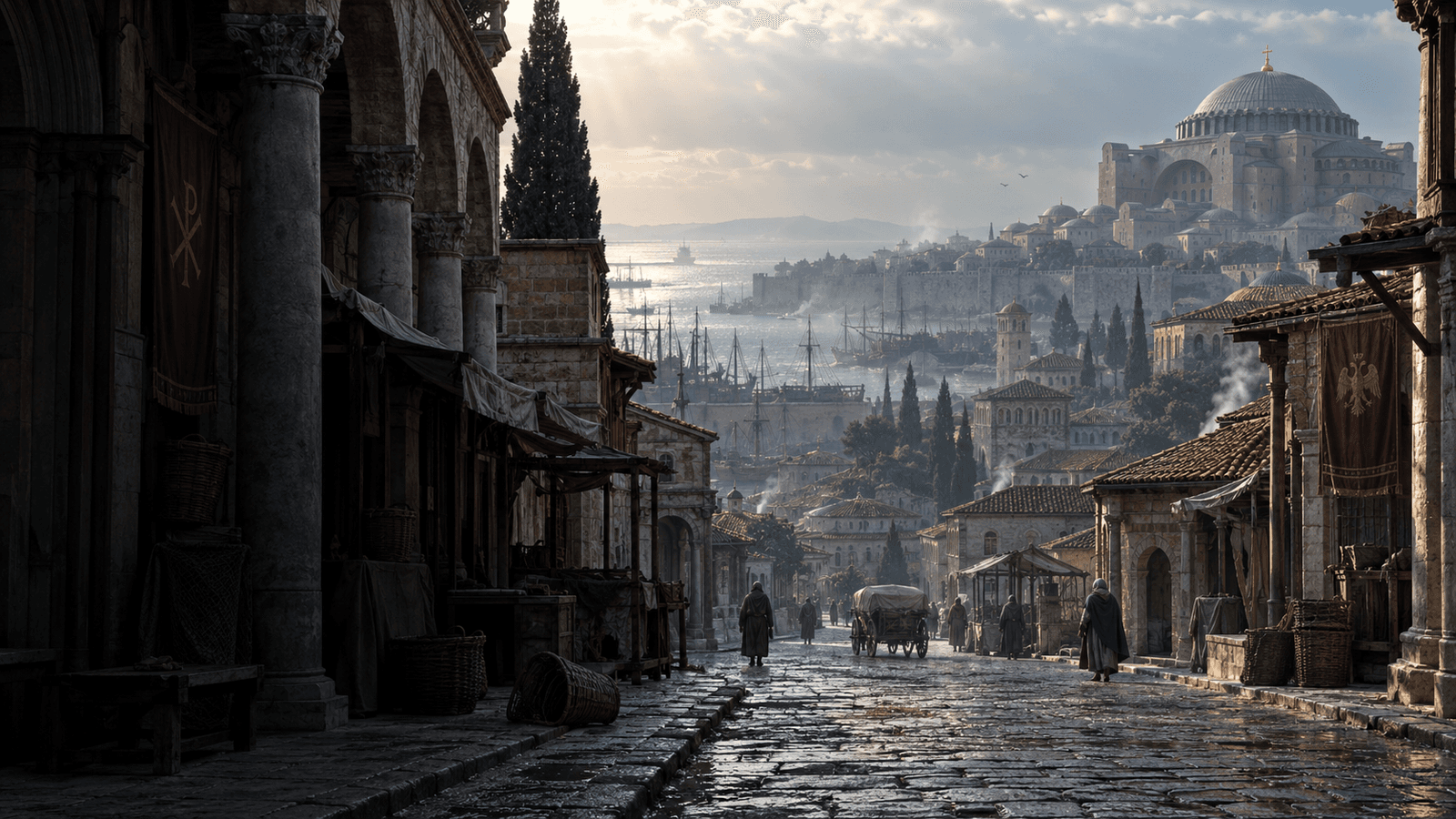
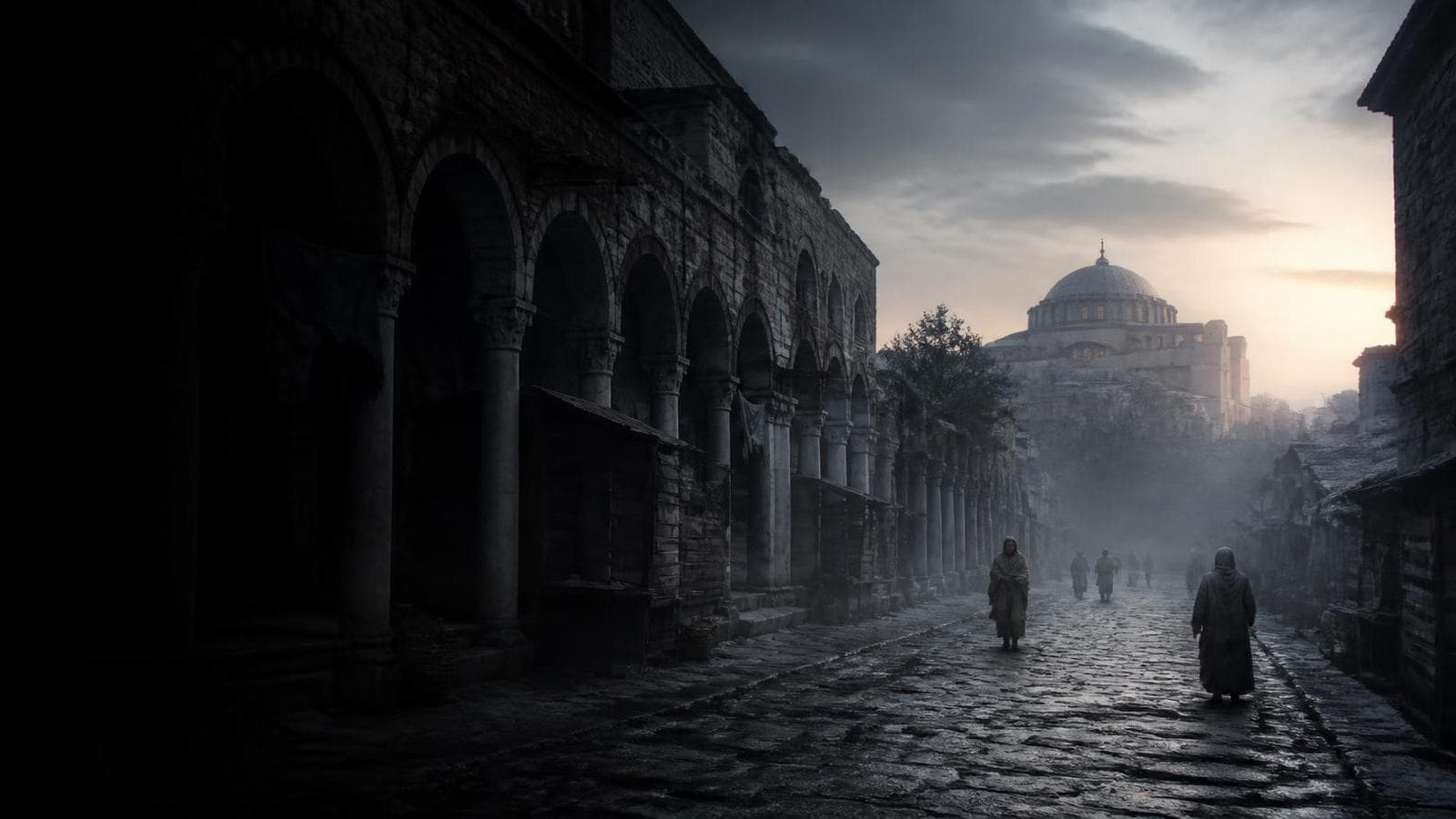
The Silent City: Constantinople and the Plague of 542

La città silenziosa: Costantinopoli e la peste del 542

Come una pandemia devastante ridisegnò la capitale bizantina.

2 min read

The Silent City: Constantinople and the Plague of 542
Un silenzio agghiacciante calò su Costantinopoli, un tempo cuore pulsante dell'Impero bizantino. Le strade, di norma brulicanti di vita, si svuotarono mentre un nemico invisibile dilagava per la città.

Il VI secolo d.C. segnò un periodo di ambiziosa espansione imperiale per l'Impero bizantino sotto Giustiniano I, che mirava a restaurare la gloria dell'Impero romano. Costantinopoli, come sua sfarzosa capitale, era un vivace centro di commercio, cultura e potere, con una popolazione stimata nell'ordine delle centinaia di migliaia di abitanti.

Conosciuta come la peste giustinianea, questa pandemia fu il primo focolaio storico di peste bubbonica interamente documentato. Ebbe origine in regioni forse lontane come la Cina o l'Asia centrale, prima di manifestarsi nell'Egitto romano nel 541 d.C. Trasportata dalle pulci sui ratti neri a bordo delle navi granarie, la malattia seguì le rotte commerciali consolidate, facendosi infine strada attraverso il Mediterraneo.

Verificato

La peste raggiunse Costantinopoli nella primavera del 542 d.C., circa un anno dopo la sua prima comparsa nelle province periferiche dell'impero.

Osservatori dell'epoca, come lo storico Procopio di Cesarea, registrarono i sintomi terrificanti: febbri improvvise, brividi, disorientamento e i rivelatori bubboni — linfonodi gonfi e dolorosi che segnavano l'insorgere della malattia fatale. L'infrastruttura della città cedette rapidamente sotto il peso della morte di massa.

Verificato

L'epidemia a Costantinopoli durò circa quattro mesi, con il picco di massima virulenza che si estese per circa tre mesi, portando alla morte, secondo le stime, del 20-40% degli abitanti della città.

"La città divenne una tomba. Seppellivamo i nostri morti in fosse e torri, ovunque potessimo. L'aria stessa sembrava appesantita dal dolore e dal fetore dei caduti."

L'impatto della peste andò oltre la mortalità immediata. Gli artigiani abbandonarono le loro botteghe, causando gravi carenze di manodopera, carestie diffuse e inflazione. Questo periodo di malattia indebolì significativamente l'Impero bizantino sia politicamente sia economicamente, contribuendo a una carenza di uomini nell'esercito e ostacolando le ambizioni di Giustiniano. Lo stesso imperatore Giustiniano I contrasse la malattia, ma si riprese sorprendentemente.

Cosa resta oggi

Sebbene nessuna cicatrice fisica della peste del 542 sia oggi visibile nella Istanbul moderna, i resoconti storici di questo periodo devastante ci ricordano la resilienza duratura della città e gli strati profondi dell'esperienza umana che giacciono sotto il suo vivace presente, dalle ambizioni imperiali alle lotte esistenziali contro forze invisibili.

Persone

Justinian IByzantine emperor

Justinian I was a Byzantine emperor who reigned from 527 to 565 CE. Born Petrus Sabbatius to peasant parents in Tauresium, Dardania, he was brought to Constantinople (modern-day Istanbul, Turkey) by his uncle, Emperor Justin I, for education and military training, later adopting the name Justinianus. He became sole emperor after his uncle's death in 527 CE. Justinian I is significant for his profound impact on Constantinople through extensive urban development, including commissioning the construction of the Hagia Sophia (built between 532 and 537 CE) and the Basilica Cistern. His reign also saw the monumental codification of Roman law, known as the "Corpus Juris Civilis," which influenced legal systems for centuries. He promoted trade and experienced the widespread devastation of the Plague of Justinian, which afflicted Constantinople starting in 542 CE.

Culture

Romans

The Roman presence in the city now known as Istanbul is fundamental to its identity, beginning with the ancient Greek colony of Byzantium becoming allied with and then part of the Roman Empire. Its significance dramatically escalated when Emperor Constantine I refounded it as Constantinople, or "New Rome," in the 4th century CE. This city then served as the capital of the Eastern Roman Empire, later known as the Byzantine Empire, for over a thousand years, preserving Roman and Hellenistic traditions and shaping much of the city's early urban fabric and cultural significance.

Byzantine Greeks

The term "Byzantine Greeks" refers to the inhabitants of the Byzantine Empire, also known as the Eastern Roman Empire. These individuals considered themselves "Romans" and their culture integrated the legal and administrative traditions of the Roman Empire with the Greek language and other Greek cultural elements. The empire was largely Greek-speaking and served as the spiritual center of the Orthodox religion. The Byzantine Greeks are profoundly important to Istanbul, as the city, then known as Constantinople, served as their capital for over a thousand years.

La città è fatta di quartieri

Storie di Istanbul

Scritto da Istanbook Editorial Team · Ultimo aggiornamento: 6 settembre 2026

Fonti (4)