The Silent City: Constantinople and the Plague of 542

沈黙の都市:コンスタンティノープルと542年の疫病

壊滅的な感染症がビザンツ帝国の首都をいかに変えたか

1 min read

The Silent City: Constantinople and the Plague of 542
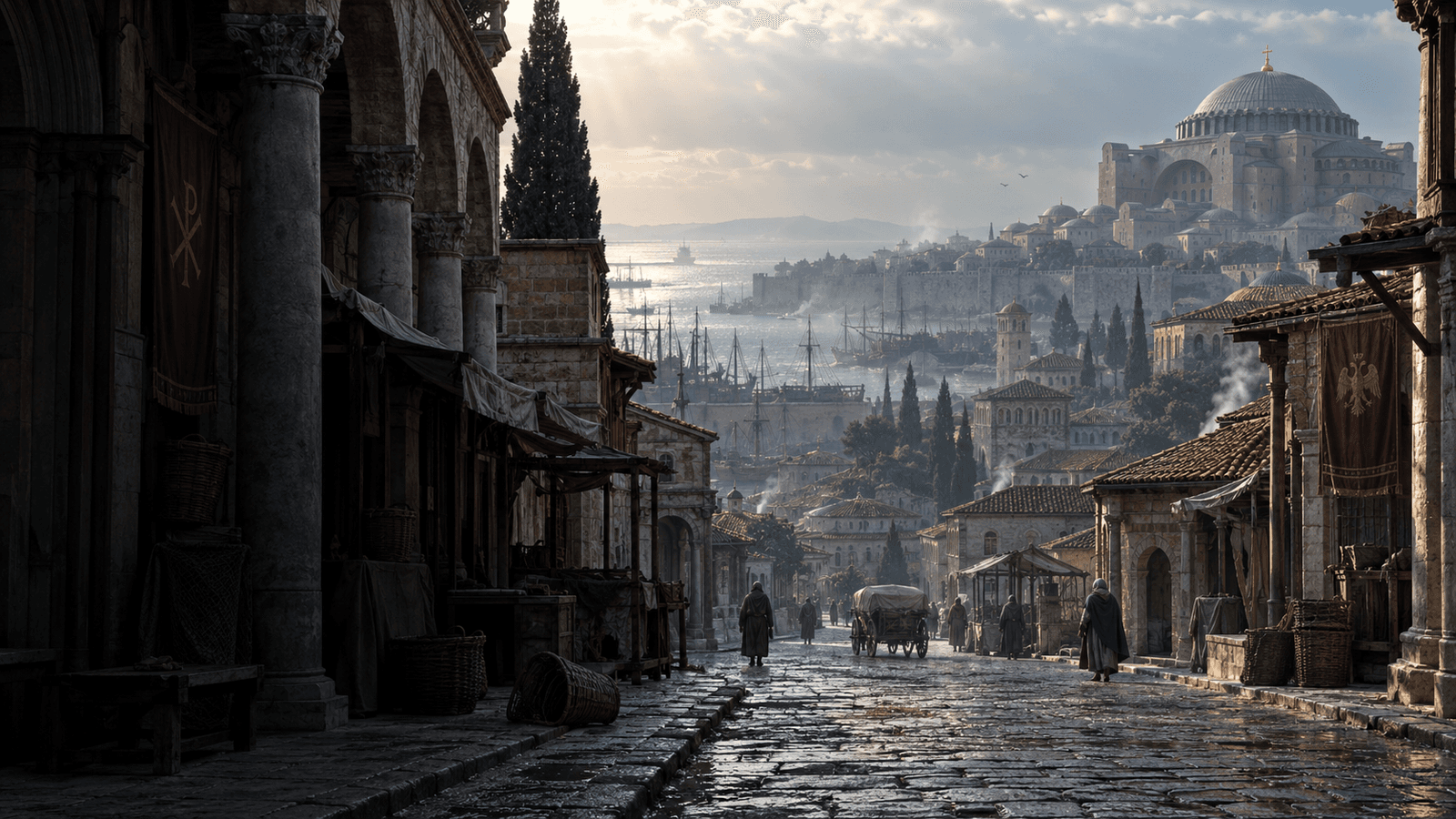
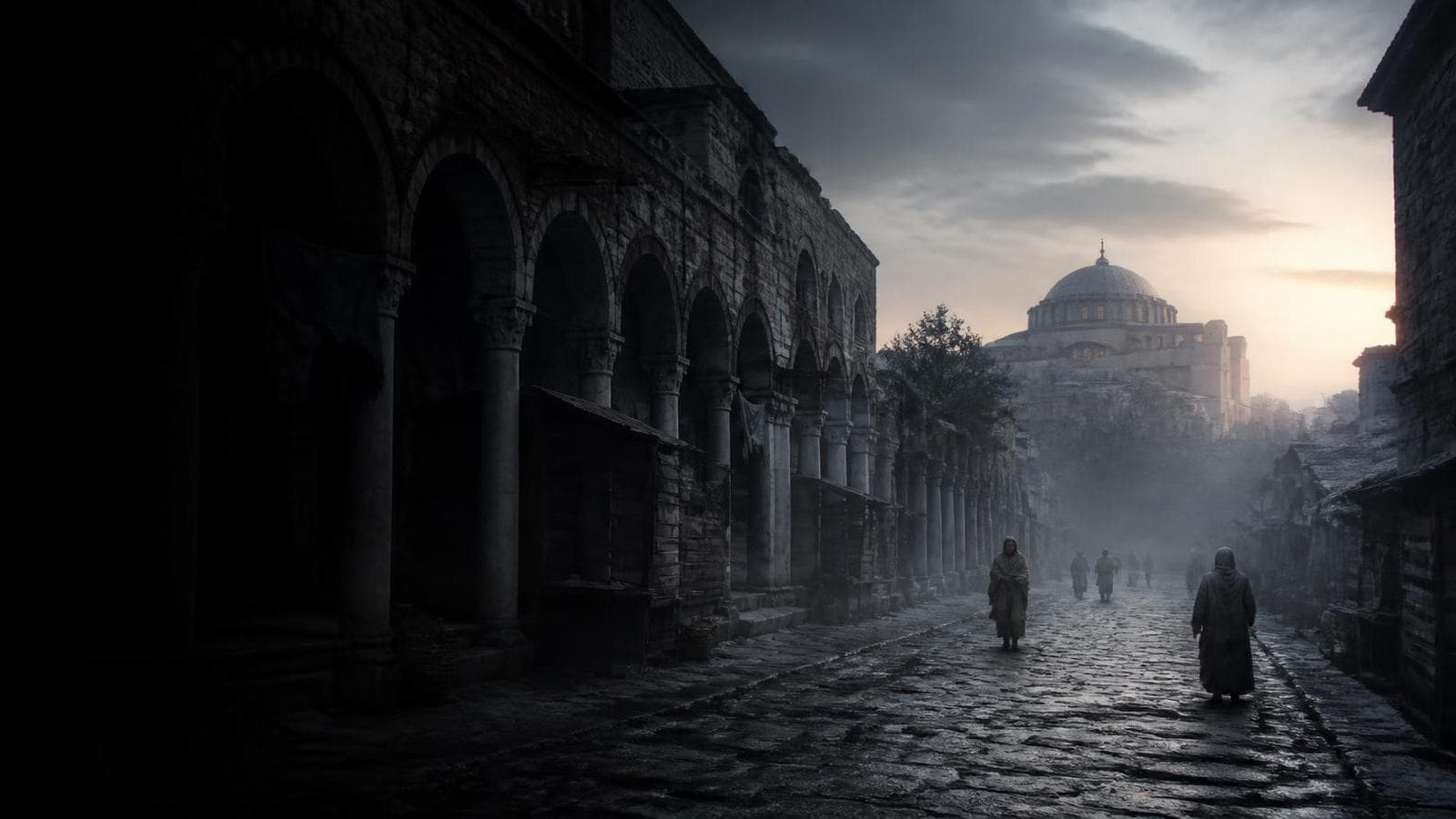
かつてビザンツ帝国の活気あふれる心臓部であったコンスタンティノープルに、身の凍るような静寂が舞い降りた。いつもは生命力にあふれていた街路は、目に見えぬ敵が街を席巻するにつれ、人影を失っていった。

6世紀、皇帝ユスティニアヌス1世のもとでビザンツ帝国は野心的な版図拡大の時代を迎え、ローマ帝国の栄光を取り戻そうとしていた。その豪奢な首都コンスタンティノープルは、通商と文化と権力が交差する活気ある中心地であり、人口は数十万人に及んだと推定される。

ユスティニアヌスの疫病として知られるこのパンデミックは、歴史上初めて完全に記録された腺ペストの大流行であった。その発生源は遠く中国あるいは中央アジアに遡る可能性があり、541年にローマ領エジプトで出現した後、穀物船に乗った黒ネズミのノミによって運ばれ、既存の交易路をたどって地中海全域へと広がっていった。

検証済み

疫病は542年の春にコンスタンティノープルに到達した。帝国の辺境属州で最初に出現してからおよそ一年後のことである。

カエサレアの歴史家プロコピオスをはじめとする当時の目撃者たちは、恐ろしい症状を記録している――突然の高熱、悪寒、意識の混濁、そして致命的な病の始まりを告げる、腫れ上がった痛々しいリンパ節、ブボである。都市のインフラは、大量死の重圧にたちまち屈していった。

検証済み

コンスタンティノープルでの流行はおよそ四か月続き、もっとも猛威を振るった期間は約三か月に及んだ。都市住民のおよそ20パーセントから40パーセントが命を落としたと推定されている。

「都市は墓となった。私たちは死者を穴やら塔やら、埋められる場所ならどこにでも埋めた。空気そのものが悲しみと、倒れた者たちの臭いで重く垂れ込めているようだった」

疫病の影響は、直接の死者数にとどまらなかった。職人たちは工房を捨て、深刻な労働力不足、広範な飢饉、そして物価高騰を招いた。この疫病の時代はビザンツ帝国を政治的にも経済的にも著しく弱体化させ、軍の兵力不足を招いてユスティニアヌスの野望を阻んだ。皇帝ユスティニアヌス1世自身もこの病に罹患したが、驚くべきことに回復した。

現在も残るもの

542年の疫病が残した物理的な傷跡は現代のイスタンブールに見ることはできないが、この壊滅的な時代の史料は、都市が持つ不屈の回復力と、帝国の野望から見えざる力との実存的な闘いに至るまで、その活気ある現在の底に横たわる人間の経験の深い層を今に伝えている。

人物

Justinian IByzantine emperor

Justinian I was a Byzantine emperor who reigned from 527 to 565 CE. Born Petrus Sabbatius to peasant parents in Tauresium, Dardania, he was brought to Constantinople (modern-day Istanbul, Turkey) by his uncle, Emperor Justin I, for education and military training, later adopting the name Justinianus. He became sole emperor after his uncle's death in 527 CE. Justinian I is significant for his profound impact on Constantinople through extensive urban development, including commissioning the construction of the Hagia Sophia (built between 532 and 537 CE) and the Basilica Cistern. His reign also saw the monumental codification of Roman law, known as the "Corpus Juris Civilis," which influenced legal systems for centuries. He promoted trade and experienced the widespread devastation of the Plague of Justinian, which afflicted Constantinople starting in 542 CE.

文化

Romans

The Roman presence in the city now known as Istanbul is fundamental to its identity, beginning with the ancient Greek colony of Byzantium becoming allied with and then part of the Roman Empire. Its significance dramatically escalated when Emperor Constantine I refounded it as Constantinople, or "New Rome," in the 4th century CE. This city then served as the capital of the Eastern Roman Empire, later known as the Byzantine Empire, for over a thousand years, preserving Roman and Hellenistic traditions and shaping much of the city's early urban fabric and cultural significance.

Byzantine Greeks

The term "Byzantine Greeks" refers to the inhabitants of the Byzantine Empire, also known as the Eastern Roman Empire. These individuals considered themselves "Romans" and their culture integrated the legal and administrative traditions of the Roman Empire with the Greek language and other Greek cultural elements. The empire was largely Greek-speaking and served as the spiritual center of the Orthodox religion. The Byzantine Greeks are profoundly important to Istanbul, as the city, then known as Constantinople, served as their capital for over a thousand years.

この街は地区でできている

イスタンブールの物語

執筆者 Istanbook Editorial Team · 最終更新日 2026年9月6日

出典 (4)